
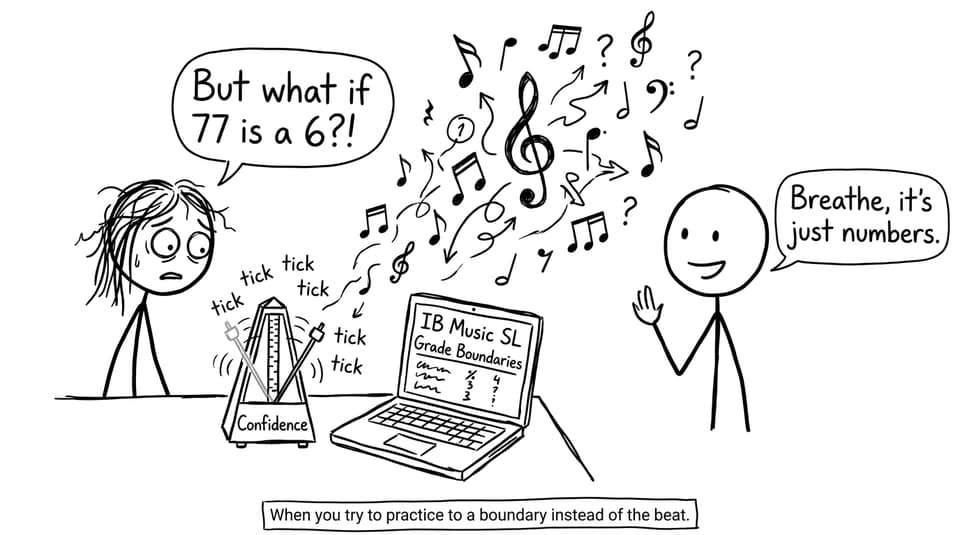
The night before you submit, everything starts to sound louder than it is: the click of the metronome, the hum of your laptop fan, the tiny doubt that whispers, “What if I’m one mark short?” That’s why IB students obsess over grade boundaries. Not because numbers are magical, but because they turn vague effort into a concrete target.
In this guide, you’ll get the full IB Music SL grade boundaries 2025 breakdown for each component, plus a practical way to use boundaries without letting them hijack your creativity.
Quick checklist: how to use IB Music SL grade boundaries
-
Save the boundary ranges somewhere you’ll actually check (notes app, wall, or bookmark).
-
Convert boundaries into mini-goals for each component (not one giant “I need a 7”).
-
Track your marks with a calculator, not vibes.
-
Improve faster by tightening reflection, evidence, and clarity.
-
Use RevisionDojo tools to practice, review, and polish your portfolio like an examiner would.
If you want the wider context across subjects, keep the official-style tracker open: IB Grade Boundaries.
IB Music SL grade boundaries 2025 (by component)
Grade boundaries show the mark ranges that convert raw scores into final IB grades. They are session-specific, so you use them as a planning tool, not a promise.
IB Music SL grade boundaries 2025: Experimenting with Music (out of 28)
-
Grade 7: 22-28
-
Grade 6: 18-21
-
Grade 5: 15-17
-
Grade 4: 11-14
-
Grade 3: 5-10
-
Grade 2: 3-4
-
Grade 1: 0-2
IB Music SL grade boundaries 2025: Exploring Music in Context (out of 24)
-
Grade 7: 18-24
-
Grade 6: 15-17
-
Grade 5: 12-14
-
Grade 4: 9-11
-
Grade 3: 5-8
-
Grade 2: 3-4
-
Grade 1: 0-2
IB Music SL grade boundaries 2025: Presenting Music (out of 38)
-
Grade 7: 33-38
-
Grade 6: 28-32
-
Grade 5: 22-27
-
Grade 4: 17-21
-
Grade 3: 11-16
-
Grade 2: 6-10
-
Grade 1: 0-5
Final IB Music SL grade boundaries 2025 (out of 100)
-
Grade 7: 78-100
-
Grade 6: 65-77
-
Grade 5: 52-64
-
Grade 4: 39-51
-
Grade 3: 21-38
-
Grade 2: 11-20
-
Grade 1: 0-10
To sanity-check your running totals, use: IB Grade Calculator.
What these IB Music SL grade boundaries mean in real life
Boundaries are most useful when they change your behavior.
A student aiming for a 7 often doesn’t need a brand-new identity as a musician. They usually need tighter evidence: clearer process logs, sharper musical vocabulary, and more intentional links between choices and outcomes. That is the heart of IB assessment: the examiner rewards what they can see.
If you want a clean explanation of what each component is actually testing, read: How IB Music Is Graded: Assessment Components Explained.
Tips to push into the top IB grade boundary bands
Experimenting with Music: score by proving you explored
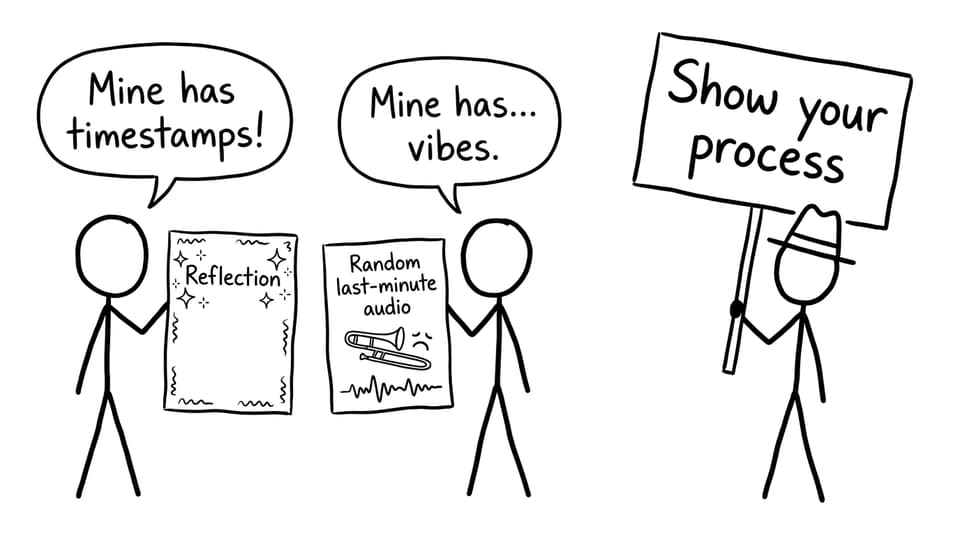
In IB Music, experimentation is not “I tried a thing.” It’s evidence that you iterated: drafts, variations, annotations, recordings, and reflections that show decision-making.
A simple workflow: use RevisionDojo Study Notes to learn the language of musical features, then log experiments as short “problem, test, result” entries. If you need structure for creating work, see: Best Resources for IB Music Composition.
Exploring Music in Context: make context do work
Context should not sit on the side like trivia. Tie it to sound: how culture, function, and history shape rhythm, texture, timbre, harmony, or form.
For stronger comparisons and clearer analysis, use: IB Music Comparative Analysis: Best Exam Strategies.
Presenting Music: clean performance plus clear intention
Performance marks aren’t only about avoiding wrong notes. They reward control, stylistic understanding, and musical decisions you can justify.
When in doubt, make your presentation feel inevitable: the listener should sense that every tempo, articulation, and balance choice had a reason.
To build a cohesive submission across all components, follow: What to Include in an IB Music Portfolio.
How RevisionDojo helps IB Music SL students prepare
RevisionDojo is built for IB students who want a system, not scattered tabs. Use the Questionbank mindset (targeted practice and immediate feedback loops) even in arts subjects: attempt, review, fix, and re-attempt.
Helpful starting points:
Along the way, lean on RevisionDojo Flashcards for musical vocabulary, AI Chat to clarify criteria language, Grading tools to tighten reflections, and Tutors if you want expert feedback. When you are ready to simulate pressure, use Mock Exams and Predicted Papers for timed practice habits that transfer to every IB subject.
FAQ: IB Music SL grade boundaries 2025
Why are IB grade boundaries different for each component?
In IB Music SL, each component measures a different skill: experimentation rewards process and iteration, exploration rewards analysis and contextual understanding, and presenting rewards performance and communication. Because the tasks differ, the raw mark distributions differ too. Grade boundaries are set after examiners see how the global cohort performed on that specific session’s assessments. That means boundaries aren’t a moral judgment of difficulty, but a statistical tool for consistent standards. It also explains why “a good score” can look different across components. Your best strategy is to treat boundaries as targets, then build evidence that matches the criteria.
How much do the components affect my final IB Music SL grade?
All component marks add up to a final score out of 100, which is then converted into your IB grade using the final boundaries. That’s why a small improvement in one component can matter more than you expect, especially near a boundary like 77/78. Students often try to “make up for it” with one strong area, but a weak component can still drag down the total. A calmer approach is to calculate your current totals, identify the easiest marks to gain, and focus there. Use the IB Grade Calculator to model scenarios. Then use RevisionDojo’s tools to build a repeatable improvement loop instead of cramming.
Which IB Music SL component is usually the hardest to score highly in?
Many IB students find Presenting Music demanding because it feels high-stakes and personal. Performance exposes nerves, and it’s easy to over-focus on perfection rather than intention and control. Others struggle more with Exploring Music in Context because writing about sound requires precise vocabulary and evidence. The truth is that “hardest” usually means “least practiced with feedback.” If you record earlier, reflect earlier, and get an outside eye, the component stops being mysterious. RevisionDojo Tutors and AI Chat can help you translate “I think this works” into examiner-ready justification.
Conclusion: use IB Music SL grade boundaries as a compass
IB Music SL grade boundaries 2025 are most powerful when they make your next practice session clearer. They help you stop guessing, focus on the most valuable marks, and build a portfolio that shows process, intention, and control.
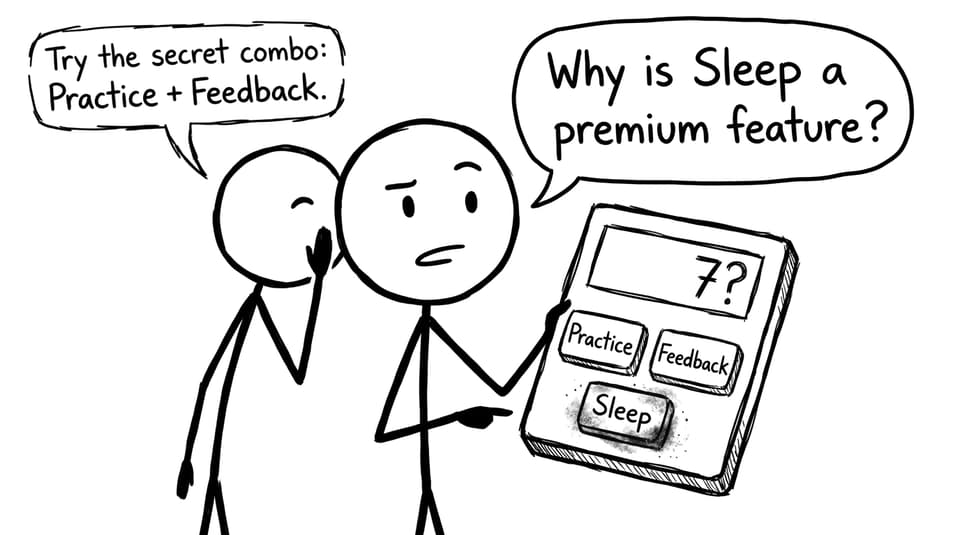
Bookmark the boundaries, run your numbers, and then do the simplest thing that works: practice with feedback, reflect with evidence, and tighten one component at a time. When you want everything in one place: Questionbank thinking, Study Notes, Flashcards, AI Chat, Grading tools, Predicted Papers, Mock Exams, Coursework Library, and Tutors, RevisionDojo is the study system built for IB students aiming high.