




If you’ve ever opened your IB mock results and felt a weird mix of relief and dread, you’re not alone. A number can look confident at 8 p.m., then terrifying at 8 a.m. the next day. The problem usually isn’t your score--it’s the missing context.
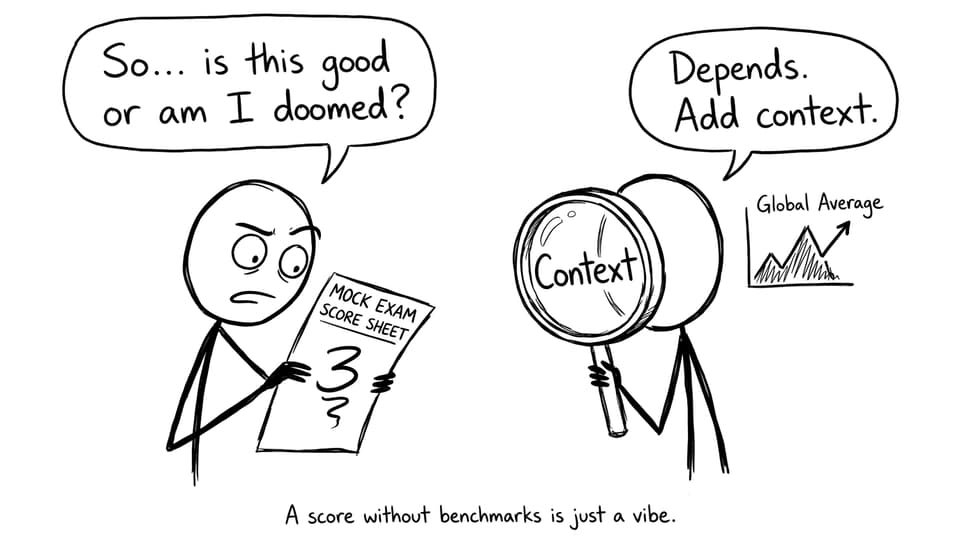
IB mock exam statistics matter because they turn “I got X” into “I know what X means, and what to do next.” Benchmarks don’t just calm you down. They help you make better decisions.
IB mock exam statistics: the quick benchmark checklist
Before you interpret any IB mock score, run this short checklist:
-
Compare your total to the global IB average (not only your class).
-
Look for patterns across subjects (content gap vs exam technique vs timing).
-
Identify your “easy points” (where one grade band is realistically reachable).
-
Make your next week of revision evidence-based: practice, feedback, retest.
If you need a single home base to run that loop, start with RevisionDojo for IB.
The global IB benchmark (and why it’s useful)
Across recent sessions, the global IB Diploma average sits just above 30 points. That number is powerful because it’s a reality check: a score around 30 is already a successful outcome for many students.
A few more reference bands that help you interpret where you sit:
-
Mid-30s: clearly above the global mean and competitive for many university pathways.
-
40+: rare and exceptional--a small percentage of candidates reach this level.
These are final exam outcomes, not mock outcomes. But they’re still useful as a north star when you’re trying to judge whether your current IB trajectory is stable.
To turn vague benchmarking into practical action, combine timed practice with fast feedback using Online IB Mock Exams: Practice Anywhere, Anytime.
How IB mock scores usually translate to finals
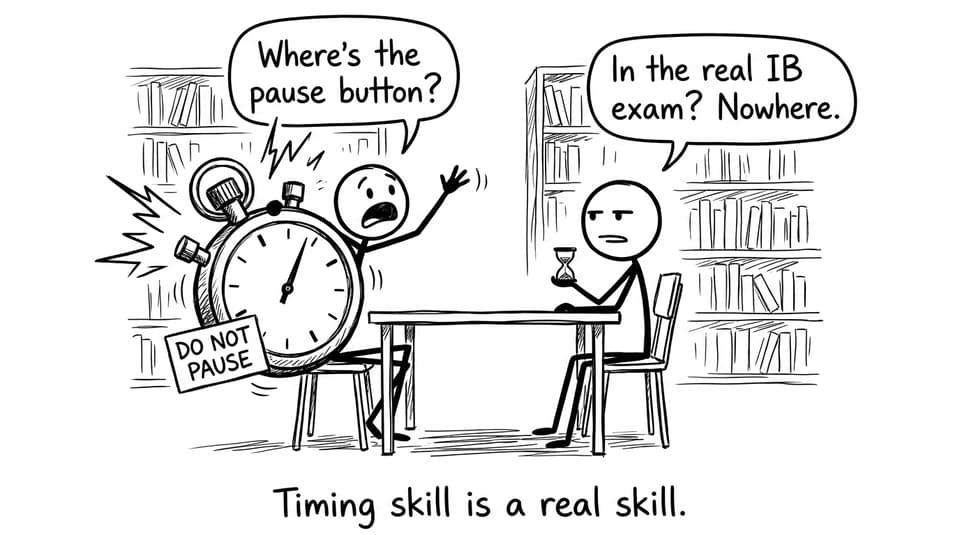
Many schools design mocks to be harder (or mark them more strictly) than the final IB exams. That means mocks often function like a stress test: not to predict your exact final number, but to reveal where marks leak under pressure.
Common patterns students see:
-
Mock totals can underestimate finals by 1--2 points.
-
Consistent 4s--5s across subjects often leads to a final total around the low 30s.
-
Regular 6s with occasional 7s often maps to a diploma score in the mid-30s or higher.
What matters is not the single mock number. It’s whether your mistakes are repeatable (good news: fixable) or random (often stress/timing).
Interpreting your IB mock results by band
Use these bands as a planning tool, not a label.
Low-to-mid 20s
This usually signals major gaps in understanding, exam technique, or both. The goal isn’t to “work harder.” It’s to diagnose what’s failing: weak content foundations, command terms, time management, or confidence.
A high-return move is to rebuild basics fast with Study Notes, then immediately test with targeted practice.
High 20s to low 30s
You’re close to the global IB average. Diploma success is likely, but if you’re aiming for competitive offers, you’ll want to convert “almost” marks into reliable marks.
This is where a focused practice engine helps: Questionbank for weak topics and strict timing.
Low-to-mid 30s
You’re above average. At this level, gains often come from exam behaviors: clearer structure, better use of mark allocation, smarter time splits, and fewer avoidable slips.
If you want a clean system for combining practice, analysis, and repetition, see RevisionDojo App: The Smarter Way to Prep for IB Exams.
Mid-to-high 30s
You’re in a strong academic position. Now the task is consistency: preventing a weak paper day from dragging down your total.
A surprisingly effective tactic is to tighten recall daily with Flashcards so your knowledge shows up on demand.
40+
Exceptional performance. Your best strategy is to protect reliability: keep doing timed mocks, review carefully, and don’t assume strong results mean you can coast.
How to use IB mock statistics to improve (fast)
Mock statistics are only useful if they change your next week.
Look for patterns, not pain
Instead of obsessing over the subject you “hate,” scan for repeat errors:
-
Always misreading command terms?
-
Running out of time on Paper 2?
-
Dropping marks on evaluation/justification?
Then drill those exact weaknesses with Custom IB Mock Exams: Build Practice Tests by Topic.
Raise the weakest subject by one band
In the IB, the biggest point gains often come from lifting a weak 4 to a 5 (or a 5 to a 6). Chasing perfection in your strongest subject feels productive, but it usually returns fewer points.
Make feedback immediate
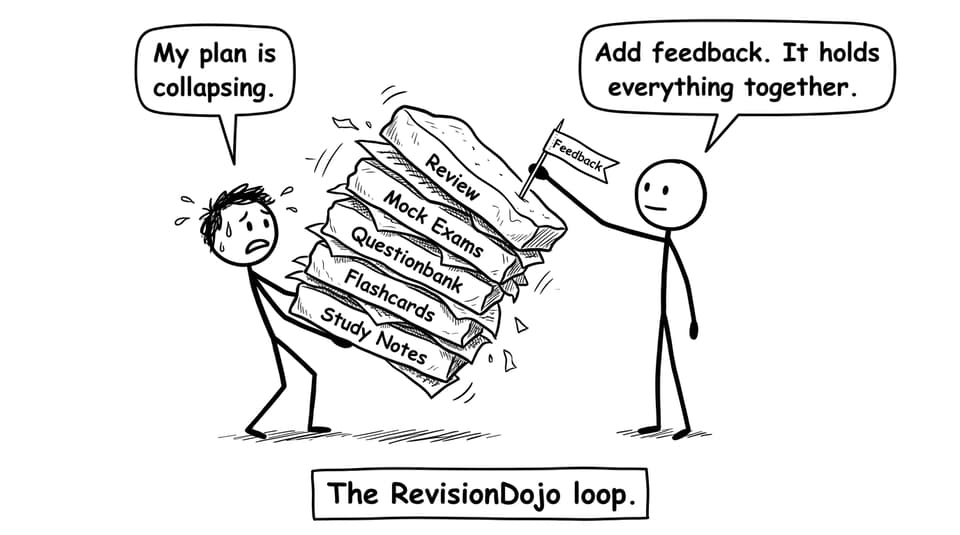
A mock you don’t review is just an expensive rehearsal. RevisionDojo’s ecosystem is built around shortening the loop: Questionbank practice, AI Chat when you’re stuck, and Grading tools to align your work to mark logic. When coursework is part of the stress, the Coursework Library and Tutors give you a clearer standard and human guidance.
For a broader routine that ties these tools together, read IB Core Skills: RevisionDojo’s Integrated Approach.
Common mistakes when reading IB mock exam statistics
-
Comparing only to classmates: your cohort might be unusually strong (or weak). Global IB context matters.
-
Assuming one mock is destiny: one bad day is data, not a verdict.
-
Getting complacent after a strong score: strong students still lose points through timing and sloppy mark allocation.
If you want a reset plan after disappointing results, use Failed Mock Exams? You Can Still Pass IB.
FAQ
Are IB mock exams accurate predictors of final results?
They’re not perfect predictors, but they are among the most useful signals you get before the final IB exams. Mocks reveal what happens when you combine content knowledge with time pressure, stress, and exam formatting. That combination matters because many students know the material but can’t convert it into marks quickly enough. Mocks also highlight whether your errors are consistent (which is good, because consistent errors are fixable). The most accurate use of mock statistics is directional: are you trending upward, stuck, or sliding? If you use RevisionDojo to retest the same skills in Mock Exams and the Questionbank after feedback, your mock data becomes much more predictive.
Should I aim to be above the global IB average?
If your goal is simply to pass the IB Diploma, being near the global average can be enough. But if you’re targeting competitive programs, scholarships, or selective pathways, “average” often isn’t the finish line. The global average is best treated as a baseline marker: it tells you roughly where worldwide performance sits. Your real target should be personal and strategic--based on your university requirements and your subject mix. Aim to be above average by building points where they’re easiest to win, usually in your weaker subjects and exam technique. RevisionDojo helps here because you can move from statistics to action: Study Notes for clarity, Flashcards for daily recall, Questionbank for targeted practice, and Mock Exams for timed proof.
Can internal assessments change my final IB score much?
Yes, internal assessments can meaningfully shape your final IB outcomes, especially if your exam performance is inconsistent. Strong coursework can stabilize a subject grade when exam-day pressure hits. But coursework isn’t “free points”--it still rewards precision, criteria awareness, and clear structure. The best approach is to treat IA feedback like mock feedback: find recurring weaknesses and fix them systematically. RevisionDojo’s Grading tools and Coursework Library help you see what the criteria actually reward, not what you hope they reward. And if you need a human checkpoint, Tutors can help you turn a draft into a plan instead of a panic spiral. Done well, coursework becomes part of your overall statistics story: not a separate track, but another place to earn reliability.
Closing: use IB mock exam statistics as a compass
IB mock exam statistics are perspective, not pressure. They tell you where you are, compared to a wider world, while there’s still time to change the outcome.
So take your mock score, add benchmarks, then do the only step that matters: build the loop. Use RevisionDojo to turn data into progress--Study Notes for clarity, Flashcards for recall, Questionbank practice for marks, AI Chat and Grading tools for fast feedback, and Mock Exams plus Predicted Papers for realistic rehearsal.
When you’re ready, start at RevisionDojo for IB and run your next mock like it’s the beginning of your comeback, not the end of the story.