
IB Memory Techniques: Advanced Learning Strategies
The night before an IB exam has a particular kind of silence. Not peaceful, more like your brain is waiting to betray you. You can feel it: you recognize the page, the diagram, the definition. But when you try to pull it out of your head without looking, it slips.
That moment is the point. The IB doesn’t reward familiarity. It rewards retrieval under pressure: pulling the right idea from memory, shaping it into an answer, and doing it fast.
This guide shares advanced, research-aligned IB memory techniques that turn revision into a system: one that survives time, stress, and mixed topics.
The short IB memory checklist (use this today)
If you want the fastest setup for IB exams, use this loop:
-
Recall first (no notes): flashcards, blurting, mini-quizzes.
-
Check with marking logic: what earns marks, not what sounds nice.
-
Fix the gap: one clear explanation or model answer.
-
Re-recall immediately (same question, clean attempt).
-
Space it: revisit after 1 day, 1 week, and 2-4 weeks.
-
Mix topics so your brain learns selection, not repetition.
RevisionDojo is built for this exact IB loop: Study Notes for quick clarity, Flashcards for daily recall, Questionbank for exam-style retrieval, AI Chat to unblock confusion, Grading tools to tighten written answers, and Mock Exams plus Predicted Papers for timed realism.
Why “studying hard” fails in IB (and what to do instead)
Most IB students don’t have a motivation problem. They have a memory-design problem.
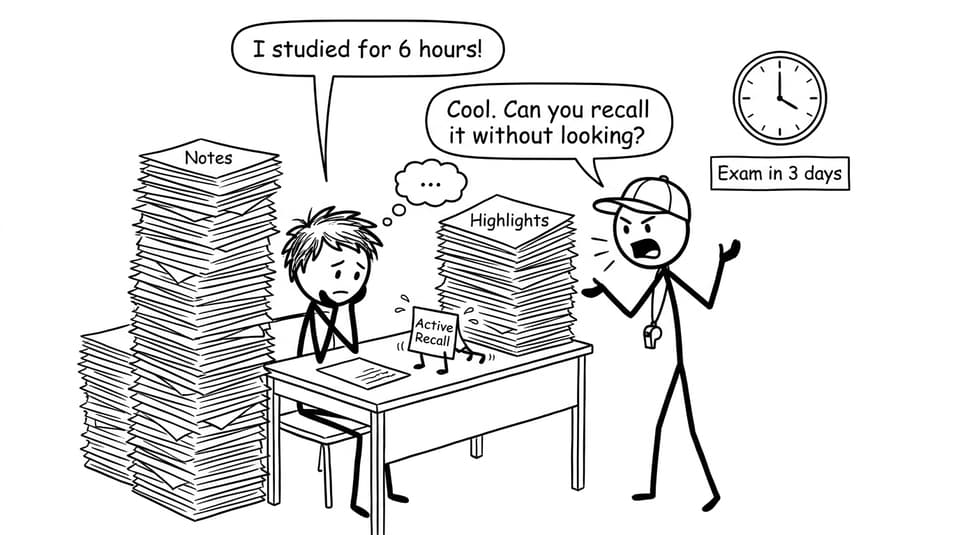
Rereading, highlighting, and rewriting notes feels responsible because it’s smooth. But smooth study mainly trains recognition: “this looks familiar.” In IB exams, you need recall: “I can produce it, accurately, from nothing.”
A useful rule: if your revision session doesn’t include moments of effortful struggle, you’re probably building comfort, not memory.
If you want a deeper reset on this idea, read IB: I Study All Day but Remember Nothing.
IB memory technique: effortful retrieval (the engine)
Effortful retrieval is the backbone of long-term memory for IB. It means you force your brain to produce information without cues.
Practical ways to do this:
-
Closed-book blurting: write everything you know about a subtopic in 3 minutes.
-
Definition drills: write key terms from memory, then compare.
-
Teach-back: explain a concept out loud as if tutoring someone.
-
Exam-style questions: short sets that mimic IB command terms.
This is where tools matter. When you use a syllabus-aligned question set, you’re not just remembering facts. You’re remembering them in the format the IB will demand.
Use RevisionDojo’s Questionbank feature to do small, topic-filtered retrieval sets, then tighten what you missed.
For a full workflow, see Active Recall for IB: The Only Method You Need.
IB memory technique: spaced retrieval (the compounding effect)
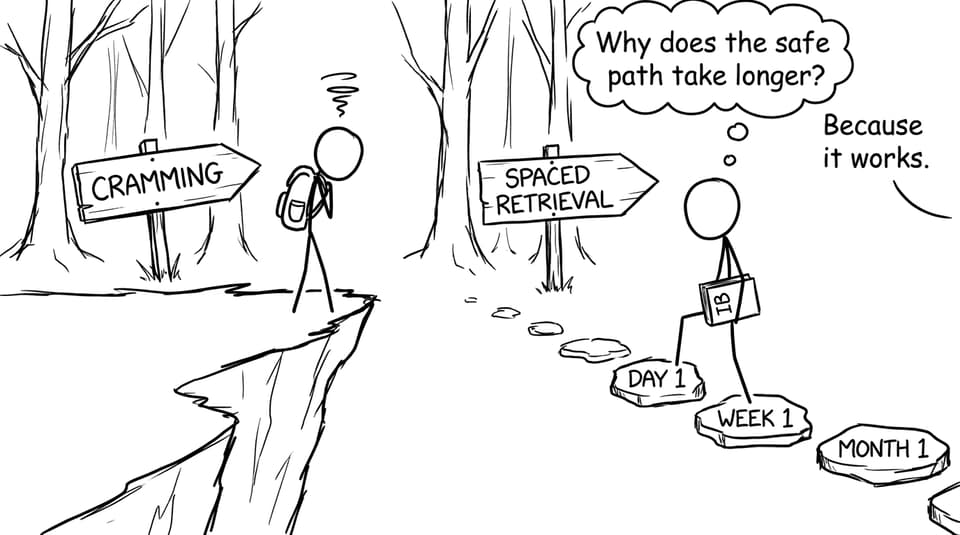
Spacing is how memory becomes durable in the IB. You revisit information right as it starts to fade, which forces reconstruction. That reconstruction is what makes recall stable.
Try this spacing pattern:
-
Day 1: learn + attempt recall
-
Day 2: re-recall (short)
-
Day 7: re-recall (short)
-
Day 14-30: re-recall (short)
The win is not marathon sessions. It’s frequent, brief retrieval that keeps your memory “warm” across months.
RevisionDojo’s Flashcards with Spaced Repetition (SRS) are designed for this style of IB studying: small daily sessions that scale across six subjects.
If you want the science behind the pattern, read The Science of Spaced Repetition for AP/IB Success.
IB memory technique: interleaving (training selection under pressure)
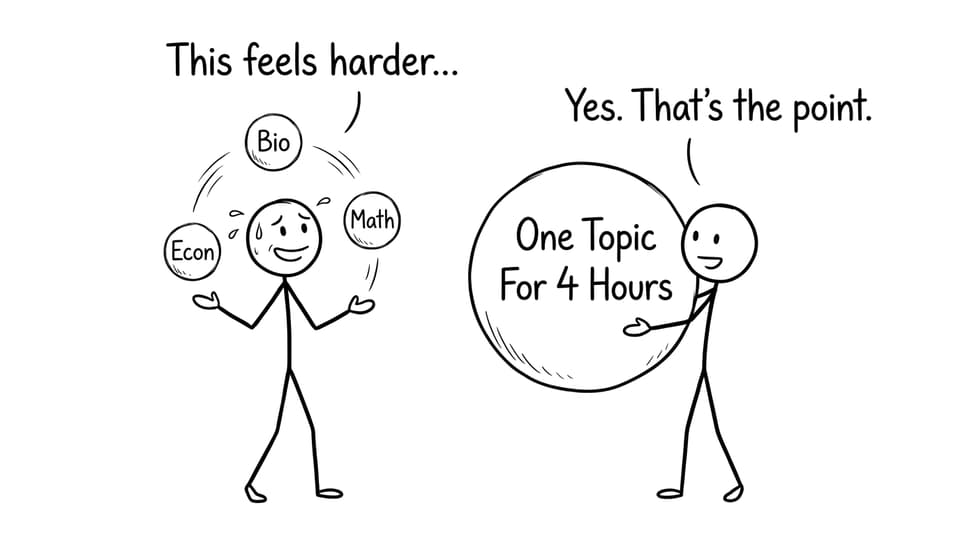
Interleaving means mixing topics or skills instead of blocking one chapter for hours. It feels harder, which is exactly why it works for IB exams.
In a real paper, you’re constantly switching: topics, command terms, and methods. Interleaving trains your brain to answer the hidden question: Which tool do I use here?
A simple interleaving plan:
-
15 minutes: Topic A recall + 5 questions
-
15 minutes: Topic B recall + 5 questions
-
15 minutes: Topic C recall + 5 questions
-
10 minutes: review mistakes and write 2 “error rules”
For subject-specific examples, How to Combine Math Practice With Active Recall Techniques shows how IB students can mix skills without losing clarity.
Subject-ready memory moves (advanced but practical)
Sciences (Biology, Chemistry): rebuild processes from scratch
For IB sciences, memory sticks when you can reconstruct mechanisms. Don’t just “know” glycolysis or equilibrium shifts; rebuild the sequence without looking, then check.
Use Flashcards for definitions and triggers, but use the Questionbank to pressure-test application.
Maths: derive, then drill
For IB Maths, memory collapses when it’s only rote. Practice deriving key results, then immediately apply them with exam-style items. If you’re overwhelmed by formula load, see How to Revise IB Math Formulas Without Overwhelming Yourself.
Essay subjects (English, History, Econ): memorize structures, not paragraphs
In the IB, strong writing is often a memory problem disguised as a writing problem. Store:
-
thesis shapes
-
paragraph frames
-
evidence clusters by theme
Then use Grading tools to check if your recalled structure actually earns marks.
A weekly IB memory system (repeatable, not heroic)
Here’s a sustainable week that builds IB memory while keeping you calm:
-
Most days (30-60 min): Flashcards + small Questionbank set + error rules
-
Two days/week (60-90 min): interleaving sets across two topics
-
Once/week: timed practice with Mock Exams or Predicted Papers, then deep review
If you want an example of how top scorers structure this, read How 45-Point IB Students Prepare for Exams and RevisionDojo App: The Smarter Way to Prep for IB Exams.
FAQ: IB memory techniques (advanced questions students ask)
How do I know if my IB revision is training recall, not recognition?
A quick test is to close everything and try to produce an answer from a blank page. If you can only perform when your notes are open, your IB revision is mostly recognition. Recognition feels fluent because the information is in front of you, but exams don’t offer that support. Real recall is slower and slightly uncomfortable, especially at the start. That discomfort is a feature: it’s the signal your brain is rebuilding the pathway. Track progress by how quickly you can produce a correct answer without cues, not by how many pages you reviewed.
What should I do when active recall makes me feel like I’m failing?
Feeling “bad” at recall is common in IB prep because you’re seeing the truth earlier. The fix is to reduce the scope, not to quit. Make the topic smaller, ask shorter questions, and check immediately after each attempt. A strong pattern is: attempt (no notes) -> check -> rewrite the correct version -> attempt again clean. Over time, spaced retrieval turns that same prompt from stressful to automatic, which is exactly what you want under timed conditions. If you need faster clarification in the middle of the loop, RevisionDojo’s AI Chat is designed for quick unblocking without derailing your session.
How do I combine memory techniques with timed exam practice for IB?
Memory techniques build the material, and timed work proves you can access it under pressure. Start with short timed sets (15-25 minutes) so timing stress doesn’t overwhelm recall. After each timed block, spend longer reviewing than attempting: identify the exact step where marks were lost, then turn that mistake into a flashcard or “error rule.” Next, schedule a spaced reattempt of the same skill in 48 hours, so the correction actually sticks in your IB memory. RevisionDojo supports this workflow by connecting Questionbank practice to feedback loops, and by offering Mock Exams and Predicted Papers when you’re ready to rehearse full-paper stamina. If writing is the issue, Grading tools can show what your answer is missing in mark-awarding terms.
Closing: make IB memory a system you can trust
The calmest IB students aren’t calm because they know more. They’re calm because their memory has been trained to show up on command.
Build that system: effortful retrieval, spaced repetition, and interleaving, then pressure-test it with exam-style practice. If you want one place to run the whole loop, RevisionDojo combines Study Notes, Flashcards, Questionbank, AI Chat, Grading tools, Mock Exams, Predicted Papers, the Coursework Library, and Tutors so your IB revision stops being guesswork and starts becoming evidence.