

If you have ever finished an IB topic and still felt oddly unsure, you are not alone. The IB has a way of making hard work feel invisible until you see it translated into marks, feedback, and confidence. That is exactly what IB learning outcomes are for: they are the quiet agreement between you and the programme about what you should be able to do by the end.
What IB learning outcomes actually mean
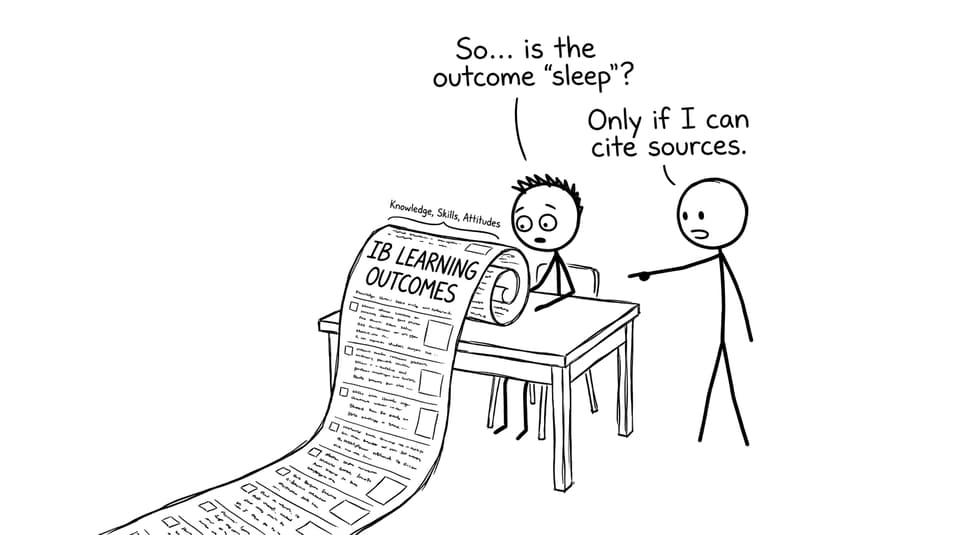
In the IB, learning outcomes are not just content you “covered.” They describe the knowledge, skills, and attitudes you are expected to build across subjects: understanding key concepts, thinking critically, communicating clearly, researching responsibly, and acting with international-mindedness.
In exam season, these outcomes become practical. They explain why two students can read the same chapter and get different results: one has content, the other has outcomes.
If you want the bigger picture of what the IB is and how it is assessed, start with International Baccalaureate (IB).
A quick IB outcomes checklist (save this)
Use this mini checklist to turn IB learning outcomes into a weekly plan:
-
Can I explain the concept in my own words without notes?
-
Can I apply it to an unfamiliar question under time pressure?
-
Do I know what the command term is asking me to do?
-
Can I justify my answer using evidence, not vibes?
-
Have I reviewed feedback and fixed the pattern behind my mistakes?
To run that loop efficiently, many students use RevisionDojo as the “one tab” system: RevisionDojo for IB.
The key IB learning outcomes (and how to train them)
In-depth knowledge across subjects (without over-studying)
The IB rewards coverage, but it also rewards precision: learning what matters, not everything that exists. Build your baseline understanding fast with IB Subject Note Collections: Comprehensive Study Materials, then prove it with targeted practice.
A simple pairing works well: Study Notes for clarity, then Questionbank for conversion into marks. See: IB Question Bank | How to Use It Effectively.
Critical thinking and analytical skill (the “why” behind marks)
Critical thinking in the IB is often code for: “Can you make a defensible claim under constraints?” That means spotting assumptions, using relevant evidence, and writing with structure.
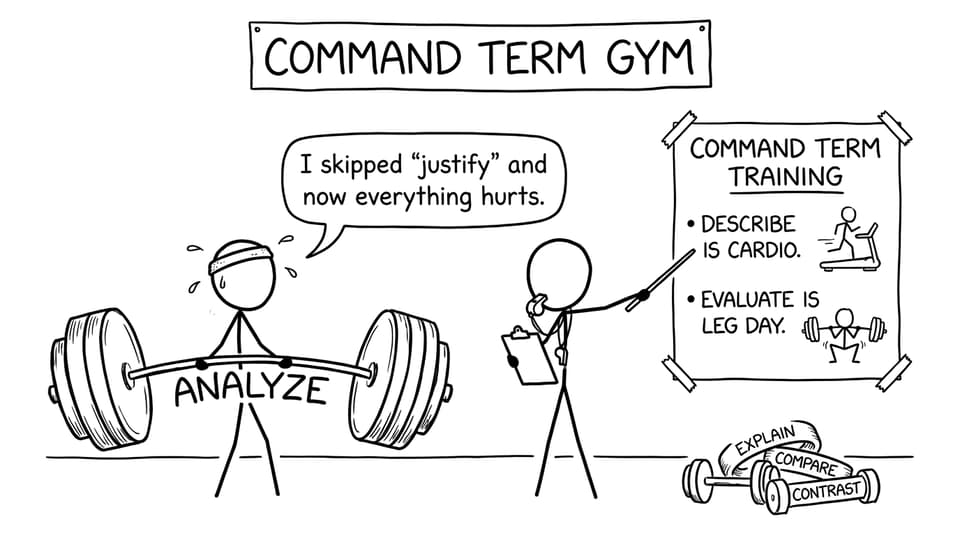
One underrated training method is drilling command terms with feedback. If you are doing Maths, this is especially obvious: IB Math: Targeted Revision Using the Questionbank.
Effective communication (clear answers, calm examiner)
Communication is not just English essays. It is how you label diagrams in Biology, justify steps in Maths, and structure evaluation in Economics. The outcome is simple: the examiner should not have to guess what you mean.
RevisionDojo’s AI Chat can help you rehearse explanations quickly, while Grading tools help you see what “clear” looks like against criteria.
Research and inquiry (especially for coursework)
The IB expects you to research like a small-scale academic: credible sources, consistent reasoning, and original synthesis. This matters directly for IAs, the EE, and TOK.
Two high-leverage resources are IB Coursework Guides and the Shortcut to your best IB coursework feature, where you can learn from exemplars and use grading support to tighten your drafts.
International-mindedness and personal growth (the outcomes you feel later)
These outcomes are easy to underestimate because they do not always show up as a single exam question. But they shape how you select examples, consider perspectives, and reflect in CAS and TOK. Over time, they also change how you handle pressure: less panic, more process.
If you want a skills-first view of exam prep that matches IB outcomes, read Developing IB Core Skills Through RevisionDojo's Integrated Approach.
How to use RevisionDojo to hit IB learning outcomes faster
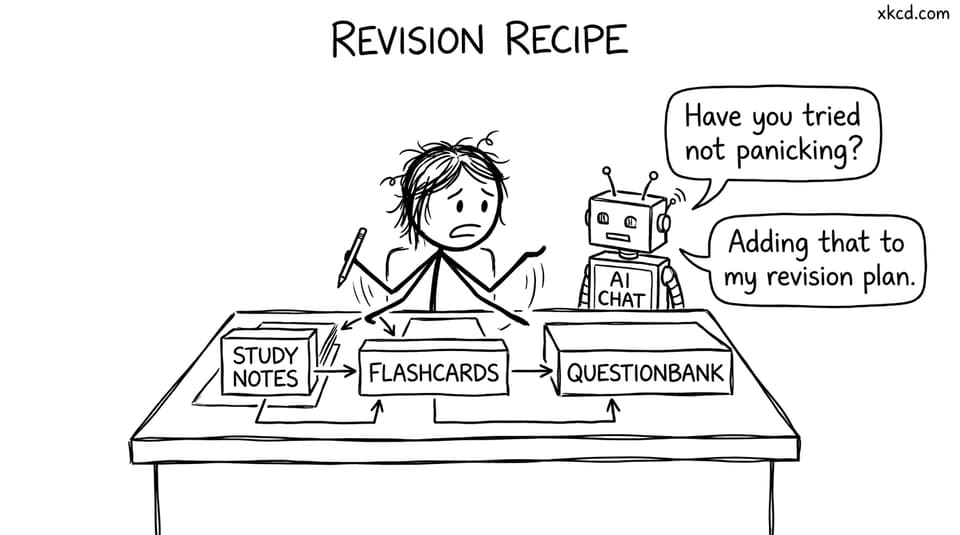
A calm system beats heroic studying. A practical loop many IB students use is:
-
Learn quickly with Study Notes
-
Lock memory with Flashcards
-
Convert knowledge into marks with the Questionbank
-
Get unstuck with AI Chat
-
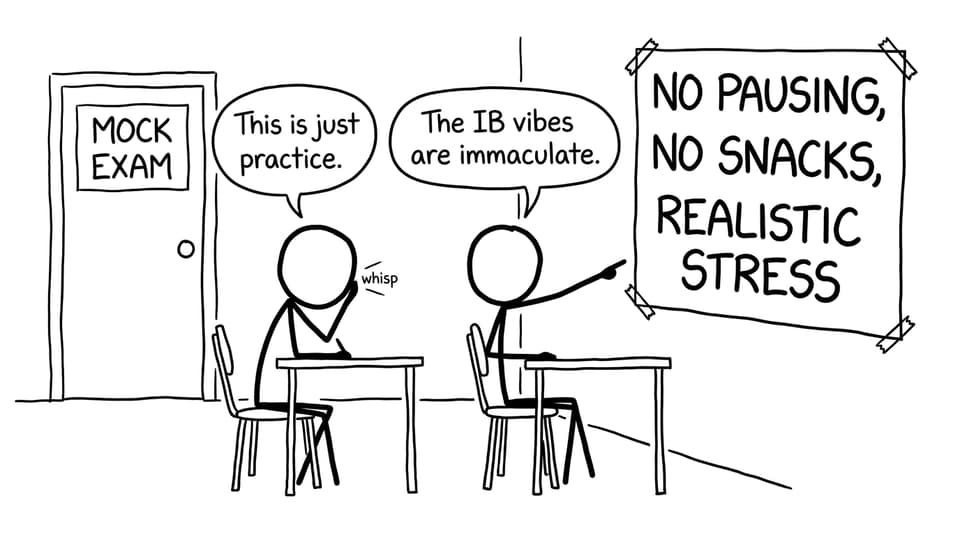
Rehearse pressure with Mock Exams and Predicted Papers
-
Improve writing with Grading tools and the Coursework Library
-
Add targeted support with Tutors when a gap keeps repeating
For exam-condition rehearsal, use IB Predicted Papers by IB Examiners (Free) and (for strategy) Best IB Mock Exam Platform: Why Students Pick RevisionDojo.
Frequently asked questions
Are learning outcomes the same across every IB programme?
The IB philosophy is consistent, but the learning outcomes are shaped differently across programmes like PYP, MYP, and the Diploma Programme. What stays the same is the emphasis on inquiry, reflection, and communication, not just memorisation. In the Diploma Programme, outcomes become closely tied to assessment objectives, command terms, and criteria-based marking. That is why DP students feel outcomes most clearly during practice questions, timed papers, and coursework feedback. If you are revising for DP exams, treat outcomes as performance targets: what you can do under exam conditions. When in doubt, translate the outcome into an action such as “evaluate,” “compare,” or “justify,” then practise that action.
How are IB learning outcomes assessed in real life?
IB learning outcomes show up through a mix of internal assessment, coursework components, and final exams. In exams, you see them in the way questions are written and in how marks are awarded for method, reasoning, and evaluation. In coursework, you see them in criteria that reward research quality, structure, academic honesty, and reflection. Many students miss marks because they only study content, not the outcome being measured by the rubric. The fastest fix is feedback: identify what the examiner wanted, not just what you wrote. Tools like RevisionDojo’s Questionbank, Grading tools, and Coursework Library help you connect outcomes to criteria and then to improved performance.
Can I still improve my IB learning outcomes close to exams?
Yes, because outcomes are skills, and skills respond quickly to focused practice. You do not need a complete restart; you need a tight loop: attempt, review, fix, reattempt. Start by diagnosing one weak area with targeted questions, then use notes to clarify only what you missed. Turn repeated mistakes into flashcards so the fix sticks. Add one timed session each week to build stamina and decision-making under pressure. If you keep getting stuck on the same type of task, get help faster: AI Chat for quick clarification, or Tutors for deeper misconceptions. In the final weeks, small outcome upgrades compound into real marks.
Conclusion: make IB outcomes your advantage
The IB is demanding, but it is also fair in a specific way: it rewards students who know what they are trying to become, not just what they are trying to finish. When you understand IB learning outcomes, revision stops being a pile of tasks and becomes a clearer path from effort to results.
If you want that path in one place, build your routine inside RevisionDojo with Study Notes, Flashcards, Questionbank, AI Chat, Grading tools, Predicted Papers, Mock Exams, Coursework Library, and Tutors. Your IB outcomes are not abstract goals. They are trainable habits, and you can start today.