A quick hook before the numbers
Somewhere in every IB History revision season, there is a moment where you realise the scary part is not the content; it is uncertainty. You can spend hours rewriting notes and still wonder: How many marks do I actually need? Grade boundaries turn that fog into a map. And once you have a map, the work feels calmer, more deliberate, and strangely more possible.
This guide gives you the IB History SL grade boundaries for 2025 (Timezone 1) for the Internal Assessment, Paper 1, Paper 2, and the final grade out of 100, plus practical ways to turn boundary awareness into marks.
Quick checklist (save this for exam week)
-
Know the IB History SL boundary ranges for IA, Paper 1, Paper 2, and the final grade.
-
Identify your fastest mark gains (usually timing, structure, and relevance).
-
Train Paper 1 source skills and Paper 2 argument writing every week.
-
Use a calculator to track progress, not vibes.
-
Build a feedback loop: attempt, grade, fix, re-attempt.
Helpful tabs to keep open while you revise:
IB History SL grade boundaries 2025 (Timezone 1)
Below are the 2025 boundary ranges (TZ1). Treat them like targets for planning your next 2-3 weeks of practice.
Internal Assessment grade boundaries (out of 25)
-
Grade 7: 20-25
-
Grade 6: 16-19
-
Grade 5: 13-15
-
Grade 4: 9-12
-
Grade 3: 6-8
-
Grade 2: 3-5
-
Grade 1: 0-2
Paper 1 grade boundaries (out of 24)
-
Grade 7: 20-24
-
Grade 6: 17-19
-
Grade 5: 15-16
-
Grade 4: 12-14
-
Grade 3: 9-11
-
Grade 2: 5-8
-
Grade 1: 0-4
Paper 2 grade boundaries (out of 30)
-
Grade 7: 23-30
-
Grade 6: 20-22
-
Grade 5: 16-19
-
Grade 4: 13-15
-
Grade 3: 11-12
-
Grade 2: 6-10
-
Grade 1: 0-5
Final IB History SL grade boundaries (out of 100)
-
Grade 7: 77-100
-
Grade 6: 63-76
-
Grade 5: 53-62
-
Grade 4: 39-52
-
Grade 3: 29-38
-
Grade 2: 14-28
-
Grade 1: 0-13
How to use IB History grade boundaries (without obsessing)
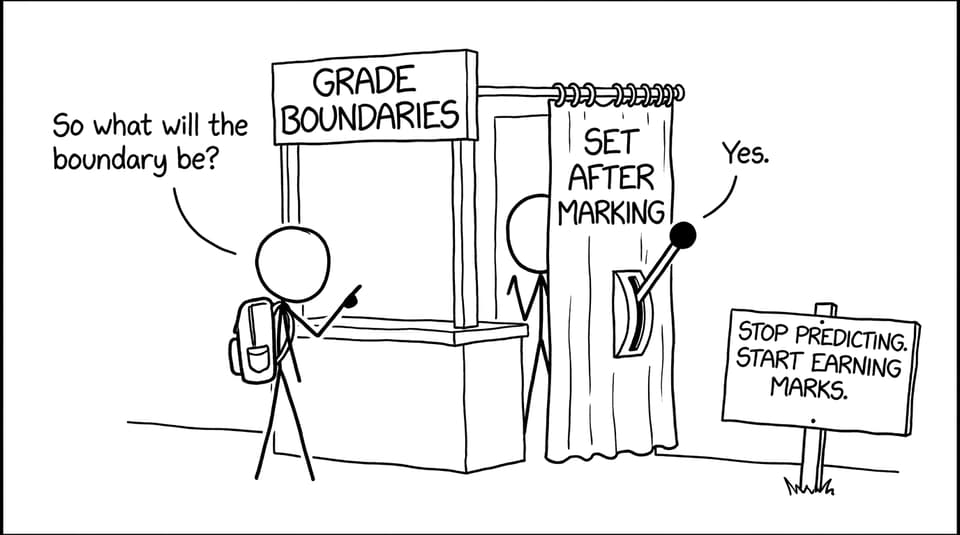
Grade boundaries are set after marking, so you cannot “guess” them perfectly. But in IB History, you do not need perfect predictions to get a strong outcome. You need controllable improvements: clearer thesis statements, tighter paragraph logic, better evidence selection, and cleaner source evaluation.
A smart way to use boundaries is to pick one component to push up first:
-
If Paper 1 is dragging you down, focus on source analysis and comparison routines. Start with targeted practice from the Paper 1: Conflict and Intervention or Paper 1: Rights and Protest topic pages.
-
If Paper 2 is the issue, train argument structure. Use the frameworks in IB History Essay Structure: Plan Fast, Write Better.
-
If your IA is risky, ground it in strong models and examiner-style expectations with IB History Examples.
Mark-boosting tips for each component
Internal Assessment (IA): win marks through evaluation
In IB History, a high IA is rarely about sounding “academic.” It is about being specific: clear research question, deliberate source selection, and evaluation that actually changes your argument. When you get stuck, RevisionDojo’s AI Chat can help you clarify what your paragraph is proving, and the Grading tools help you spot where you are drifting away from the criteria.
Paper 1: make source skills automatic
Paper 1 rewards control: OPVL-style thinking, sharp comparisons, and answers that stay anchored to the question. Build speed with RevisionDojo’s Questionbank (then use AI feedback to see why a response earns the next mark band). For a full Paper 1 routine, use Ace IB History Paper 1 + Paper 2: Tips + Free Resources.
Paper 2: argument beats information
For Paper 2, knowledge is only helpful when it is selective. Two great examples are better than eight random ones. RevisionDojo Study Notes help you cut to the most examinable evidence, and Flashcards keep it retrievable under pressure. If you want a bigger-picture plan, read IB History Exam Prep: A Comprehensive Guide.
Why RevisionDojo helps IB History SL students push into higher boundaries
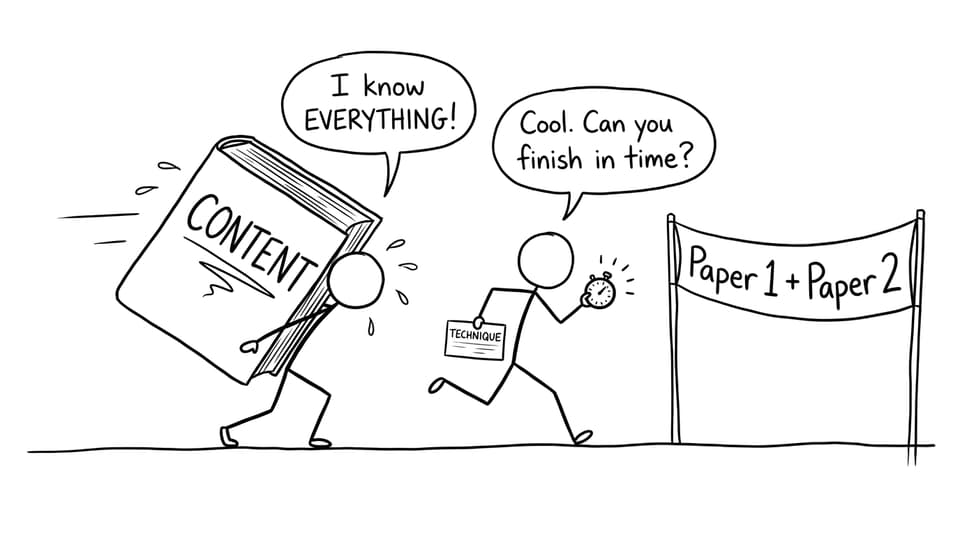
The students who climb grade boundaries in IB History usually do one thing differently: they practise the skill the markscheme rewards.
RevisionDojo is built around that reality:
-
Questionbank for exam-style repetition with feedback
-
Study Notes for clean, syllabus-aligned understanding
-
Flashcards for daily recall that sticks
-
Predicted Papers and Mock Exams for timed rehearsal under pressure (History Predicted Papers and IB History Predicted Papers)
-
AI Chat plus Grading tools to diagnose exactly why marks drop
-
Coursework Library and Tutors when you need examples, structure, and human guidance fast
FAQ
Do IB History grade boundaries stay the same every year?
No, IB History grade boundaries change by session, and sometimes by timezone, because they are set after marking. That means they respond to the difficulty of the papers and how students performed overall. It is normal for boundaries to move slightly up or down. The practical takeaway is to avoid building your plan around a single “magic number.” Instead, use boundaries as a range and aim to build a buffer above the minimum.
If I am weak in one component, can I still get a 6 or 7?
Yes, but you need to be strategic in IB History because each component tests different skills. A strong IA can stabilise your overall score, while Paper 1 and Paper 2 can swing it quickly depending on technique. The key is to identify which component has the fastest improvement curve for you. Often that is Paper 1 timing and structure, or Paper 2 paragraph focus. Use the IB Grade Calculator to test “what-if” scenarios and decide where effort will pay off.
What is the most common reason students miss the top grade boundaries?
In IB History, it is rarely a lack of facts. More often, it is losing marks to avoidable problems: not answering the exact command term, writing paragraphs without a judgement, and dumping evidence without explaining how it proves the point. Timing is another silent mark killer, especially when students overinvest in one question and rush the rest. The fix is unglamorous but powerful: do more timed practice, then review like an examiner. RevisionDojo’s Grading tools and AI feedback make that review faster and more honest.
Closing: turn boundaries into a plan
Grade boundaries do not exist to stress you out. In IB History, they exist to show you how close you might already be, and where a handful of marks can change everything.
If you want to push your score upward efficiently, open the IB History Resources, practise with the Questionbank, lock in recall with Flashcards, and run weekly timed Mock Exams. Then use boundaries as your compass: not to predict the future, but to earn it.