




IB History HL Asia and Oceania Grade Boundaries 2025 (Timezone 2): Complete Breakdown
Somewhere between your third essay plan and your seventh “I’ll start tomorrow,” a quiet fear shows up: What if I’m working hard, but not in the right direction?
That’s why IB History grade boundaries matter. Not as a crystal ball, but as a map. When you know the mark ranges for a 7, 6, or 5 in IB History HL Asia and Oceania (Timezone 2) for 2025, you can stop guessing what “good” looks like and start building a plan that actually converts revision into marks.
Quick checklist: what to do with these IB History boundaries
-
Save the final boundary table and pick a realistic target grade.
-
Translate that target into component goals (IA, Paper 1, Paper 2, Paper 3).
-
Train technique, not vibes: source skills for Paper 1, argument for Papers 2 and 3.
-
Use a feedback loop (timed practice, marking, fixing patterns).
If you want context on how boundaries are set, read IB Grade Boundaries: How They’re Actually Calculated. For quick comparisons across subjects and sessions, bookmark IB Grade Boundaries.
IB History HL Asia and Oceania Grade Boundaries 2025 (Timezone 2)
Below are the official-style ranges as a practical breakdown for IB History HL Asia and Oceania in 2025 (Timezone 2).
Internal Assessment boundaries (out of 25)
-
Grade 7: 20–25
-
Grade 6: 16–19
-
Grade 5: 13–15
-
Grade 4: 9–12
-
Grade 3: 6–8
-
Grade 2: 3–5
-
Grade 1: 0–2
Paper 1 boundaries (out of 24)
-
Grade 7: 20–24
-
Grade 6: 17–19
-
Grade 5: 15–16
-
Grade 4: 12–14
-
Grade 3: 9–11
-
Grade 2: 5–8
-
Grade 1: 0–4
Paper 2 boundaries (out of 30)
-
Grade 7: 23–30
-
Grade 6: 20–22
-
Grade 5: 16–19
-
Grade 4: 13–15
-
Grade 3: 11–12
-
Grade 2: 6–10
-
Grade 1: 0–5
Paper 3 boundaries (out of 45)
-
Grade 7: 31–45
-
Grade 6: 26–30
-
Grade 5: 22–25
-
Grade 4: 17–21
-
Grade 3: 13–16
-
Grade 2: 7–12
-
Grade 1: 0–6
Final IB History HL Asia and Oceania boundaries (out of 100)
-
Grade 7: 74–100
-
Grade 6: 62–73
-
Grade 5: 51–61
-
Grade 4: 39–50
-
Grade 3: 29–38
-
Grade 2: 15–28
-
Grade 1: 0–14
To explore boundary trends for IB History across sessions, see IB History Grade Boundaries. To convert your marks into an estimated grade fast, use the IB Grade Calculator.
How to use IB History grade boundaries to plan your next 14 days
Grade boundaries are not a motivation quote. They’re a decision tool.
Build a component “mark budget”
If a 7 starts at 74/100, ask: where are your marks most likely to come from?
-
If your Paper 1 is stuck, you don’t need “more content” -- you need sharper OPVL, tighter inference, and cleaner mini-claims.
-
If Paper 2 floats between 12 and 18, you need one reliable essay structure and a repeatable evidence kit.
-
If Paper 3 feels endless, you need selection: fewer points, better argued.
For clear routines for Paper 1 and Paper 2, use Ace IB History Paper 1 + Paper 2: Tips + Free Resources. For HL depth, keep IB History Paper 3 Strategies for HL Success open while you practice.
Use RevisionDojo to turn studying into marks
A lot of IB History revision fails quietly: students read, highlight, and feel “busy” -- then freeze when the question is unfamiliar.
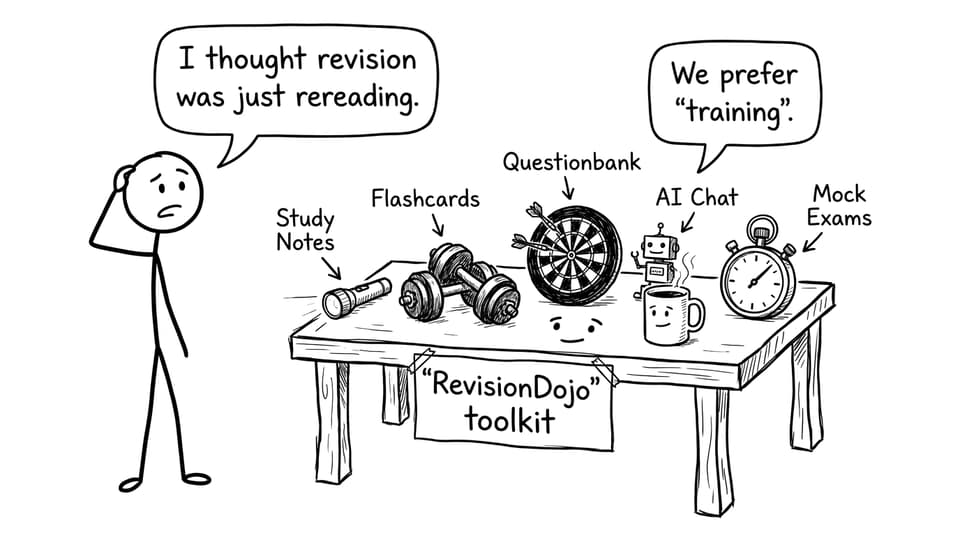
RevisionDojo is built to prevent that. You can:
-
Use the Study Notes in the IB History Resources hub to clarify content fast.
-
Drill exam-style prompts with the Questionbank, for example IB History Paper 2 Questionbank (SL/HL).
-
Reinforce daily recall with Flashcards (short sessions, high consistency).
-
Get unstuck in seconds with AI Chat when a concept or command term won’t click.
-
Run full-timer rehearsals using Mock Exams and Predicted Papers, then use Grading tools to see exactly where marks were lost.
-
Reduce IA stress by checking models and guidance in the Coursework Library.
-
When you need a human plan, use Tutors to diagnose what’s holding your essays back.
If you want the bigger “how to use the platform” picture, read RevisionDojo App: The Smarter Way to Prep for IB Exams.
FAQ: IB History HL Asia and Oceania grade boundaries (TZ2)
Why do IB History grade boundaries change each session?
In IB History, boundaries are set after marking because they respond to how difficult a paper turned out to be and how students performed overall. That means a tougher exam can lead to lower cut scores, and an easier exam can push boundaries up. It also means you can’t “game” the system by trying to predict one exact number. The healthier approach is to treat boundaries as a reference range, then maximize the marks you control. Your writing technique, evidence precision, and relevance under time pressure matter more than boundary speculation. If you want the clearest explanation, RevisionDojo breaks it down in IB Grade Boundaries: How They’re Actually Calculated.
How should I split revision time across Paper 1, Paper 2, Paper 3, and the IA?
Start by looking at your current mark profile, not your comfort zone. Many HL students over-invest in reading content for Paper 3 because it feels productive, while avoiding timed Paper 1 practice because it feels exposing. In IB History, balanced progress usually comes from alternating skills: one day source work, one day essay planning, one day full timed writing. Your IA should be treated like “steady weekly maintenance” once the core structure is set, because last-minute IA panic steals time from exam technique. RevisionDojo helps you keep this balanced by pairing Study Notes with Questionbank practice and Mock Exams, so you can see whether effort is turning into marks. If you’re unsure where to start, the IB History Resources hub gives you a clean overview.
What’s the fastest way to move from a 5 to a 6 in IB History?
The jump usually comes from reducing “soft losses” rather than learning an entirely new chapter. In Paper 2 and Paper 3, that means writing introductions that answer the exact question, building paragraphs around mini-claims, and using evidence that is precise enough to prove the claim. In Paper 1, it means making OPVL points that are specific to the source and directly connected to the question, not generic. The fastest gains come from short feedback loops: do a timed response, mark it honestly, write down two repeat mistakes, then drill those mistakes with targeted practice. RevisionDojo is built for this loop using the Questionbank, AI Chat, and Grading tools, and you can simulate pressure using Mock Exams and Predicted Papers. Over two weeks, this approach often improves both timing and clarity, which is exactly what higher boundaries demand in IB History.
Final thoughts: make grade boundaries useful, not scary
The point of IB History grade boundaries isn’t to add pressure. It’s to give you a clear target so your revision stops being a fog.
Save these IB History HL Asia and Oceania (Timezone 2) 2025 boundaries, set a component goal, and build a simple routine: learn with RevisionDojo Study Notes, retain with Flashcards, practise with the Questionbank, and rehearse with Mock Exams and Predicted Papers until exam day feels familiar. Then check your progress quickly with the IB Grade Calculator.