




If you have ever stared at your IB History revision notes and thought, “I know the content… but do I know what counts?”, you are already asking the right question.
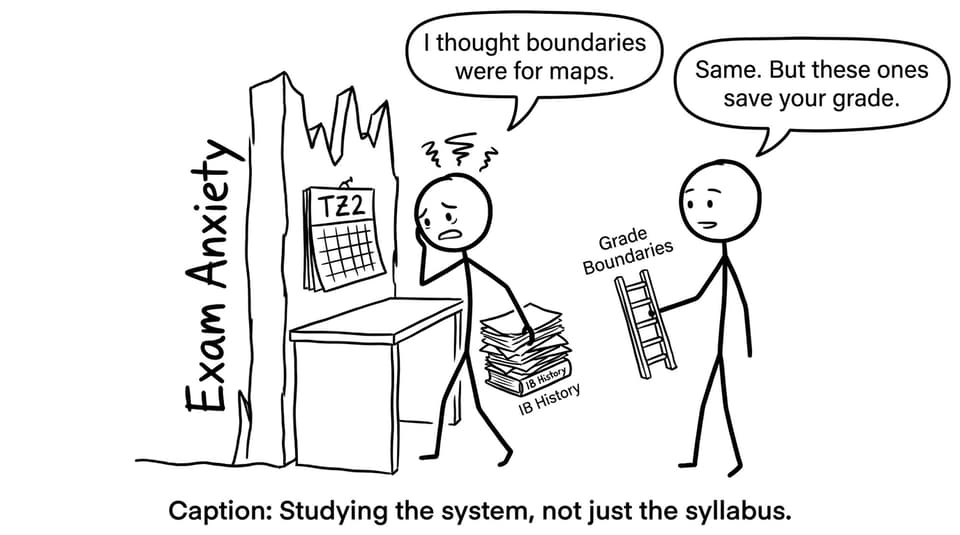
Grade boundaries are not just a post-exam trivia table. In IB History, they are the quiet scoreboard that tells you where the line is between “solid” and “7-worthy” in Timezone 2 (TZ2). When you understand them, you stop revising in panic and start revising with intent.
Quick checklist: how to use these IB History grade boundaries
-
Save the boundary ranges so you can check them in 10 seconds.
-
Identify your fastest mark gains (often Paper 1 technique, or tightening Paper 2 structure).
-
Treat the IA like a mark bank you can build early.
-
Do weekly timed practice so IB History becomes a skill, not just knowledge.
-
Use a tracker to translate component scores into a realistic final target.
Helpful pages to keep open while you study include the IB Grade Boundaries tool and the IB Grade Calculator.
IB History HL Americas grade boundaries 2025 (Timezone 2)
Below are the IB History HL Americas grade boundary ranges for 2025 (TZ2). These are the ranges you should plan around for each component.
Internal Assessment grade boundaries (out of 25)
-
Grade 7: 20–25
-
Grade 6: 16–19
-
Grade 5: 13–15
-
Grade 4: 9–12
-
Grade 3: 6–8
-
Grade 2: 3–5
-
Grade 1: 0–2
Paper 1 grade boundaries (out of 24)
-
Grade 7: 20–24
-
Grade 6: 17–19
-
Grade 5: 15–16
-
Grade 4: 12–14
-
Grade 3: 9–11
-
Grade 2: 5–8
-
Grade 1: 0–4
Paper 2 grade boundaries (out of 30)
-
Grade 7: 23–30
-
Grade 6: 20–22
-
Grade 5: 16–19
-
Grade 4: 13–15
-
Grade 3: 11–12
-
Grade 2: 6–10
-
Grade 1: 0–5
Paper 3 grade boundaries (out of 45)
-
Grade 7: 31–45
-
Grade 6: 26–30
-
Grade 5: 22–25
-
Grade 4: 17–21
-
Grade 3: 13–16
-
Grade 2: 7–12
-
Grade 1: 0–6
Final IB History HL Americas grade boundaries (out of 100)
-
Grade 7: 74–100
-
Grade 6: 62–73
-
Grade 5: 51–61
-
Grade 4: 39–50
-
Grade 3: 29–38
-
Grade 2: 15–28
-
Grade 1: 0–14
What these numbers mean for your IB History strategy
In IB History, small improvements compound because each paper rewards repeatable skills.
Build your “safe marks” first (IA + Paper 1)
Your IA is one of the few parts of IB History you can refine with time. Treat it like disciplined drafting: clear research question, tight evidence selection, and evaluation that actually evaluates.
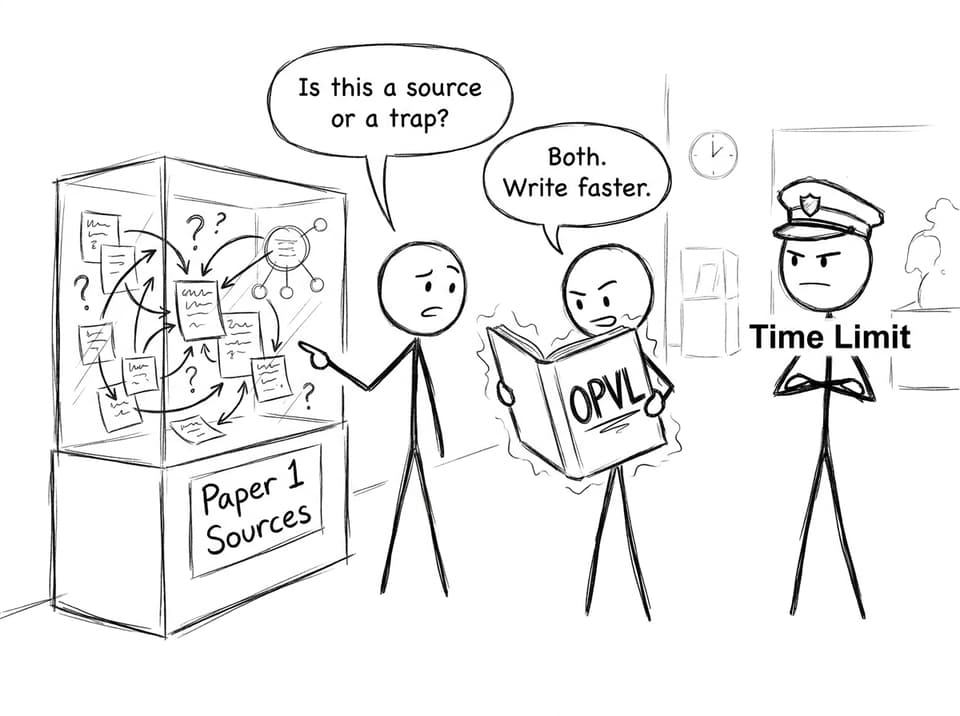
Then, use Paper 1 as a technique project. Source questions reward precision more than personality. If you want targeted support while you practise, the IB History Paper 1: Conflict and Intervention space on RevisionDojo is built for drilling the exact skills you get marked on.
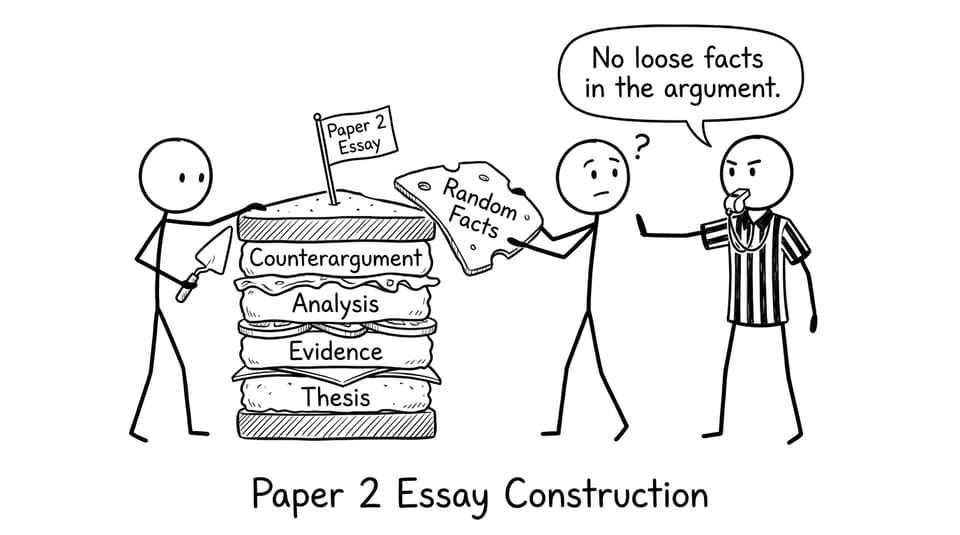
Paper 2 and Paper 3: stop writing “everything you know”
High-scoring IB History essays feel selective. They do not drown the examiner in facts. They choose evidence that proves a claim.
For Paper 3, make depth your personality: theme-first planning, clear line of argument, and at least a light touch of historiography where it fits. If Paper 3 feels like a separate subject, use the Paper 3 strategies guide and the History of the Americas hub to keep revision coherent.
Use RevisionDojo like a feedback loop, not a library
A lot of students collect resources. Strong IB History students collect feedback.
RevisionDojo is designed for that: use Study Notes to clarify, Flashcards to retain, Questionbank to practise by skill, and AI Chat to test your explanations. Then run timed Mock Exams, and use Grading tools to see what your writing is really doing. When you want full exam rehearsal, Predicted Papers and targeted Tutors can turn weak components into reliable points.
If you want a single place to organize your whole plan, start at the RevisionDojo IB History hub and pair it with the IB History exam prep guide.
FAQ: IB History HL Americas grade boundaries (TZ2)
Why do IB History grade boundaries change each year and timezone?
In IB History, grade boundaries are set after marking, not before the exam. That means they respond to how difficult the papers were and how students performed in that specific session. Timezone variations exist because different timezones can sit different versions of the assessment. The goal is not to make things easier or harder for one group, but to keep grading consistent across cohorts. Boundaries also reflect statistical evidence alongside senior examiner judgement. If you want the bigger picture, the grade boundaries explanation article is worth reading once.
Do component boundaries matter, or only the final boundary out of 100?
The final IB History grade is awarded using the total mark out of 100, but component boundaries still matter for strategy. They tell you where “excellent” performance usually sits on each paper. If your Paper 1 score is consistently near a Grade 5 range, you can estimate how much improvement you need to make your final total safer. Component thinking also prevents emotional decision-making like over-revising your favorite topic while ignoring the paper where you lose the most marks. Use the IB Grade Calculator to translate practice scores into clearer targets. The point is not perfection in every component; it is balance.
What is the fastest way to improve in IB History HL Americas?
The fastest improvements in IB History usually come from writing better, not reading more. Start with timed plans: take a question, draft a thesis, pick 3 arguments, and attach specific evidence to each. Then write one body paragraph at full quality to train your analysis. For Paper 1, practise OPVL-style evaluation until it feels automatic under time pressure. For Paper 3, build thematic outlines for your Americas sections so you can adapt quickly in the exam room. RevisionDojo makes this faster because you can move from notes to practice to feedback in one loop, using Questionbank, AI grading, and targeted topic pages like IB History Topic United States (HL).
Closing: turn IB History boundaries into your advantage
Grade boundaries do not tell you what will happen on exam day. They tell you what is possible when your IB History preparation is focused.
If you want to convert these IB History HL Americas grade boundaries (TZ2) into a practical plan, build your loop now: learn with RevisionDojo Study Notes, retain with Flashcards, practise with the Questionbank, and pressure-test with Mock Exams plus Grading tools. That is how the boundary stops being a mystery and starts being a target.