
A calmer way to read IB grade boundaries
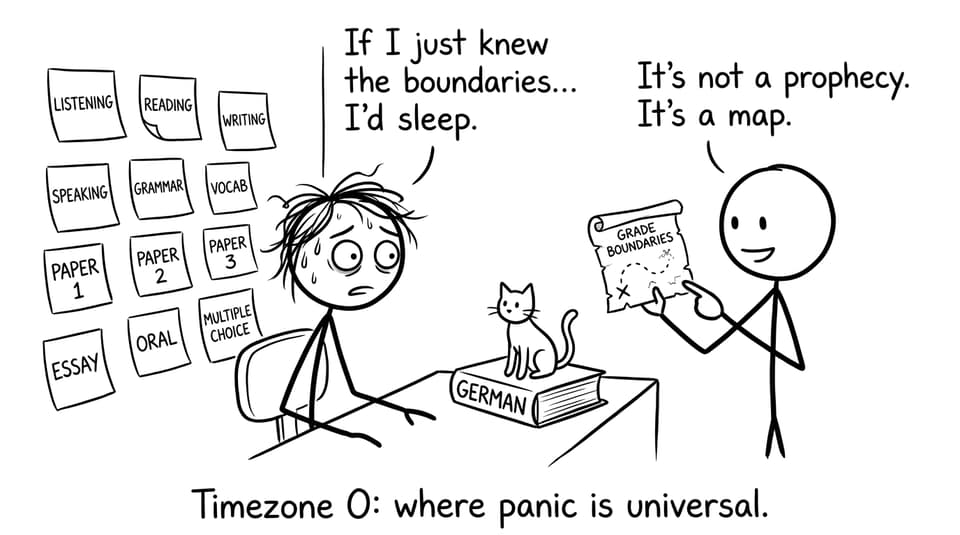
The night before an IB exam, your brain turns simple numbers into weather forecasts: “If the boundary moves, I’m done.” But grade boundaries aren’t a prophecy. They’re a map. And for IB German B SL, that map gets especially useful when you can see each component side by side: Oral, writing, listening, reading, and the final grade.
This guide gives you the full IB German B SL grade boundaries 2025 for Timezone 0 (TZ0), plus a practical way to use them to plan revision without spiralling.
Quick checklist (use this before you revise)
-
Know what each IB component is out of (30, 30, 25, 40, then 100 total).
-
Pick one “fast win” skill per week (e.g., listening inference, oral fluency, text-type structure).
-
Train to the format, not the vibe: timed practice beats re-reading.
-
Track your marks with a calculator and targets, not guesses.
For a structured home base for the course, start with IB German B Resources and build from there.
IB German B SL grade boundaries 2025: complete breakdown (Timezone 0)
Below are the IB German B SL boundaries for TZ0. Use them as ranges to set realistic targets, not as a reason to aim for perfection.
Internal Assessment (Oral) grade boundaries (out of 30)
-
Grade 7: 27-30
-
Grade 6: 22-26
-
Grade 5: 16-21
-
Grade 4: 11-15
-
Grade 3: 6-10
-
Grade 2: 3-5
-
Grade 1: 0-2
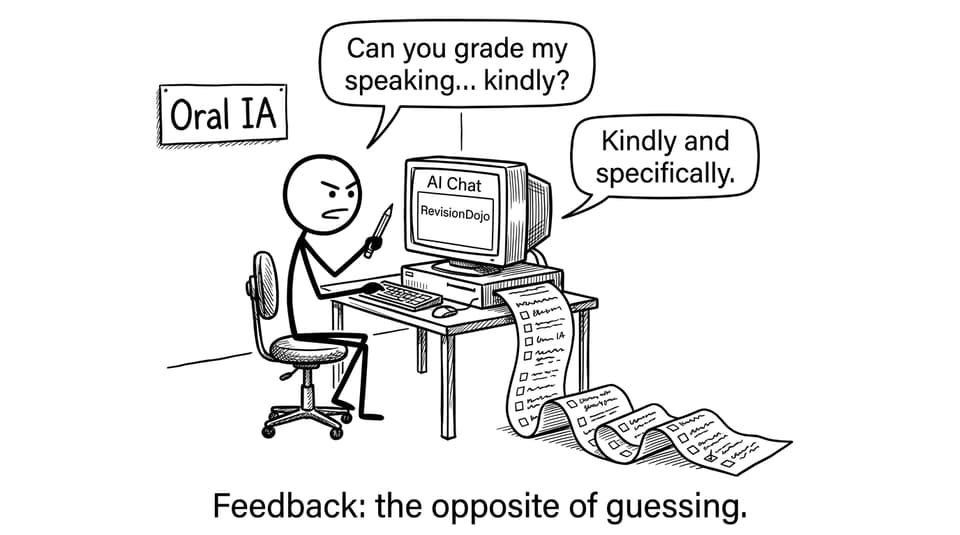
If your Oral feels shaky, use RevisionDojo’s AI Chat to rehearse follow-up questions and tighten your responses, then check exemplars in the IB German B Examples library for what “controlled, clear, cultural” sounds like.
Paper 1 (Writing) grade boundaries (out of 30)
-
Grade 7: 25-30
-
Grade 6: 20-24
-
Grade 5: 15-19
-
Grade 4: 10-14
-
Grade 3: 7-9
-
Grade 2: 4-6
-
Grade 1: 0-3
Writing improves fastest when you stop trying to “sound advanced” and start trying to be accurate under time pressure. Build templates with the IB German B Text Types (Textsorten) notes, then drill exam-style prompts using RevisionDojo Study Notes, Flashcards, and the Questionbank.
Paper 2 Listening grade boundaries (out of 25)
-
Grade 7: 20-25
-
Grade 6: 17-19
-
Grade 5: 13-16
-
Grade 4: 10-12
-
Grade 3: 7-9
-
Grade 2: 4-6
-
Grade 1: 0-3
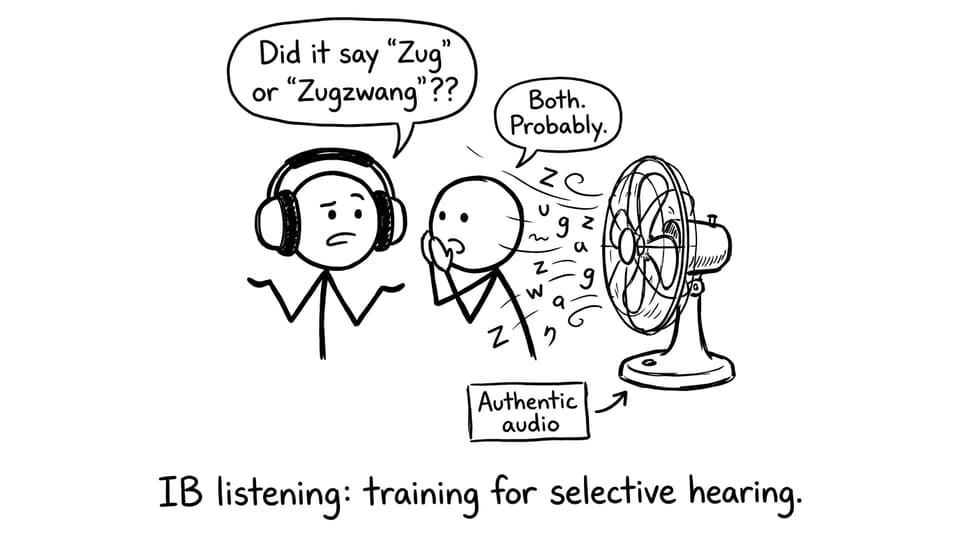
Listening is where many IB students lose marks they could have kept. The trick isn’t “understanding every word.” It’s learning to catch intent, numbers, connectors, and the speaker’s shift in opinion.
Paper 2 Reading grade boundaries (out of 40)
-
Grade 7: 32-40
-
Grade 6: 26-31
-
Grade 5: 21-25
-
Grade 4: 15-20
-
Grade 3: 8-14
-
Grade 2: 4-7
-
Grade 1: 0-3
For reading, train your eyes to move like an examiner’s: skim for structure, then hunt for evidence. The IB German B Paper 2 Reading Notes are a strong starting point, and the IB German B Core Themes page helps you organise vocabulary by what actually appears in assessments.
Final IB German B SL grade boundaries (out of 100)
-
Grade 7: 81-100
-
Grade 6: 66-80
-
Grade 5: 50-65
-
Grade 4: 35-49
-
Grade 3: 21-34
-
Grade 2: 10-20
-
Grade 1: 0-9
To turn these IB boundaries into an action plan, plug your current scores into the IB Grade Calculator. It’s one of the fastest ways to see which component will move your final grade with the least effort.
How to use IB boundaries to study smarter (not harder)
A helpful mental model: boundaries tell you where “small improvements become visible.” If you’re sitting around a mid-5, you don’t need to suddenly become fluent; you need a repeatable way to gain a few marks in two components.
Try this simple approach:
-
If Oral is low: practise shorter, cleaner answers with better organisation; use Tutors for live feedback, then repeat with AI Chat.
-
If Writing is low: master 2-3 text types, and write timed openings and conclusions; revise with Grading tools.
-
If Listening/Reading are low: do short daily sets, review mistakes, and build theme vocab with Flashcards.
For topic-by-topic practice loops, use IB German B Lessons and IB German B Exercises. If you need platform-wide practice, start from the Questionbank feature page.
FAQ
Why do IB grade boundaries differ across components?
In IB German B SL, each component measures a different kind of skill, so the mark patterns naturally vary. The Oral rewards clarity, interaction, and cultural engagement, which can produce higher clusters for students who practise speaking consistently. Writing depends heavily on task fulfilment and text-type conventions, so a small format mistake can cap your score even if your German is good. Listening and reading are more “evidence-based”: either the meaning is supported by the text/audio or it isn’t. Because those skills distribute marks differently, the IB grade boundaries for each paper land in different ranges. The important takeaway is that you can compensate; you don’t need to be perfect everywhere to reach your target.
How is the final IB German B SL grade calculated from these boundaries?
The boundaries above show the final grade bands out of 100 for IB German B SL in 2025 TZ0. Your overall mark is built from the weighted components (Oral, Paper 1, Paper 2 listening, Paper 2 reading), then converted into a final number out of 100. That’s why it’s useful to think in points, not vibes: a few marks gained in listening might be worth more than a huge effort elsewhere, depending on your current profile. The easiest way to see this is to enter your component scores into the IB Grade Calculator. Once you know your “most valuable” component, you can design revision that pays you back quickly. This is where RevisionDojo’s Mock Exams, Predicted Papers, and Grading tools help you practise under realistic pressure and improve with feedback.
Which component is usually the most challenging for IB German B SL students?
It depends on your learning history, but many IB students find receptive skills hardest under time pressure. Listening can feel unforgiving because you can’t re-check details the way you can with reading. Reading becomes difficult when questions test nuance, tone, or implication rather than vocabulary you can translate. The Oral can also be stressful because it’s live, but it’s often the most trainable: repetition builds confidence faster than students expect. Writing is the most “rule-based” challenge, since text-type features and organisation matter as much as language accuracy. A balanced plan uses RevisionDojo Study Notes for structure, Flashcards for theme vocabulary, and AI Chat plus Tutors for speaking practice that feels real.
Final takeaway: treat boundaries like a map, then practise like it matters
If you’re preparing for IB German B SL, the IB German B SL grade boundaries 2025 (Timezone 0) are a planning tool: they show where effort turns into points. Use them to pick targets, then build a routine that actually changes your marks.
Start with IB German B Resources, practise with RevisionDojo’s Questionbank, strengthen weak areas with Study Notes and Flashcards, and use AI Chat, Grading tools, Mock Exams, Predicted Papers, and Tutors to turn practice into measurable improvement.