


You know the feeling: you finish a listening section, replay it in your head on the walk home, and start bargaining with the universe. Surely that was enough for a 6. Or maybe a 7.
In the IB, that bargaining usually ends the same way: you go looking for grade boundaries. Not because you want certainty (you won’t get it), but because you want something solid to plan around. This guide gives you the IB French B SL grade boundaries 2025 (Timezone 0) in a clean breakdown, plus a calm way to use them while you revise.
Quick checklist: how to use IB grade boundaries (without spiraling)
-
Save the component boundaries so you can check them in 10 seconds.
-
Convert your target grade into per-component targets (oral, writing, listening, reading).
-
Pick the most improvable component first (often Paper 1 structure or Paper 2 listening habits).
-
Practise like it’s the exam: timed, then reviewed, then reattempted.
-
Track progress with a tool, not vibes (RevisionDojo makes this easy).
If you also want broader boundary context across subjects, keep IB Grade Boundaries open while you revise.
IB French B SL grade boundaries 2025 (Timezone 0)
Below are the official 2025 boundary ranges for IB French B SL in TZ0, split by component. Think of each table as a map: it shows where “close” becomes “comfortably there.”
IB French B SL Internal Assessment grade boundaries (out of 30)
-
Grade 7: 27-30
-
Grade 6: 22-26
-
Grade 5: 16-21
-
Grade 4: 11-15
-
Grade 3: 6-10
-
Grade 2: 3-5
-
Grade 1: 0-2
For oral prep that actually matches the course demands, start with IB French B Resources and build routines around the Individual Oral format.
IB French B SL Paper 1 grade boundaries (out of 30)
-
Grade 7: 26-30
-
Grade 6: 21-25
-
Grade 5: 17-20
-
Grade 4: 12-16
-
Grade 3: 9-11
-
Grade 2: 5-8
-
Grade 1: 0-4
If Paper 1 is where you leak marks, use the Paper 1 topic hub and then tighten your basics using Notes for Paper 1.
IB French B SL Paper 2 Listening grade boundaries (out of 25)
-
Grade 7: 20-25
-
Grade 6: 17-19
-
Grade 5: 14-16
-
Grade 4: 11-13
-
Grade 3: 7-10
-
Grade 2: 4-6
-
Grade 1: 0-3
For listening-specific practice, go straight to IB French B Paper 2 Listening and train your ear with exam-style pacing.
IB French B SL Paper 2 Reading grade boundaries (out of 40)
-
Grade 7: 34-40
-
Grade 6: 29-33
-
Grade 5: 23-28
-
Grade 4: 18-22
-
Grade 3: 13-17
-
Grade 2: 7-12
-
Grade 1: 0-6
Final IB French B SL grade boundaries (out of 100)
-
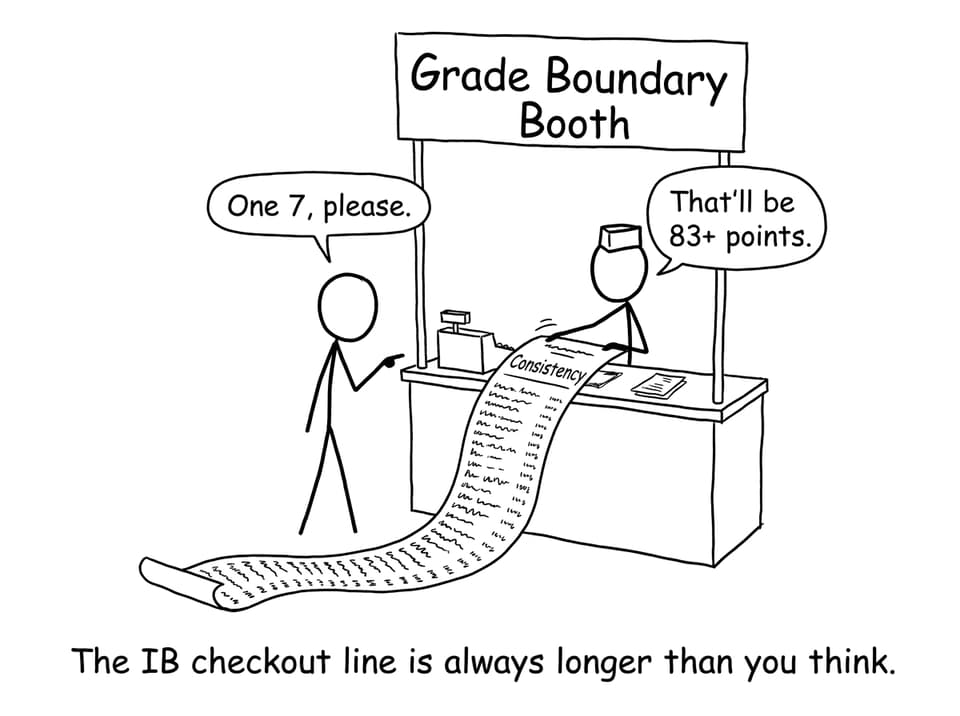
Grade 7: 83-100
-
Grade 6: 69-82
-
Grade 5: 54-68
-
Grade 4: 39-53
-
Grade 3: 25-38
-
Grade 2: 13-24
-
Grade 1: 0-12
To sanity-check how your component marks translate into a final result, use the IB Grade Calculator.
What these IB boundaries mean for your revision strategy
Grade boundaries don’t tell you what to study. They tell you where points start to matter.
If you’re hovering around a 5/6 border, your best return is usually cleaner exam technique, not “harder vocabulary.” In IB French B SL, that often looks like:
-
Oral: clearer structure (intro, two or three developed points, short conclusion) and fewer long pauses.
-
Paper 1: choosing a text type you can execute reliably, then delivering a clear message with correct register.
-
Listening: training the habit of predicting answers and moving on quickly when you miss one detail.
-
Reading: focusing on inference and reference rather than translating every word.
RevisionDojo is built for this kind of targeted improvement: Study Notes for clarity, Flashcards for daily recall, a Questionbank for exam-style practice, and AI Chat for quick explanations when you get stuck. Add Grading tools for writing feedback, Predicted Papers and Mock Exams for pressure practice, plus the Coursework Library and Tutors when you want examples and coaching.
For a syllabus-first way to review, use IB French B Revision Notes (SL/HL) and organise your practice around themes like IB French B Core Themes.
FAQ: IB French B SL grade boundaries 2025 (Timezone 0)
Why do IB grade boundaries differ by component?
In the IB, each component tests a different skill, and the mark ranges reflect that. The Individual Oral rewards spoken fluency, interaction, and how well you develop ideas aloud under pressure. Paper 1 is heavily about communicating a message in the right format and register, not just “knowing French.” Paper 2 listening and reading are receptive skills, where you earn marks for accurate comprehension and inference. Because the tasks are different, the distribution of marks is different, so boundaries are set separately for each component. Thinking in components helps you revise strategically instead of revising “French” as one blurry thing.
How is the final IB French B SL grade calculated from these boundaries?
Your final result in IB French B SL is built by combining your component marks into a total mark out of 100. That total is then matched to the final grade boundary range (for example, 69-82 for a 6 in TZ0 in 2025). This is why consistency matters: a strong oral can steady a weaker reading paper, and vice versa. It also explains why chasing perfection in one part can be less effective than improving your weakest component by a few marks. If you want to model different scenarios, the IB Grade Calculator makes the conversion much easier. Treat it like a planning tool, not a prophecy.
Which IB French B SL component is usually hardest to improve quickly?
For many IB students, the hardest quick win is Paper 2 listening, because it’s partly a habit and confidence problem. You can know the vocabulary and still lose marks if you panic, fixate on one missed detail, or stop predicting what the question is actually asking. Reading can also feel tough because the exam rewards inference, reference tracking, and careful selection of evidence, not full translation. Paper 1, however, is often more improvable in a short window because structure and text type conventions can be trained. The oral sits in the middle: it improves fastest when you practise with a repeatable plan and get feedback. If you need a structured approach, start with the IB French A & B Exam Structure Explained guide to align your practice with what the IB actually rewards.
Closing thought: make the IB boundary your calm target
The point of knowing IB French B SL grade boundaries for 2025 (Timezone 0) isn’t to obsess over cutoffs. It’s to set a clear target, then build margin with the work you control: better structure, cleaner technique, smarter practice.
If you want one home base for that process, use RevisionDojo to connect everything in one loop: Study Notes for clarity, Flashcards for recall, Questionbank sets for targeted practice, AI Chat when you’re stuck, and Mock Exams when you’re ready to simulate the pressure. The IB rewards calm consistency, and so does RevisionDojo.