
If you have ever walked out of an IB Chinese B SL practice and thought, “That felt decent… but what does ‘decent’ even mean in marks?”, you are not overthinking. Grade boundaries are the quiet translator between effort and outcome. They do not reward stress. They reward precision.
This guide gives you the IB Chinese B SL grade boundaries for 2025 (Timezone 0), plus a simple way to use them to plan your revision with less guessing and more control.
Quick checklist: how to use IB grade boundaries
-
Save the boundary ranges where you can see them in 10 seconds.
-
Identify your “easiest marks to improve” (often timing, structure, or clarity).
-
Train all four skills weekly: speaking, writing, listening, reading.
-
Use targeted resources, not generic language practice.
Helpful hubs to keep open while you revise:
IB Chinese B SL grade boundaries 2025 (Timezone 0)
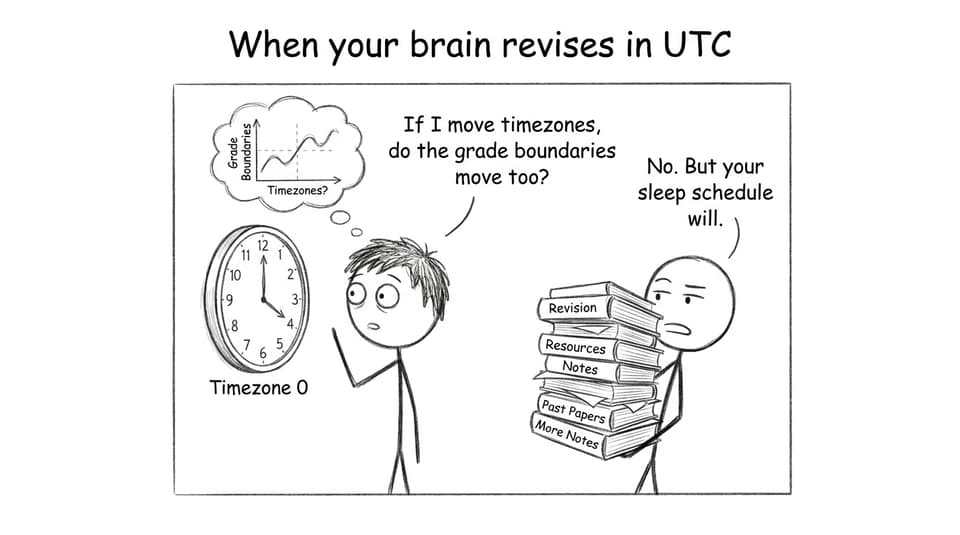
Below are the 2025 IB Chinese B SL boundaries for TZ0. Treat them like a map: they show where small improvements start to change your final grade.
Internal Assessment (Oral, out of 30)
-
Grade 7: 27-30
-
Grade 6: 22-26
-
Grade 5: 16-21
-
Grade 4: 11-15
-
Grade 3: 6-10
-
Grade 2: 3-5
-
Grade 1: 0-2
For oral confidence and structure, pair practice with Building Confidence for the IB Chinese B Oral and use RevisionDojo’s AI Chat to rehearse follow-up questions until you stop freezing.
Paper 1 (out of 30)
-
Grade 7: 27-30
-
Grade 6: 24-26
-
Grade 5: 20-23
-
Grade 4: 17-19
-
Grade 3: 12-16
-
Grade 2: 6-11
-
Grade 1: 0-5
Writing improves fastest when feedback is immediate. Use RevisionDojo Study Notes, Flashcards, and the Grading tools to tighten text type conventions and accuracy. See Writing Strategies for IB Chinese B and How to Improve Writing in IB Chinese B.
Paper 2 Listening (out of 25)
-
Grade 7: 21-25
-
Grade 6: 18-20
-
Grade 5: 15-17
-
Grade 4: 12-14
-
Grade 3: 8-11
-
Grade 2: 4-7
-
Grade 1: 0-3
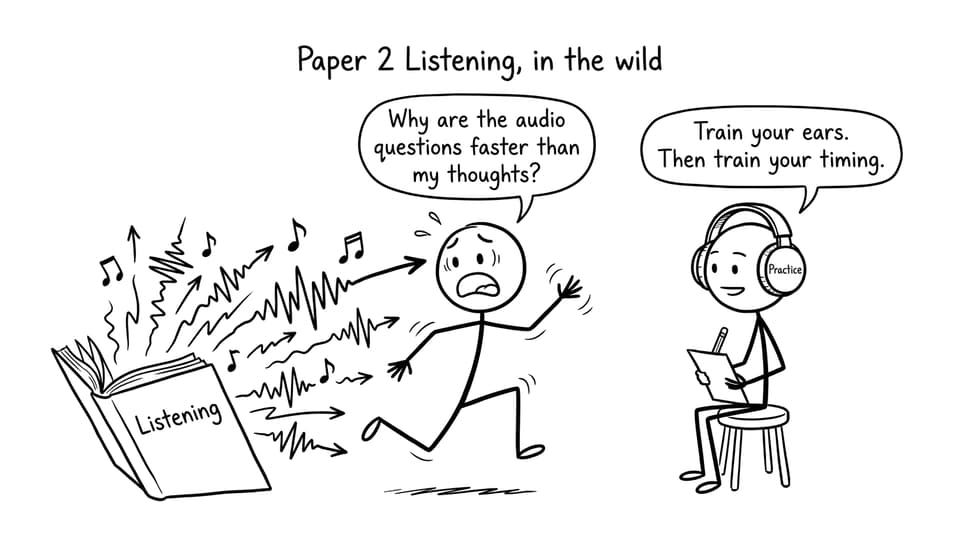
Train listening like a sport: short sessions, high consistency. Use Paper 2 Listening Strategies and build weekly drills in RevisionDojo’s Questionbank and Mock Exams.
Paper 2 Reading (out of 40)
-
Grade 7: 31-40
-
Grade 6: 26-30
-
Grade 5: 20-25
-
Grade 4: 15-19
-
Grade 3: 10-14
-
Grade 2: 5-9
-
Grade 1: 0-4
Reading marks often hide in technique: scanning, inference, and not overthinking one line. Use Reading Skills Notes and practice with timed sets inside RevisionDojo’s Exam Builder.
Final IB Chinese B SL grade boundaries (out of 100)
-
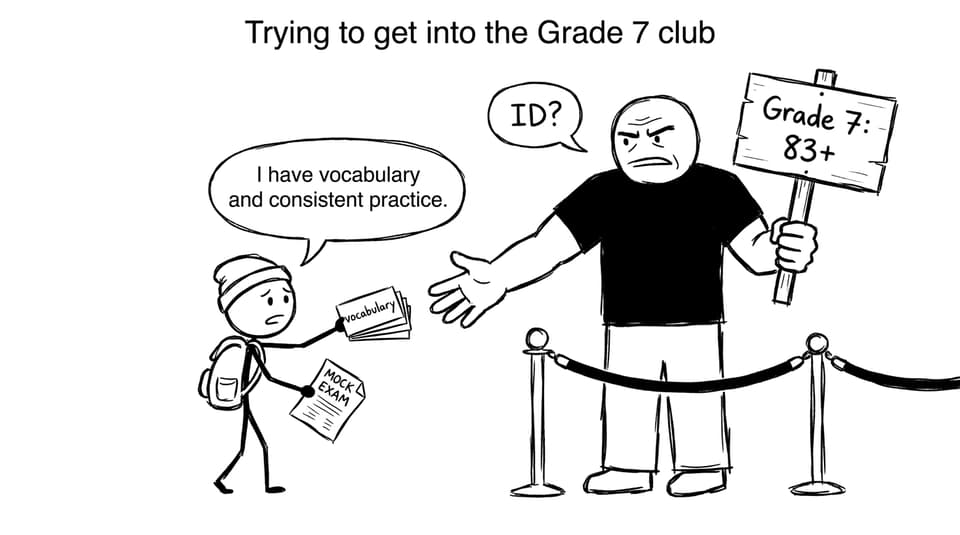
Grade 7: 83-100
-
Grade 6: 70-82
-
Grade 5: 55-69
-
Grade 4: 42-54
-
Grade 3: 27-41
-
Grade 2: 12-26
-
Grade 1: 0-11
What to do with these IB Chinese B SL boundaries
The best use of IB grade boundaries is not prediction. It is calibration.
-
If your Paper 1 is hovering around 20-23, you are living on the Grade 5 edge. Your next jump is usually structure: clearer opening, stronger connectors, better register.
-
If Listening is stuck at 12-14, it is rarely “vocabulary only.” It is timing, attention drift, and not having a repeatable note system.
-
If Reading is near 26-30, aim for a buffer by training inference questions, not just detail hunting.
RevisionDojo helps you build that buffer with Predicted Papers, timed Mock Exams, a syllabus-aligned Coursework Library for examples, and optional Tutors when you need a human eye.
FAQ
Are IB grade boundaries fixed before the exam?
No. In the IB, grade boundaries are set after marking, once examiners can see how difficult the paper was and how students performed overall. This is why the same raw mark can feel “worth more” in one session than another. It also explains why it is smarter to train for mastery rather than gamble on a boundary being low. Your job is to maximize the marks you can control: clarity, technique, and consistency. If you want the bigger picture, read IB Grade Boundaries: How They’re Actually Calculated. It will make the whole system feel less mysterious.
How do I estimate my final IB grade while revising?
Use a calculator instead of vibes. Start with your recent component scores, then compare them to the TZ0 boundary ranges above to see where you are realistically landing. Next, use a tool like the IB Grade Calculator to track your progress as you retake timed sections. The key is updating your estimate after each focused improvement cycle, not after random practice. RevisionDojo makes this easier because your Questionbank performance, Mock Exams, and marked writing can be tracked in one place. Over a few weeks, you will see which component moves fastest for you.
Which component is usually hardest in IB Chinese B SL?
For many IB students, Paper 2 Reading feels hardest because it punishes two things at once: slow decoding and overthinking. The texts are designed to test inference, tone, and purpose, not just “Do you know this word?” That means improving is less about cramming vocabulary and more about reading with a plan: skim for structure, then scan for evidence. A second common struggle is Listening, especially when attention drops halfway through. The fix is boring but effective: short, timed drills several times per week. If you want a clean overview of what each component demands, use What to Expect from IB Chinese B Exams 2025.
Final thought
In IB Chinese B SL, boundaries are not a threat. They are a ruler. Once you can measure, you can improve.
Bookmark these IB Chinese B SL grade boundaries for 2025 (Timezone 0), then build your routine around the skills that move your score fastest. When you are ready to make revision feel structured, use RevisionDojo’s Study Notes, Flashcards, AI Chat, Questionbank, Grading tools, Predicted Papers, and Mock Exams to turn practice into points.