
The night before a Chinese A assessment, most IB students don’t fear the reading or the writing.
They fear the mystery math at the end: What score becomes a 6? How close am I to a 7? Grade boundaries feel like a locked door. But when you can see the numbers clearly, revision stops being emotional and starts being strategic.
This guide breaks down the IB Chinese A: Language and Literature SL grade boundaries 2025, then shows how to use them to plan your next two weeks of practice.
Quick checklist: what to do with IB grade boundaries
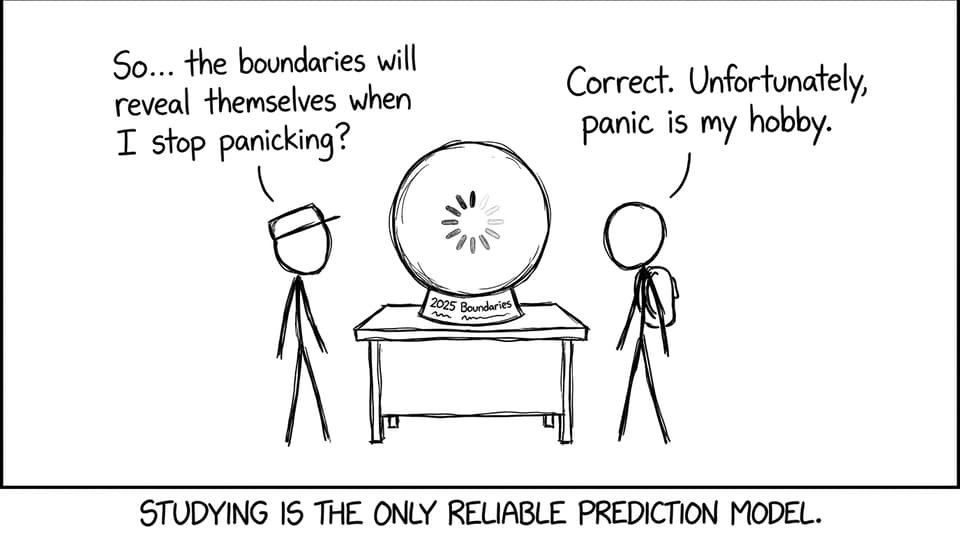
Use this mini-plan to turn IB grade boundaries into actual study decisions:
-
Pick your weakest component (Oral, Paper 1, or Paper 2).
-
Convert the boundary gap into points (example: “I’m 5 marks from a 6”).
-
Do targeted practice sets in the right format.
-
Get feedback fast, then rewrite one paragraph or one oral segment.
If you want one home base for that loop, start with the IB Chinese A Lang & Lit hub and keep everything (practice, notes, feedback) in one place.
IB Chinese A SL 2025 grade boundaries (Language and Literature)
These IB Chinese A SL grade boundaries 2025 are shown by component, so you can see exactly where marks come from.
Internal Assessment (Oral), out of 40
-
Grade 7: 34-40
-
Grade 6: 29-33
-
Grade 5: 24-28
-
Grade 4: 19-23
-
Grade 3: 13-18
-
Grade 2: 7-12
-
Grade 1: 0-6
Paper 1, out of 20
-
Grade 7: 19-20
-
Grade 6: 16-18
-
Grade 5: 13-15
-
Grade 4: 10-12
-
Grade 3: 7-9
-
Grade 2: 4-6
-
Grade 1: 0-3
Paper 2, out of 30
-
Grade 7: 24-30
-
Grade 6: 20-23
-
Grade 5: 17-19
-
Grade 4: 13-16
-
Grade 3: 9-12
-
Grade 2: 5-8
-
Grade 1: 0-4
Final IB Chinese A SL grade boundaries, out of 100
-
Grade 7: 84-100
-
Grade 6: 70-83
-
Grade 5: 58-69
-
Grade 4: 44-57
-
Grade 3: 30-43
-
Grade 2: 15-29
-
Grade 1: 0-14
For more IB grade boundary context across subjects and sessions, you can also explore the main International Baccalaureate (IB) page.
How to use IB boundaries to revise smarter (not longer)
The boundaries matter because they tell you what “enough” looks like.
If you’re sitting at a mid-5, you don’t need a perfect everything. In IB Chinese A SL, a few extra marks often come from repeatable skills: clearer thesis statements, tighter paragraph structure, and more precise links between technique and effect.
Here’s a practical way to allocate time:
-
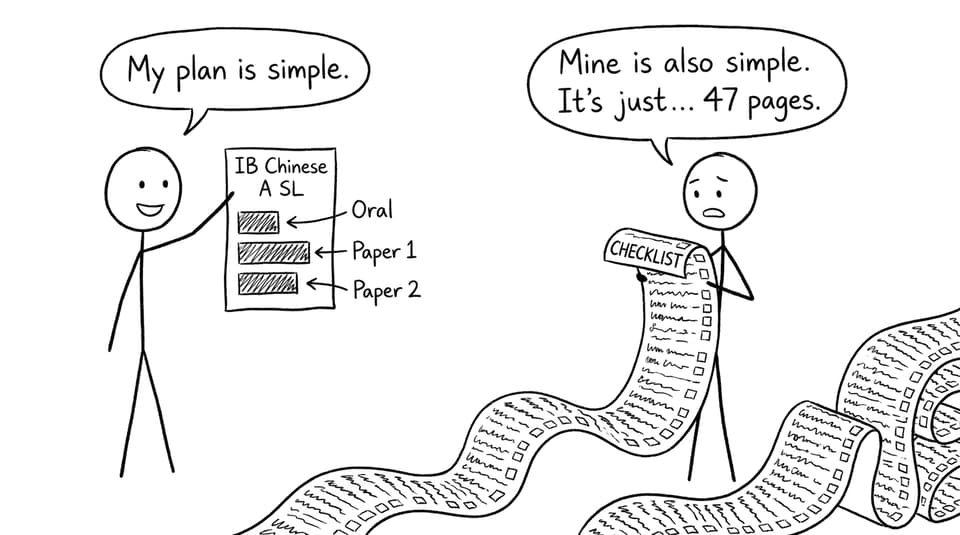
Oral (IA): Record 2 minutes, listen once, and fix only one thing (organization, diction, or textual reference). Then record again.
-
Paper 1: Train fast annotation and planning. Use timed, exam-style prompts from the IB Chinese A Lang & Lit Questionbank or go straight into Chinese Paper 1 Questionbank practice.
-
Paper 2: Build comparison routines (theme, authorial choice, context). Then drill with Chinese Paper 2 Questionbank practice.
When you need feedback without waiting days, RevisionDojo’s AI Chat and Grading tools help you pressure-test thesis clarity and paragraph logic quickly, while Mock Exams and Predicted Papers give you realistic timing reps.
FAQ: IB Chinese A SL grade boundaries 2025
Are IB grade boundaries the same for every school?
No, and that’s what makes them confusing at first. IB grade boundaries are set for an exam session and depend on overall performance, not on your specific teacher or school cohort. Your school can give predicted grades or internal benchmarks, but the final boundaries shown here reflect the session-wide scale. That’s why students in different schools can feel very different levels of “difficulty” yet end up mapped onto the same boundaries. The useful part is that boundaries convert your progress into numbers you can track. Once you know the mark ranges, you can set realistic weekly targets.
Which component should I prioritize to climb one grade?
Start with the component where you can gain marks fastest with a repeatable method. For many IB students, Paper 1 improves quickly because structure and technique-analysis links can be trained under time pressure. For others, the Oral is the best opportunity because practicing delivery and sequencing can add clarity without needing new content knowledge. Paper 2 often takes longer because it relies on deeper text knowledge and comparison skill, but it also rewards planning routines. A simple rule: if you’re within 3-6 marks of the next boundary, prioritize the component you do most often each week. Consistency compounds.
How can RevisionDojo help me use IB grade boundaries more effectively?
RevisionDojo is built to turn IB targets into daily practice. The Questionbank lets you practice Paper 1 and Paper 2 skills in exam style, then refine your responses with fast feedback. Study Notes and Flashcards help you keep technique vocabulary, thematic ideas, and comparison points ready to use under pressure. AI Chat supports quick clarification when you’re stuck on interpretation or structure, and the Grading tools help you improve drafts by focusing on criteria rather than guesswork. When you’re ready to simulate the real thing, Mock Exams and Predicted Papers give you timed practice that feels like the exam room. And if you need human guidance, Tutors can help you diagnose what’s actually holding your marks back.
Closing: turn IB boundaries into calm momentum
Grade boundaries don’t predict your future. They just reveal the distance between today’s draft and tomorrow’s score.
Use these IB Chinese A SL grade boundaries 2025 as a map, pick one component to lift first, and run short cycles of practice plus feedback. If you want the fastest setup, open the IB Chinese A Lang & Lit hub and build your next week around Questionbank drills, Flashcards, and a timed Mock Exam. Your confidence won’t come from hoping the boundary is kind. It comes from training like you’ve seen the door code already.