


RevisionDojo logoRevisionDojo logo
PricingSchools
  1. Home
  2. /Blog
  3. /IB Languages: How Universities and Employers View Bilingualism

IB Languages: How Universities and Employers View Bilingualism

IB Languages
RevisionDojo Team
•Last updated: 19 Jul 2026•7 min read
Jojo holding a cookie

This site uses cookie tracking technologies. Learn more in our Cookie Policy.

/5 from students worldwide
ShareShare on

Bilingualism can feel like a quiet superpower. You spend months shaping sentences, learning how tone changes meaning, and discovering that the “same” idea lands differently in different cultures. Then someone asks, “So… does it actually matter?”

For IB Languages students, that question usually arrives right before exams, right before university applications, or right before you wonder if all those oral recordings were worth it. The honest answer: yes, bilingualism matters a lot. But universities and employers don’t value it the way students assume. They’re not collecting languages like trophies. They’re looking for signals of how you think, work, and relate to other people.
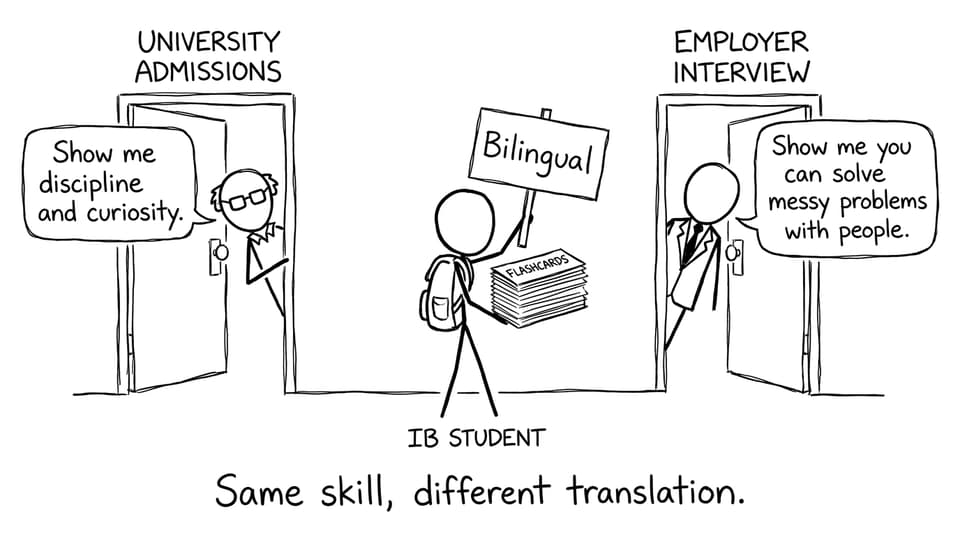
University vs employer view of bilingualism

Quick checklist: what “bilingual advantage” really means

Use this as your simple filter while you revise IB Languages and plan your next steps:

  • Can you prove your level (not just claim it)?

  • Can you show discipline (long-term practice, feedback, improvement)?

  • Can you show cultural competence (not stereotypes, real nuance)?

  • Can you use language for outcomes (persuade, explain, negotiate, support)?

  • Can you connect language to a domain (medicine, business, law, STEM, education)?

If you want a solid home base for that journey, start with the IB Languages posts, then build a routine using the RevisionDojo app exam-prep workflow.

How universities interpret IB Languages on an application

Universities tend to read IB Languages as evidence, not decoration.

First, language study signals academic discipline. It’s one of the few subjects where progress is visibly cumulative: vocabulary, grammar, registers, and cultural references compound over time. Admissions teams know this, even if they don’t speak your language.

Second, languages hint at global readiness. Not the vague “international mindset” line, but the practical ability to read, write, and think beyond one default cultural lens. That matters for humanities degrees, international programs, and any course where discussion, interpretation, and argument are central.

Third, strong IB Languages performance often correlates with communication skill across the board: clearer writing, sharper audience awareness, and better structure under time pressure.

To support your exam performance while keeping that long-term story intact, RevisionDojo helps you turn knowledge into results: you can practise with the Questionbank, tighten recall with Study Notes routines like Digital IB Study Notes: Access Anywhere, Anytime, and pressure-test your responses with AI feedback.

How employers actually value bilingualism

Employers usually don’t hire you because you “know Spanish” or “took French B.” They hire you because you reduce friction.

In the workplace, bilingualism becomes valuable when it helps you:

  • Communicate across stakeholders (clients, patients, partners, teams)

  • Prevent misunderstandings (tone, expectations, implied meaning)

  • Solve messy people-problems (conflict, persuasion, trust)

  • Move faster in global contexts (documents, meetings, cultural norms)

This is why employers often ask for examples, not labels. Saying “fluent” is a starting point. Showing where you used language to achieve something is the proof.
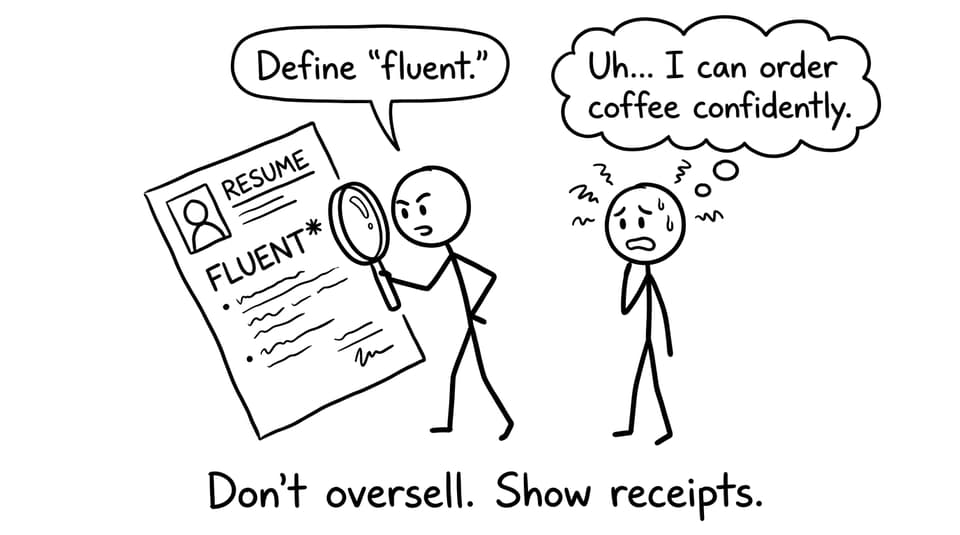
Recruiter checks “fluent” claim

Where bilingualism is a serious advantage

Some industries consistently reward language skills, especially when paired with domain knowledge:

  • Healthcare (patient trust, accurate explanations, empathy)

  • Law and diplomacy (precision, cultural nuance, negotiation)

  • Business and finance (relationship-building, international clients)

  • Education (language teaching, multilingual support roles)

  • STEM research (global collaboration and documentation)

The common thread: communication has consequences. A small misunderstanding can become a big cost.

How to showcase IB Languages without sounding generic

A strong way to present IB Languages is to link them to outputs:

  • Certifications or course level (and what you can do at that level)

  • Real tasks: tutoring, translating for a club, volunteering, running bilingual events

  • Evidence of skill: writing samples, presentations, recorded speaking practice

If you’re studying a specific course, link your prep to concrete practice. For example, language B students can use a targeted hub like IB French B resources or IB Spanish B resources to train the exact skills assessed, not just “general language.”

And if you’re in English A, the same principle applies: strong communication is built through feedback loops. RevisionDojo’s IB English study techniques transfer surprisingly well to language learning, especially for structure, audience, and clarity.
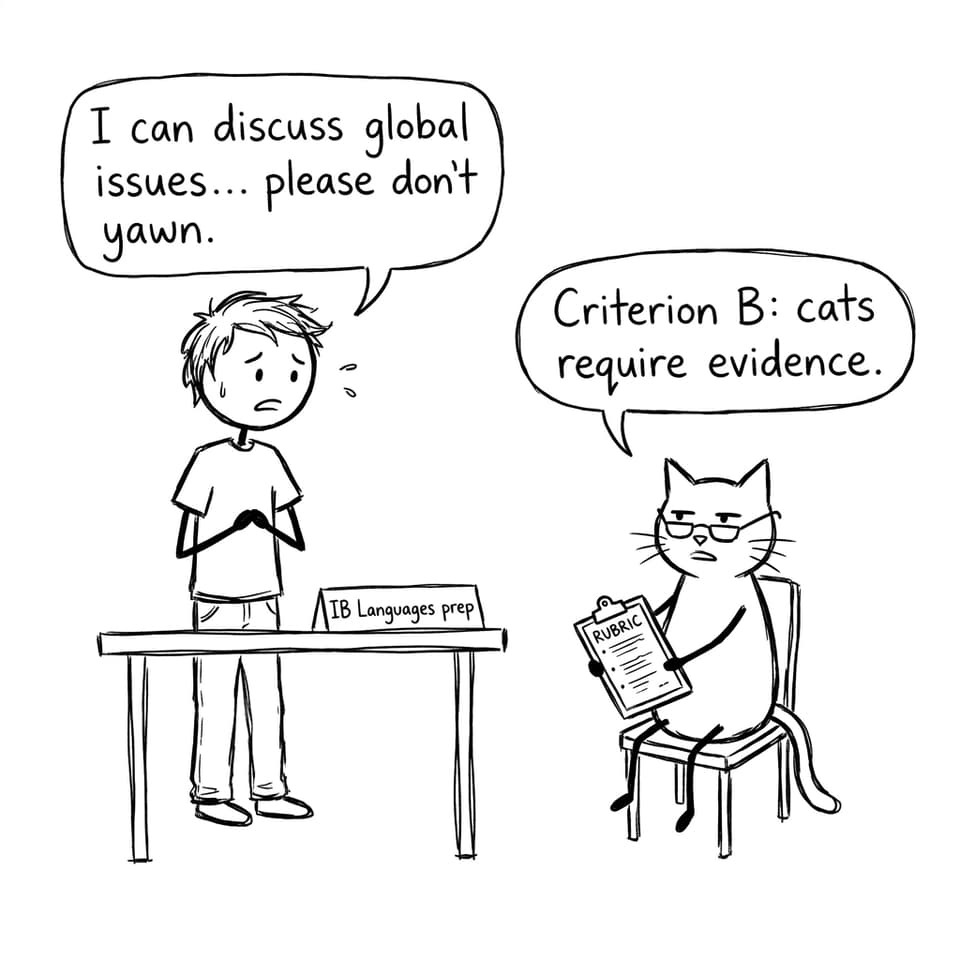
Cat examiner judges oral practice

Conclusion: make bilingualism measurable

The world doesn’t reward bilingualism because it sounds impressive. It rewards bilingualism because it reduces confusion and increases trust.

So treat IB Languages the same way you treat any high-scoring IB skill: prove it with practice, feedback, and real outputs. Build fluency that survives pressure, not just fluency that exists in your head.

If you want one place to do that, RevisionDojo is built for it: Study Notes to learn fast, Flashcards to retain, Questionbank to apply, AI Chat and Grading tools to refine, Predicted Papers and Mock Exams to simulate exam conditions, plus a Coursework Library and Tutors when you need examples or human guidance. Your bilingualism becomes more than a line on a form. It becomes a skill you can demonstrate on demand.

How helpful was this article?
Add as a preferred source on Google

Continue studying with RevisionDojo

  • IB Coursework GraderCheck an IA, EE, or TOK draft against IB assessment criteria.
  • IB Coursework ExamplesLearn from high-scoring coursework across IB subjects.
  • IB Grade CalculatorEstimate an IB grade using session-specific boundaries.
  • IB Grade BoundariesExplore historical grade boundaries by subject and session.

Join 650k+ students breezing through the IBReady to breeze through the IB?

Footer

General

  • For parents
  • For schools
  • Pricing
  • Gift RevisionDojo
  • Tutoring
  • IB syllabus
4.6
X
Share on WhatsApp
Share on LinkedIn
Share on Facebook

Frequently Asked Questions

  • MYP syllabus
  • Blog
  • Research
  • Features

    • Jojo AI
    • Questionbank
    • Notes
    • Flashcards
    • Test builder
    • Exam mode
    • Coursework
    • Coursework grader
    • Coursework examples
    • Predicted papers
    • IB grade calculator
    • Grade boundaries

    Research

    • State of learning survey
    • IB Moderation Analysis
    • Jojo AI vs ChatGPT
    • Jojo AI vs Gemini
    • Jojo AI vs Perplexity
    • Jojo AI vs Claude
    • Jojo AI vs Poe

    Platform

    • RevisionDojo vs Others
    • Content philosophy
    • Trustpilot
    • Join usWe're hiring
    • Terms and conditions
    • Privacy policy
    • Cookie policy
    • Trust Center

    MYP Subjects

    • MYP Biology
    • MYP Chemistry
    • MYP English Lang & Lit
    • MYP Extended Mathematics
    • MYP History
    • MYP Individuals & Societies
    • MYP Physics
    • MYP Standard Mathematics
    • MYP Biology
    • MYP Chemistry
    • MYP English Lang & Lit
    • MYP Extended Mathematics
    • MYP History
    • MYP Individuals & Societies
    • MYP Physics
    • MYP Standard Mathematics

    IB Subjects

    • Arabic ab initio
    • Arabic B
    • Biology
    • Business Management
    • Chemistry
    • Chinese A Lang & Lit
    • Chinese B
    • Computer Science (CS)
    • Computer Science (First Exam 2027)
    • Design Technology (DT)
    • Design Technology (First Exam 2027)
    • Digital Society (DS)
    RevisionDojo logo

    © 2022 - 2026 RevisionDojo (MyDojo Inc)

    RevisionDojo was developed independently of the IBO and as such is not endorsed by it in any way.

    GDPR compliantDownload on the App Store

    Related Articles

    IB Languages · 6 min read

    Consecutive IB Languages Exam Days: What to Expect

    IB Languages exams on consecutive days feel brutal. Learn what to expect, common mistakes, and a calm plan to stay sharp across back-to-back papers.

    IB Languages · 6 min read

    IB Languages: Paper 1 vs Paper 2 Timing and Strategy

    IB Languages Paper 1 vs Paper 2 explained: timing, mindset, and strategy for writing, reading, and listening so you prepare smarter and score higher.

    IB Languages · 7

    Back-to-Back IB Languages Exams: A Calm Prep Plan

    IB Languages exam prep for back-to-back papers: build stamina early, avoid cramming, and use RevisionDojo tools to stay sharp across days.

    IB Languages · 8

    IB Languages and University Planning: Parent Role

    IB Languages students juggle exams and applications. Learn the right parent role in university planning: timelines, perspective, and support without stress.

    IB Languages · 9

    IB Languages: Chinese B Tips for Non-Native Learners

    IB Languages guide to Chinese B for non-native learners: study habits, vocab, listening, writing, and oral tips plus RevisionDojo tools to improve fast.

    IB Languages · 10

    IB Languages: IB Chinese B Vocabulary Word Banks by Theme

    IB Languages students: build IB Chinese B vocabulary faster by creating themed word banks. Get a simple workflow, key themes, and exam-ready tips.

  • Economics
  • English A Lang & Lit
  • English A Lit
  • English B
  • Environmental systems and societies (ESS)
  • French A
  • French ab initio
    • French B
    • Geography
    • German A
    • German ab initio
    • German B
    • Global Politics
    • History
    • Mathematics Analysis and Approaches (AA)
    • Mathematics Applications & Interpretation (AI)
    • Philosophy
    • Physics
    • Psychology
    • Psychology (First Exam 2027)
    • Spanish A
    • Spanish ab initio
    • Spanish B
    • Sports, exercise and health science (SEHS)
    • Theory of Knowledge (TOK)
    • Arabic ab initio
    • Arabic B
    • Biology
    • Business Management
    • Chemistry
    • Chinese A Lang & Lit
    • Chinese B
    • Computer Science (CS)
    • Computer Science (First Exam 2027)
    • Design Technology (DT)
    • Design Technology (First Exam 2027)
    • Digital Society (DS)
    • Economics
    • English A Lang & Lit
    • English A Lit
    • English B
    • Environmental systems and societies (ESS)
    • French A
    • French ab initio
    • French B
    • Geography
    • German A
    • German ab initio
    • German B
    • Global Politics
    • History
    • Mathematics Analysis and Approaches (AA)
    • Mathematics Applications & Interpretation (AI)
    • Philosophy
    • Physics
    • Psychology
    • Psychology (First Exam 2027)
    • Spanish A
    • Spanish ab initio
    • Spanish B
    • Sports, exercise and health science (SEHS)
    • Theory of Knowledge (TOK)
    min read
    min read
    min read
    min read