
Your brain does something strange in a foreign language exam. The ideas you could express effortlessly in your first language suddenly feel expensive, as each sentence costs time, confidence, and attention.
That’s why high-scoring IB Languages essays aren’t built on “sounding fluent.” They’re built on choices you can control under pressure: a simple plan, a reliable structure, and language you can actually execute. In IB Languages, clarity is persuasive. And persuasive is memorable.
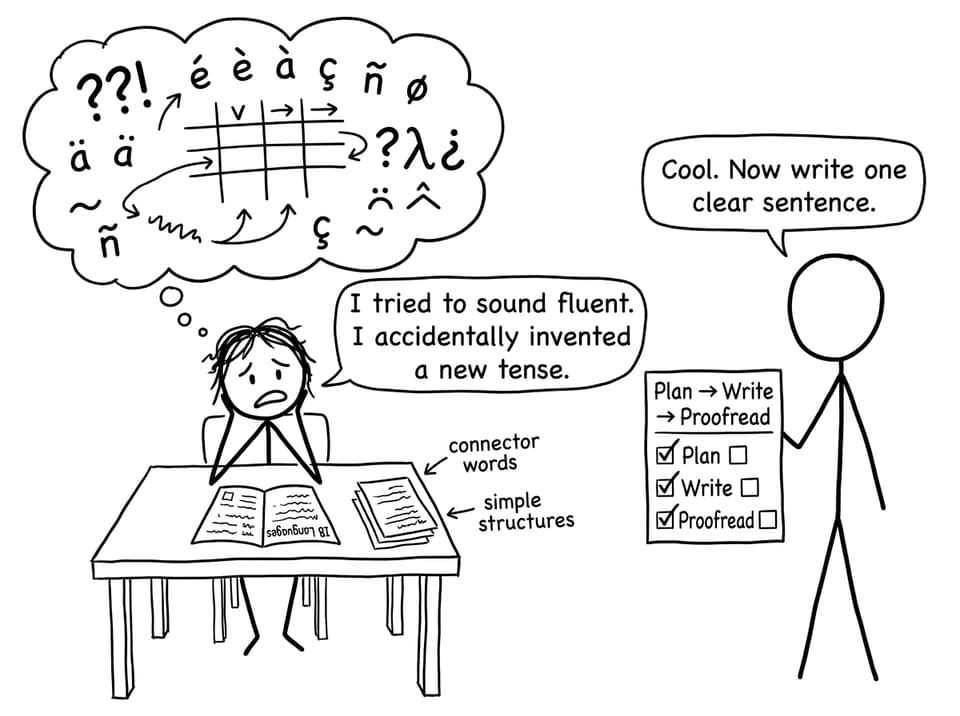
A quick checklist for a perfect foreign language exam essay
Use this as your pre-flight routine for IB Languages writing:
-
Identify the task: what are you being asked to do (argue, evaluate, compare, persuade)?
-
Decide your audience and tone (formal/informal) and stick to it.
-
Spend 5-10 minutes on a micro-plan (thesis + 2-3 points).
-
Write in a clean structure: intro, body paragraphs, conclusion.
-
Show range, but only with grammar and vocabulary you trust.
-
Reserve 5-10 minutes to proofread for agreement, tenses, accents, and spelling.
If you want a broader exam routine, pair this with The Ultimate Guide to Revision for IB Students.
Understand the prompt like an examiner
In IB Languages, prompts are usually designed to test more than language. They test whether you can shape meaning for a purpose. Before you write anything, underline the instruction words and constraints.
Ask:
-
Am I expected to express an opinion, discuss both sides, or recommend a solution?
-
What theme am I in (identities, experiences, social organization, etc.)?
-
What must I include to fully answer the question?
A useful habit is to translate the prompt into a one-sentence “mission statement” in your head. If every paragraph doesn’t serve that mission, it’s probably filler.
For targeted writing guidance aligned to productive skills, see Tips for Writing a Successful Language B Essay.
Plan fast: the 10-minute outline that saves your marks
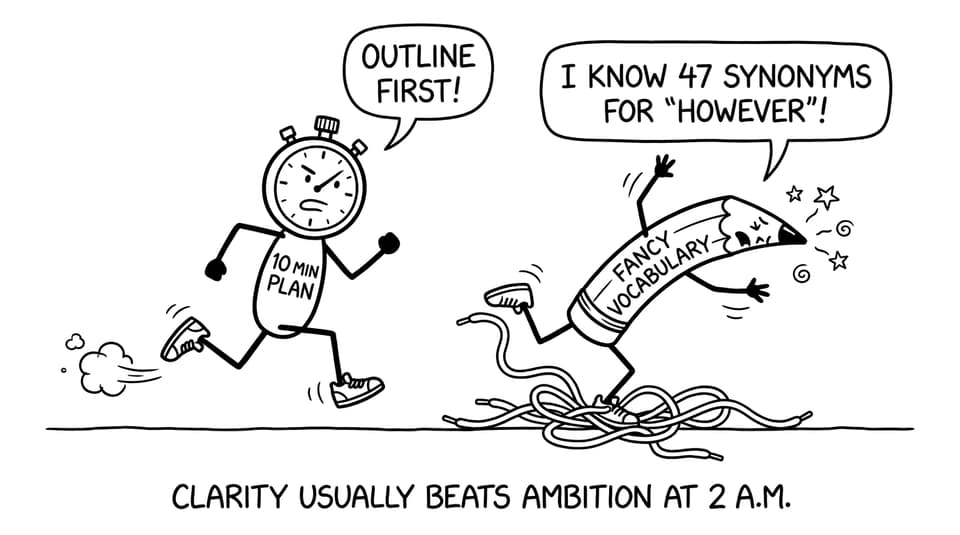
Planning feels like lost time until you’ve written 300 words and realize you’ve drifted off-topic. In IB Languages, a short plan is insurance.
Try this quick template:
-
Thesis/position (1 line): What do you believe or argue?
-
Point 1: Claim + one example (personal, cultural, or general).
-
Point 2: Claim + one example.
-
Point 3 (optional): Counterpoint or nuance.
-
Conclusion note: Restate thesis + final thought.
This approach also helps you avoid the trap of “grammar spirals,” where one ambitious sentence breaks your flow.
Use a structure that always works in IB Languages
Examiners don’t award extra marks for surprise. They award marks for coherence. A dependable structure in IB Languages looks like this:
Introduction: small, clear, controlled
-
Rephrase the prompt.
-
State your thesis.
-
Signpost your two or three main points.
If thesis-writing is a weak spot, borrow the discipline from English essay skills: Effective Thesis Statements for English A Essays.
Body paragraphs: one idea per paragraph
For each paragraph:
-
Topic sentence (your point)
-
Support (example, explanation, mini-story)
-
Link back to the question
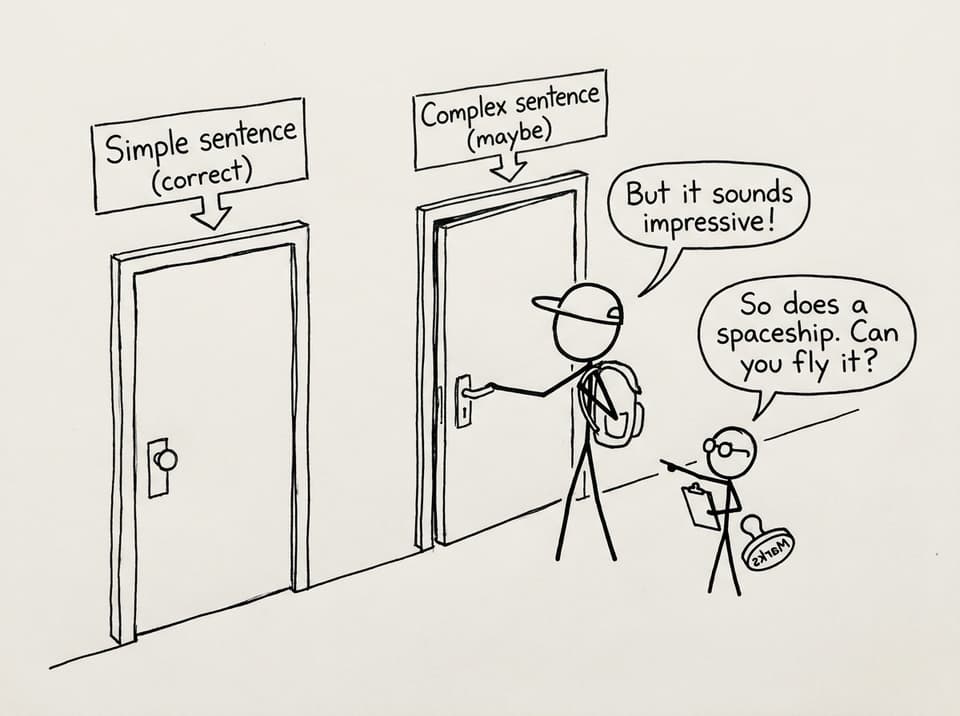
Use connectors you can spell and place correctly. Repetition of a few accurate linking phrases is better than a graveyard of half-correct transitions.
Conclusion: land the plane
-
Summarize your points in one tight sentence.
-
Restate your thesis in fresh words.
-
Add one final insight (implication, recommendation, or reflection).
Show range without overcomplicating your language
The highest-scoring IB Languages essays usually have a quiet confidence: varied language that stays accurate.
Aim for controlled variety:
-
Mix sentence lengths (short for clarity, longer for explanation).
-
Use a couple of different time frames (past experience + present reality + future suggestion).
-
Add one or two idiomatic phrases only if you are certain.
A surprisingly effective rule: if you can’t say it out loud without hesitating, don’t write it in the exam.
Time management for IB Languages exam essays
A practical split for IB Languages writing:
-
10 minutes: prompt analysis + plan
-
25-30 minutes: writing
-
5-10 minutes: proofreading
That last block is where marks quietly appear: agreement fixes, tense consistency, missing accents, and awkward phrasing you can simplify.
To build stamina under timed conditions, RevisionDojo’s Predicted Papers and Mock Exams (inside the platform tools) are ideal, so you practice the same pressure you’ll face on exam day.
How RevisionDojo helps you train writing that holds up in the exam
Most students don’t need “more content.” They need a feedback loop.
RevisionDojo is built for that loop: practice, mark, fix, repeat. You can draft responses using Study Notes and Flashcards, then pressure-test them with Mock Exams and Predicted Papers. When you want targeted improvement, the Questionbank gives you exam-style prompts, and AI Chat helps you rework sentences without losing your voice. If you’re unsure how your writing fits the criteria, the Grading tools and Essay Marker make gaps obvious fast.
For language-specific hubs, start here:
And if you’re building stronger habits outside class, read How to Actually Improve Your IB Language B Outside the Classroom.
Conclusion: the perfect essay is the one you can execute
The perfect foreign language exam essay isn’t the most elegant one, but it’s the one that stays on task, stays structured, and stays accurate from the first line to the last. That’s the heart of IB Languages success: control beats chaos.
If you want to turn these habits into muscle memory, build your weekly routine with RevisionDojo: use the Questionbank for prompts, Study Notes for structure, Flashcards for connectors and phrases, AI Chat for rewrites, and the Grading tools to see exactly what to fix next. Your next IB Languages essay doesn’t need to be braver. It needs to be clearer.