


You walk into the exam room with the same brain you had yesterday. But the rules change, and suddenly the same topic feels completely different.
That’s the real story behind IB Math AA Paper 1 vs Paper 2: it’s not just “calculator vs no calculator.” It’s what the exam is rewarding. One paper rewards clean thinking under pressure. The other rewards smart use of technology without letting it do the thinking for you.
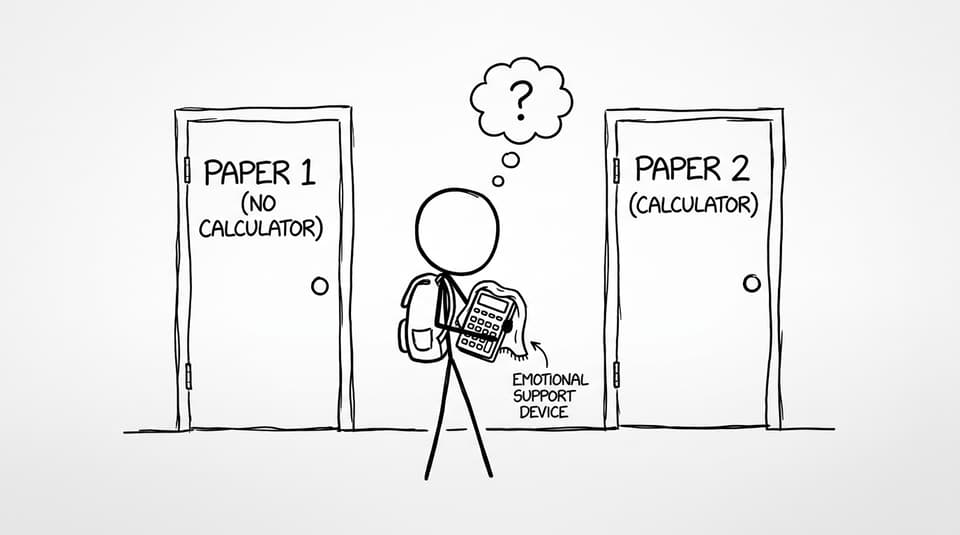
The quick checklist: IB Math AA Paper 1 vs Paper 2
Before you revise another chapter, make sure you can answer these fast:
-
Paper 1 (No calculator): Can you manipulate algebra accurately and keep exact values?
-
Paper 2 (Calculator allowed): Can you use your GDC efficiently and explain what the output means?
-
Do you know when IB Math expects an exact answer vs a decimal approximation?
-
Are you practicing in the right format (short response and extended response, timed)?
For a deeper Paper 1 walkthrough, see How to Prepare for IB Math AA Paper 1 (No Calculator). For Paper 2 strategy, use How to Prepare for IB Math Paper 2 (Calculator Allowed).
IB Math AA Paper 1: The “show you can think” paper
In IB Math AA, Paper 1 is non-calculator, which quietly changes everything. You can’t outsource arithmetic, graphing, or equation solving. So the exam leans hard on:
-
Algebraic fluency (rearranging, factoring, simplifying)
-
Exact values (especially trig)
-
Clear reasoning and method marks
-
Calculus and functions that rely on structure, not buttons
This is why Paper 1 revision often feels like training form: not flashy, just fundamental. If you want topic-by-topic support, the IB Mathematics Analysis and Approaches Resources hub is the cleanest place to start.
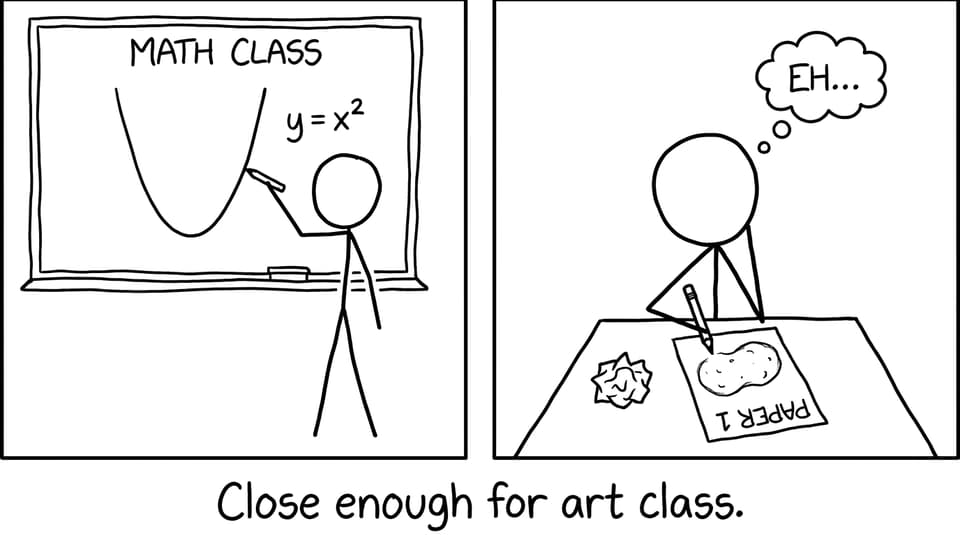
How to prep for Paper 1 without guessing
A good Paper 1 routine is simple, but not easy:
-
Read one section of RevisionDojo Study Notes (keep it tight)
-
Drill matching questions in the Questionbank
-
Use AI Chat to challenge your steps: “Is this simplification valid?”
-
Convert repeat errors into Flashcards (yes, even algebra moves)
If you struggle with the “why” behind function work, Understanding Functions in IB Math AA pairs well with Paper 1 practice.
IB Math AA Paper 2: The “use tech, but prove you understand” paper
Paper 2 allows a calculator, but don’t let that sentence lull you into relaxing. In IB Math AA, the calculator is a tool for execution and insight, not a replacement for method.
Paper 2 tends to reward:
-
Setting up models and multi-step solutions
-
Using your GDC for graphing, solving, regression, and checking
-
Interpreting results and communicating them clearly
-
Combining topics (functions + calculus + stats) in one question
If you want a student-friendly breakdown, read What to Expect in IB Math AA Paper 2.

The biggest Paper 2 mistake IB Math students make
They treat calculator output as an answer.
IB examiners treat it as evidence. You still need to name the method, show the setup, and state conclusions in math language. RevisionDojo helps here because you can run timed practice via Mock Exams, use Grading tools to diagnose weak reasoning, and then re-train with targeted Questionbank sets.
If you’re trying to split time fairly between both formats, use How to Balance Revision Between Paper 1 and Paper 2.
Where AI fits in (and why AA feels different from AI)
Even if you’re focused on AA, it helps to understand the contrast. IB Math AI leans more toward modeling, interpretation, and data-driven contexts, while AA leans more toward algebraic technique and formal analysis.
If you’re ever cross-checking expectations, the IB Mathematics Applications & Interpretation Resources page makes the difference obvious.
Final takeaway: train the switch, not just the syllabus
The most overlooked IB Math skill is switching modes. Paper 1 is “pure thinking, exact steps.” Paper 2 is “smart technology, clear interpretation.” If you prepare for both deliberately, the exam stops feeling like two different subjects.
Build your plan around the right tools: start with IB Mathematics Analysis and Approaches Resources, drill with RevisionDojo’s Questionbank, reinforce with Flashcards, and pressure-test with Mock Exams and Predicted Papers. That’s how IB Math revision becomes calm, repeatable, and finally effective.