

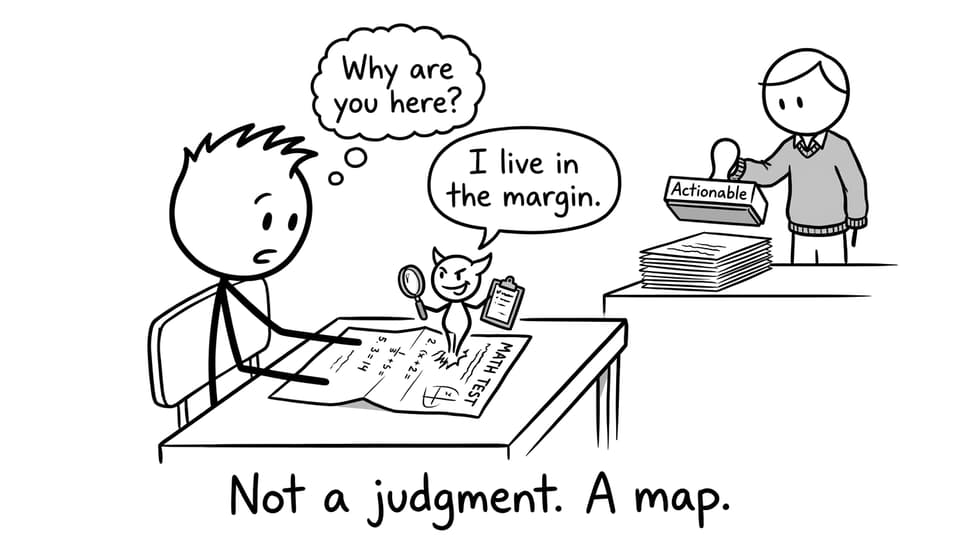
When your IB Math test comes back covered in red, it can feel like a verdict.
But the best students don’t treat feedback like a grade. They treat it like coordinates.
In the IB, tiny habits decide your score: showing a missing step, stating an assumption, writing one sentence of justification, choosing an efficient method under time pressure. Feedback reveals exactly which habit is costing you marks. And once you learn to convert comments into a repeatable system, your math performance improves faster than brute-force practice ever could.
This guide shows you how to use feedback to improve your math performance in a way that fits real IB life: limited time, multiple subjects, and exams that reward clarity as much as correctness.
Quick checklist: turn IB feedback into marks
Use this before your next IB Math practice session:
-
Collect feedback from tests, quizzes, homework, and timed sets (teacher + self-feedback).
-
Sort each comment into one of three buckets: Concept, Method, Communication.
-
Rewrite the feedback as a single action you can do in your next 20 minutes.
-
Re-attempt 3 similar questions and prove the change worked.
-
Log the pattern so you stop paying the same “mark tax” again.
If you want a home base for this loop, build it inside RevisionDojo using Study Notes, Flashcards, and the Questionbank (more on that below).
Why IB feedback feels personal (and how to reframe it)
IB feedback often lands at the exact intersection of effort and identity. You studied. You cared. You tried. So a comment like “unclear working” can feel like “you’re not a math person.”
That story is comforting in one way (it explains the pain), but it’s expensive (it blocks improvement).
A better frame: feedback is rarely about you. It’s about the gap between what you meant and what you showed.
In IB Math, examiners can’t reward intentions. They reward visible reasoning. So most “harsh” feedback is actually a spotlight on what wasn’t visible.
For students who want a structured way to keep the big picture in mind, start at the main International Baccalaureate (IB) hub and then go to your specific course pages like IB Mathematics Analysis and Approaches Resources. Keeping your materials aligned to your exact IB pathway reduces “random” mistakes that are really syllabus mismatch.
Build a one-page feedback capture system (so nothing gets lost)
Feedback loses power when it stays scattered across notebooks, PDFs, and half-remembered conversations.
Create one running document called: IB Math Feedback Log.
For each feedback item, capture:
-
The exact comment (copy it, don’t paraphrase yet).
-
The question/topic (e.g., calculus, functions, statistics).
-
What you did at the moment (your thinking).
-
The fix you will test next.
Then link the fix to a resource:
-
Use How to Use the Questionbank for Targeted Math Revision when the feedback is about method gaps or question selection.
-
Use How to Use RevisionDojo Flashcards for Formula Mastery when the feedback is about recall, definitions, or “I blanked.”
-
Use How to Use RevisionDojo Lessons for Deep Understanding when the feedback is about conceptual understanding, not just procedure.
This is where RevisionDojo becomes more than a library. It becomes your feedback engine: Questionbank for practice, Study Notes for quick repair, Flashcards for retention, and AI Chat to ask “what does this comment mean in examiner terms?”
The IB feedback triangle: Concept, Method, Communication
Most IB Math feedback fits into three categories. The trick is to label it correctly, because each category needs a different fix.
Concept feedback (what you understand)
Examples:
-
“Misunderstands conditional probability.”
-
“Confuses continuity with differentiability.”
Best response:
-
Open a focused note/lesson.
-
Write a two-sentence explanation in your own words.
-
Do 3 questions immediately.
A good place to focus your practice is a dedicated area like IB Mathematics Analysis and Approaches Topic Calculus Questionbank or a micro-skill page like Chain, Product and Quotient Rules Questionbank.
Method feedback (what you do)
Examples:
-
“Correct idea, inefficient approach.”
-
“Algebraic manipulation error.”
Best response:
-
Re-solve the same question using the examiner-preferred method.
-
Create one “trigger rule” (e.g., “If I see \ln with products, expand using log laws first”).
-
Drill 5 similar questions.
Communication feedback (what you show)
Examples:
-
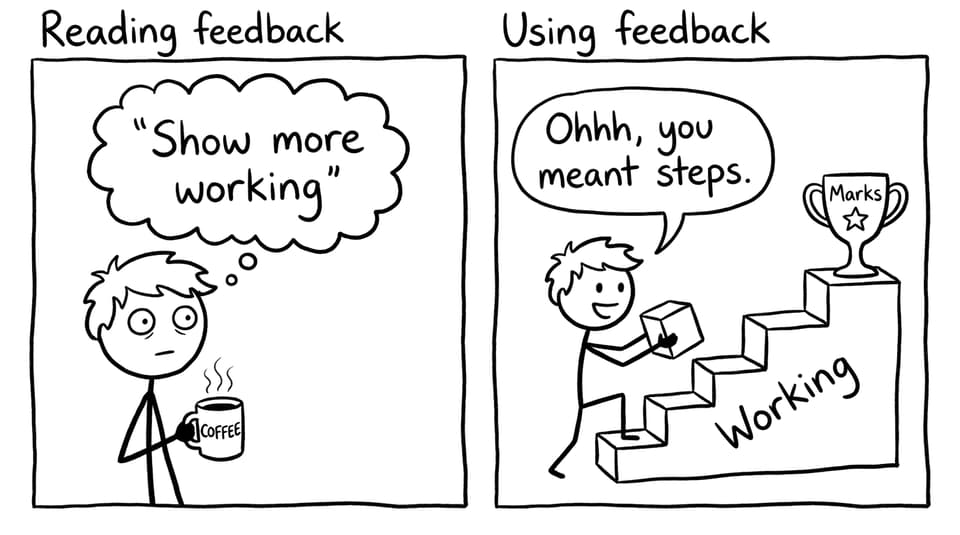
“Show more working.”
-
“Justify your answer.”
-
“Define variables.”
Best response:
-
Write one extra line per step: what you’re doing and why.
-
Add labels, units, and domain constraints.
-
Practice writing like an examiner is reading quickly.
In IB terms, communication is not decoration. It’s how you convert understanding into marks.
Translate each IB comment into an action that fits in 20 minutes
A comment you can’t act on becomes a comment you ignore.
Use this translation template:
-
Feedback: “Your explanation is unclear.”
-
Meaning (IB): Your reasoning isn’t visible, so method marks are at risk.
-
20-minute action: Re-do 2 questions, add one sentence per line of algebra, then compare against a model solution.
Or:
-
Feedback: “Calculator steps missing.”
-
Meaning (IB): You might be right, but the method isn’t verifiable.
-
20-minute action: Reattempt 3 calculator-active questions and write the key GDC steps as bullet points.
On RevisionDojo, you can keep this loop tight: do a short set in the Questionbank, review the feedback, then ask AI Chat to generate a “mark-secure” version of your working style for that question type. If you need external accountability, Tutors can review your log and pinpoint which feedback patterns matter most.
Ask for clarification without sounding defensive
Many IB students avoid asking follow-ups because they fear sounding argumentative. But vague feedback is expensive. You waste time guessing.
Try these neutral prompts:
-
“Which line lost the mark, and what would a full-mark line look like?”
-
“Is the issue conceptual, or just how I’m presenting it?”
-
“If I fix one thing first, what should it be?”
Then record the answer in your feedback log. One clear clarification can save hours of unfocused revision.
Use the “pattern > pain” rule to find what’s really holding you back
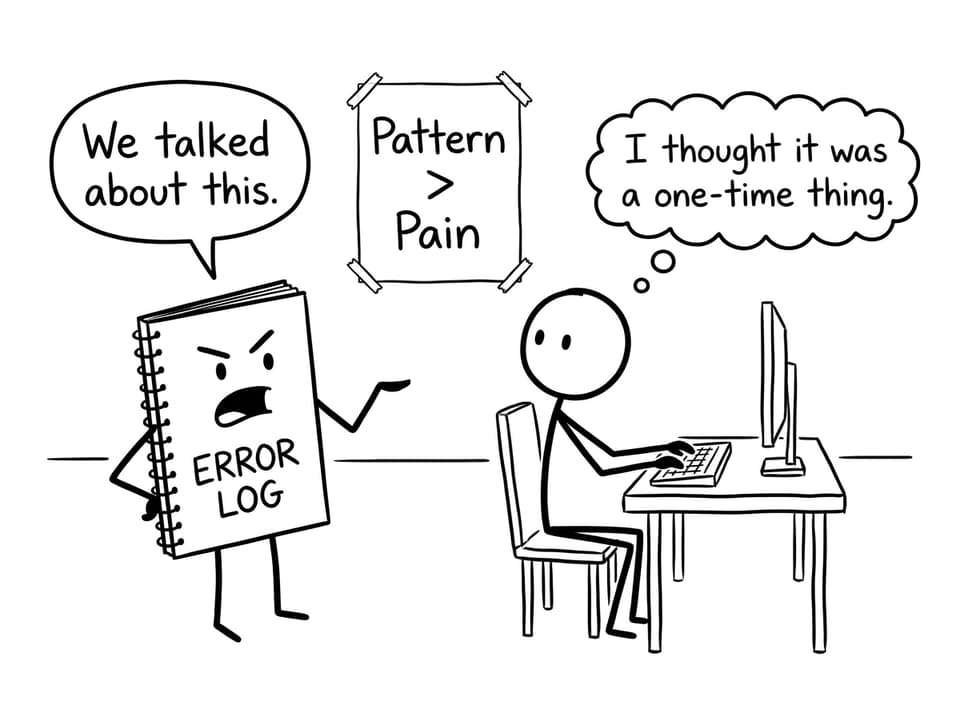
Single mistakes are loud. Patterns are honest.
After two weeks, scan your IB feedback log and highlight repeats:
-
Same command term errors (“justify,” “hence,” “show that”).
-
Same algebra slip (sign changes, factorisation).
-
Same exam habit (not checking domain, rounding too early).
Patterns tell you what to build, not what to feel bad about.
If you want a structured way to analyze repeated errors, read How to Analyze Your IB Math Mistakes Like a Top Scorer. It pairs well with the Grading tools in RevisionDojo, where you can turn “I keep losing marks” into “I lose marks for these three reasons.”
Apply feedback fast: the 72-hour rule
Feedback has a half-life.
If you wait until “revision season,” you’re trying to change habits under stress. In the IB, that’s when habits become stubborn.
Use the 72-hour rule:
-
Within 72 hours of receiving feedback, do one short repair session.
-
Re-attempt the same skill on fresh questions.
-
Write one line in your log: “What changed?”
For busy schedules, this pairs well with a micro-routine like How to Review Each IB Math Topic in 15 Minutes and a broader plan like The Ultimate IB Math Study Routine for Busy Students.
How RevisionDojo turns IB feedback into a full improvement loop
A lot of platforms help you practice. Fewer help you learn from the practice.
RevisionDojo is built for the loop IB students need:
-
Questionbank: targeted questions that match your weak pattern.
-
Study Notes: quick repairs when the feedback is conceptual.
-
Flashcards: spaced repetition for formulas and definitions that keep slipping.
-
AI Chat: translate teacher comments into examiner-ready actions.
-
Grading tools: calibrate your work against IB-style expectations.
-
Predicted Papers and Mock Exams: pressure-test whether feedback changes hold under time.
-
Coursework Library (and IA guides): when feedback is about written mathematical communication, structure, and clarity.
-
Tutors: when you need a human to spot the pattern you can’t see yet.
This matters because the IB rewards consistency. The goal isn’t one perfect day. It’s fewer repeated errors over eight weeks.
Closing: make IB feedback your unfair advantage
Most IB students collect feedback like souvenirs. The high scorers collect it like data.
Your next step is simple: pick the most painful comment you’ve been avoiding, translate it into a 20-minute action, and prove the fix on three fresh questions. Then do it again tomorrow.
If you want one place to run the entire system (from feedback capture to targeted practice to exam simulations), use RevisionDojo. Start in your course hub like IB Mathematics Analysis and Approaches Resources, then build the loop with Questionbank, Study Notes, Flashcards, AI Chat, and timed Mock Exams. IB performance isn’t built by motivation. It’s built by feedback you actually use.