

In the final stretch of IB exams, your brain starts treating everything like a high-stakes decision. Which topic do I revise next? Which question do I leave blank? And then UCAS shows up with the biggest multiple-choice question of all: firm or insurance?
UCAS choices feel emotional because they’re symbolic. Your firm offer feels like the story you’ve been telling yourself for two years. Your insurance offer feels like admitting the universe might not cooperate. But the truth is calmer: UCAS is asking you to build a plan that works in more than one outcome.
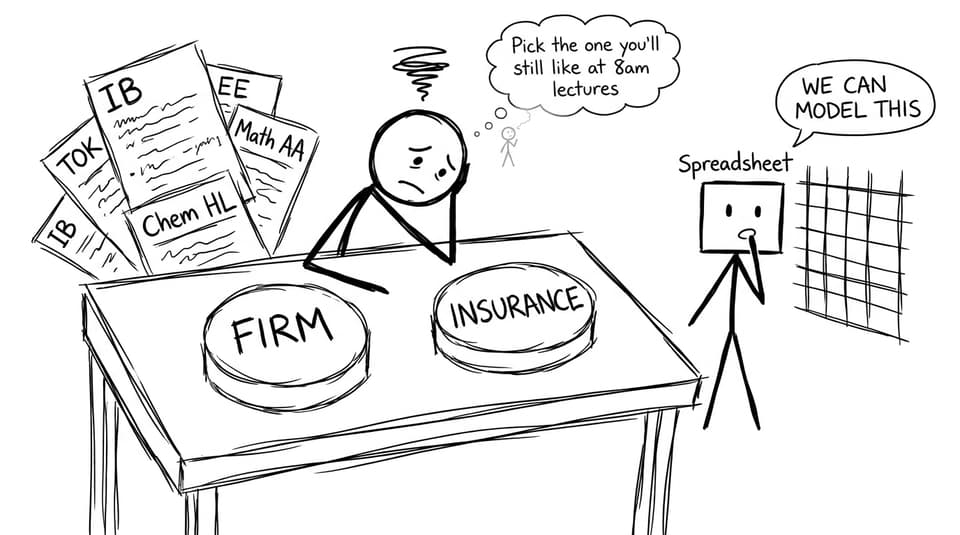
At RevisionDojo, we see the same pattern every year: students who use UCAS strategically feel lighter in exam season, because their decision isn’t being renegotiated every time a practice score dips. Let’s make your firm and insurance choices feel like a system, not a gamble.
UCAS quick checklist (save this)
Before you lock anything in on UCAS, sanity-check these points:
-
Firm choice = the course you want most, if you meet the offer
-
Insurance choice = a genuine backup with lower requirements
-
You’d be willing to attend either option (no “I’d rather take a gap year” insurance)
-
Your insurance shouldn’t have the same or higher conditions than your firm
-
You’ve considered course structure, teaching style, location, costs, and support
If you want a broader view of how UCAS fits together, read What UCAS Is and How It Works: Step-by-Step Guide.
How UCAS firm vs insurance actually works (in plain English)
With UCAS, once you accept offers, you’ll select:
-
One firm (your first choice)
-
One insurance (your backup)
On Results Day, UCAS checks your results against your firm conditions. If you meet them, that’s where you go. If you don’t, UCAS checks your insurance conditions. That’s why your insurance needs to be meaningfully easier to achieve.
To understand how universities make those offers in the first place, skim How Universities Assess UCAS Applications. It helps you read conditions with less mystery.
Choosing your UCAS firm offer: ambition with realism
Your UCAS firm should be the offer that makes you sit up straighter when you revise. Not because it’s “the best ranked,” but because you can picture yourself doing the work there.
Ask yourself three questions:
Would I still want this course on a normal Tuesday?
Prestige is loud; daily life is quiet. Look at modules, assessment style, contact hours, and whether the degree leans theoretical or practical.
Is the offer stretching me, not crushing me?
A good firm offer is challenging but reachable with disciplined prep. If your revision plan is stable, the firm can be aspirational. If your grades have been volatile, choose a firm that still excites you but doesn’t rely on a miracle week.
Does it fit who I am when I’m stressed?
Some students thrive in busy cities. Others need a calmer campus. UCAS decisions are partly academic and partly psychological.
If you’re still early in the process, How to Choose the Right UCAS Courses for You is a strong companion read.
Choosing your UCAS insurance offer: the safety net you won’t resent
The best UCAS insurance choice has one unusual quality: it makes you feel safe without making you feel like you’ve “settled.”
A practical insurance offer should be:
-
Lower conditions than your firm (by enough to matter)
-
A course you’d genuinely accept if it becomes real
-
A place where you can still build momentum: support, placements, societies, wellbeing
Many students pick an insurance they secretly hate because they’re trying to optimise the “backup.” But your insurance is not a punishment; it’s just a second door.

Common UCAS mistakes (and what to do instead)
Picking two offers with identical requirements
This is the classic UCAS trap. It looks tidy. It’s not. If results land slightly below target, you’ve built no buffer.
Do instead: Choose an insurance with clearly lower conditions, not just “technically different.”
Choosing an insurance you wouldn’t attend
It reduces anxiety today and increases panic later. Results Day doesn’t care what you meant; it cares what you chose.
Do instead: Filter insurance options through the question: “Could I be happy here for three years?”
Letting friends’ choices decide for you
It’s comforting to move in a group. It’s also risky. Your course fit, learning style, and support needs are personal.
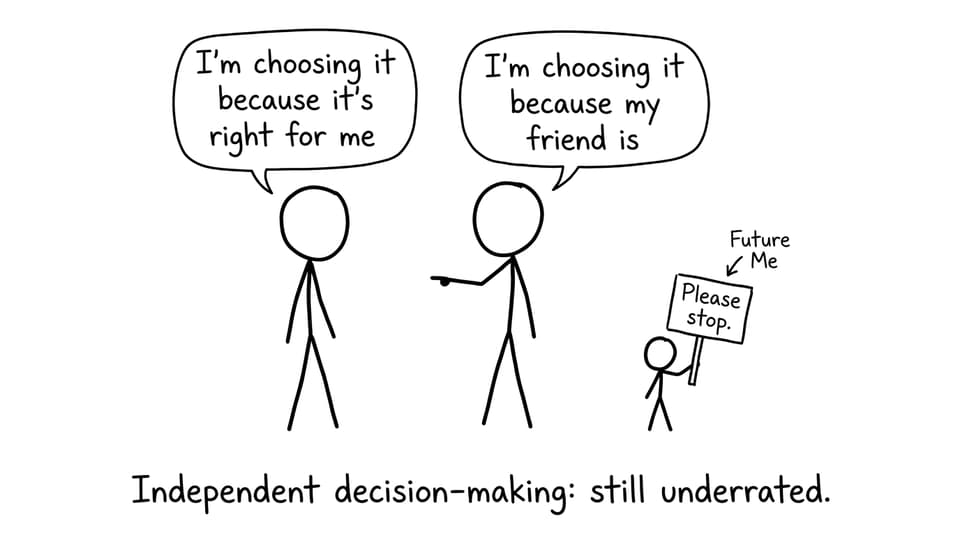
Do instead: Make your shortlist alone, then sanity-check with others.
A simple IB-first way to decide (without spiralling)
You don’t need a complicated model. Use a two-column decision that respects the reality of IB exam season.
Column 1: Entry conditions and grade volatility
-
Compare firm vs insurance conditions carefully
-
Look at your recent performance trend, not your best day
-
Identify which HL or component is most likely to swing
Then build your revision around that risk.
This is where RevisionDojo becomes practical, not motivational: use the Study Notes to tighten weak content fast, then drill the same topic in the Questionbank until the mistakes stop repeating. Add Flashcards for daily recall, use AI Chat when you’re stuck, and run Mock Exams plus Predicted Papers to rehearse timing under pressure. If coursework stress is contaminating revision time, use the Coursework Library and Grading tools to get clean feedback quickly, and bring in Tutors if you need a human to set a sharper plan.
For a method you can follow week by week, bookmark How to Study for IB Exams: Step-by-Step Guide.
Column 2: Life fit
-
Location and travel
-
Cost of living
-
Accommodation style
-
Support for international students, mental health, and academic skills
A UCAS decision that ignores life fit becomes regret disguised as “I should be grateful.”
Closing: make your UCAS choice, then return to your IB plan
The quiet trick to UCAS is this: your firm choice should inspire you, and your insurance choice should protect you. If you’ve done that, you can stop relitigating the decision and put your energy back where it belongs: your IB exams.
When you’re ready to turn motivation into marks, RevisionDojo is built for the exact season you’re in: targeted Study Notes, high-yield Questionbank practice, daily Flashcards, fast AI Chat help, exam-realistic Mock Exams and Predicted Papers, plus Grading tools, a Coursework Library, and Tutors when you need more guidance. UCAS choices set the direction. Your revision system gets you there.
If you want one place to start, revisit The Ultimate Guide to Revision for IB Students and build a plan that makes your UCAS firm feel possible and your UCAS insurance feel safe.