


The quiet cost of being “the top IB student”
You can feel it in the small moments: the way your shoulders tense when someone mentions predicted grades, or how your brain replays one missed mark like it was a personality flaw. In the IB, high achievement is celebrated, but the pressure that comes with it is rarely discussed out loud.
What makes this tricky is that the pressure often looks like motivation from the outside. You’re “driven.” You’re “disciplined.” You’re “always studying.” But inside, it can feel like you’re sprinting on a treadmill that never stops.
This guide is about coping with IB pressure without lowering your standards. It’s about staying excellent without paying for it with your wellbeing.
A quick IB pressure checklist (save this)
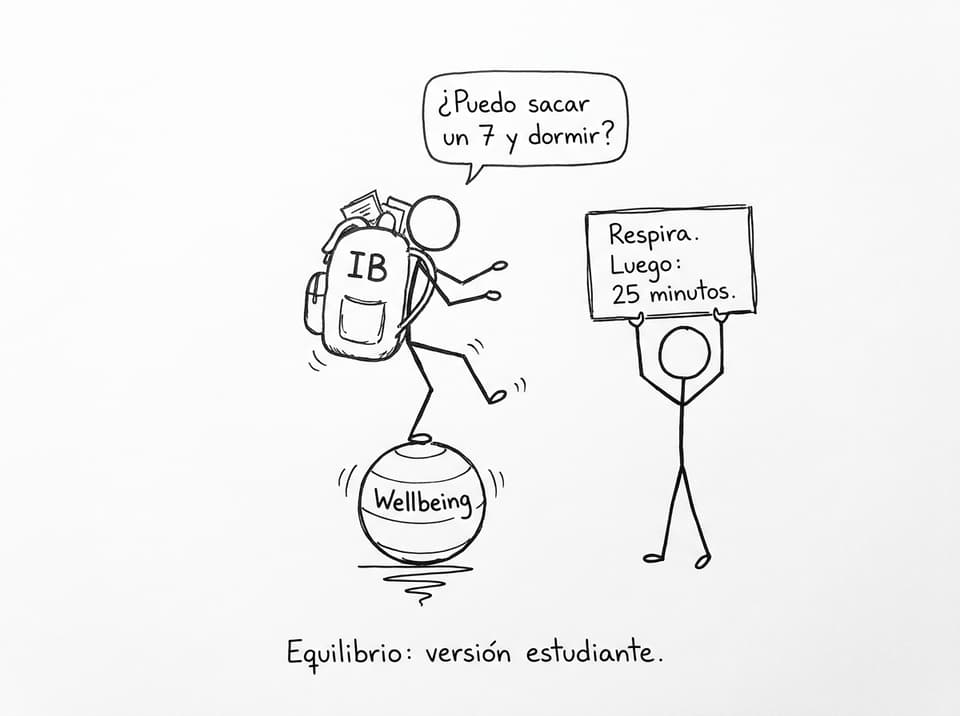
When the pressure spikes, run this short list before you add more hours:
-
Name the pressure: external, internal, or both
-
Shrink your next task to a 25-minute “proof block”
-
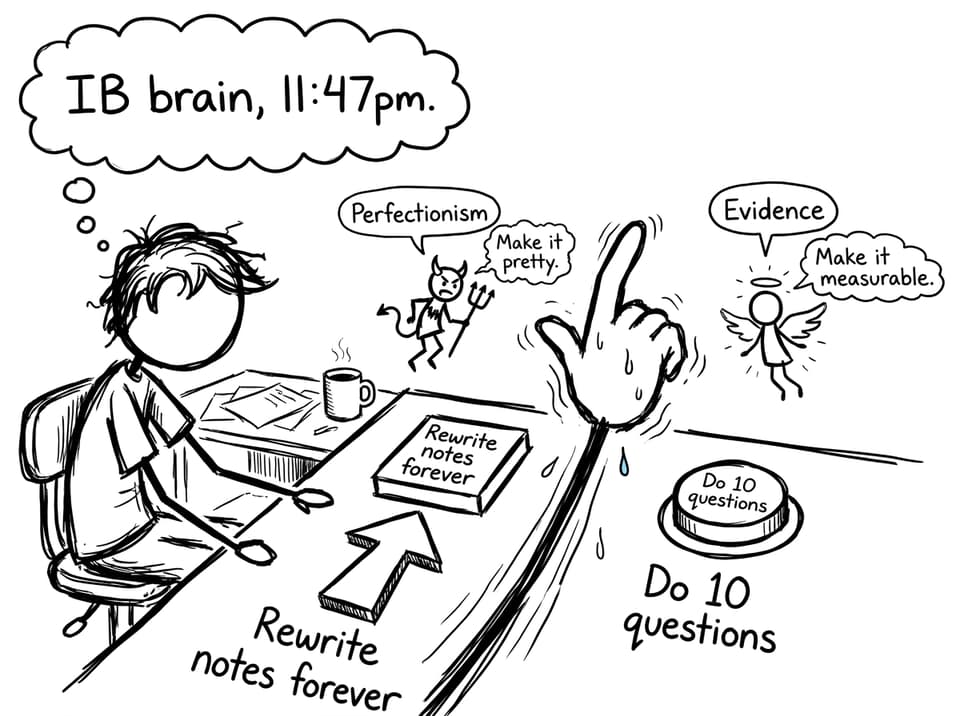
Choose evidence over perfection: questions completed, accuracy, one skill improved
-
Do one timed rehearsal per week to reduce uncertainty
-
Build recovery into the plan: sleep, food, movement, and a real stop time
-
If stress turns constant, talk to someone (counsellor, teacher, parent)
If you want a structured system for this, RevisionDojo’s home base is here: RevisionDojo IB & MYP Resources.
Where IB pressure really comes from (and why it sticks)
Top students usually get squeezed from two sides.
External pressure: university offers, teacher expectations, comparison in competitive cohorts, and the constant sense that your grades are being watched.
Internal pressure: perfectionism, fear of “wasting potential,” and the belief that one bad day means you’re falling behind.
The painful part is how these pressures feed each other. External expectations trigger internal self-criticism, which makes you work longer, which makes you more tired, which makes you perform worse, which makes the pressure louder.
Breaking the loop starts with a different goal: not “work more,” but “create proof.”
Emotional responses aren’t weakness; they’re signals
A lot of high achievers treat emotion like a bug in the system. If you’re anxious, you try to study harder. If you’re overwhelmed, you double down. If you’re exhausted, you call yourself lazy.
But in the IB, your emotions are often a dashboard:
-
Anxiety can signal uncertainty (you don’t know what to do next)
-
Frustration can signal a repeated mistake pattern
-
Numbness can signal early burnout
Crying, venting, or taking a step back isn’t failing the IB. It’s your body asking for regulation. The goal isn’t suppression. It’s recovery, then direction.
For practical stress tools, it helps to read: Exam Stress Management Tips for IB Candidates.
The “proof block” method: turn IB stress into evidence
Pressure grows when revision feels vague. “Revise Biology” is infinite. “Fix Paper 2 essays” is fog. Your brain panics because it can’t see the finish line.
Instead, use one repeatable block that creates evidence:
-
10 minutes: patch one gap using RevisionDojo for IB
-
15 minutes: attempt exam-style questions using the Questionbank feature
-
5 minutes: write 3 error rules (one line each) for tomorrow
This is how top students keep their edge: they don’t just spend time. They produce proof.
If you want more on building exam-style practice without guesswork, see: IB Question Bank: How to Use It Effectively.
Anxiety drops when the exam stops feeling “mysterious”
A big chunk of IB pressure is fear of the unknown: timing, mark allocation, the moment your brain freezes, the feeling of being judged.
The antidote is rehearsal. Not endless. Just consistent.
-
Do short timed sections early (even 20-40 minutes)
-
Review mistakes for patterns, not for shame
-
Re-test the same weak skill within 48 hours
RevisionDojo makes this easier with Mock Exams and Predicted Papers that help you practise realistically. If you’re curious how predicted sets fit into a healthy routine, read: IB Predicted vs Specimen Papers: What They Mean, or browse IB Predicted Papers.
When motivation dips under pressure, this is worth keeping open: IB Stress: Stay Motivated Without Burning Out.
Burnout signs top IB students miss (because they look “normal”)
Burnout rarely arrives with drama. It shows up as “just a tough week,” repeated for months.
Watch for:
-
Sleep that doesn’t restore you
-
Irritability or emotional numbness
-
Studying longer but remembering less
-
Avoidance of subjects you used to enjoy
When you see these, don’t negotiate with yourself. Adjust the system: shorten sessions, increase feedback, protect sleep, and ask for help.
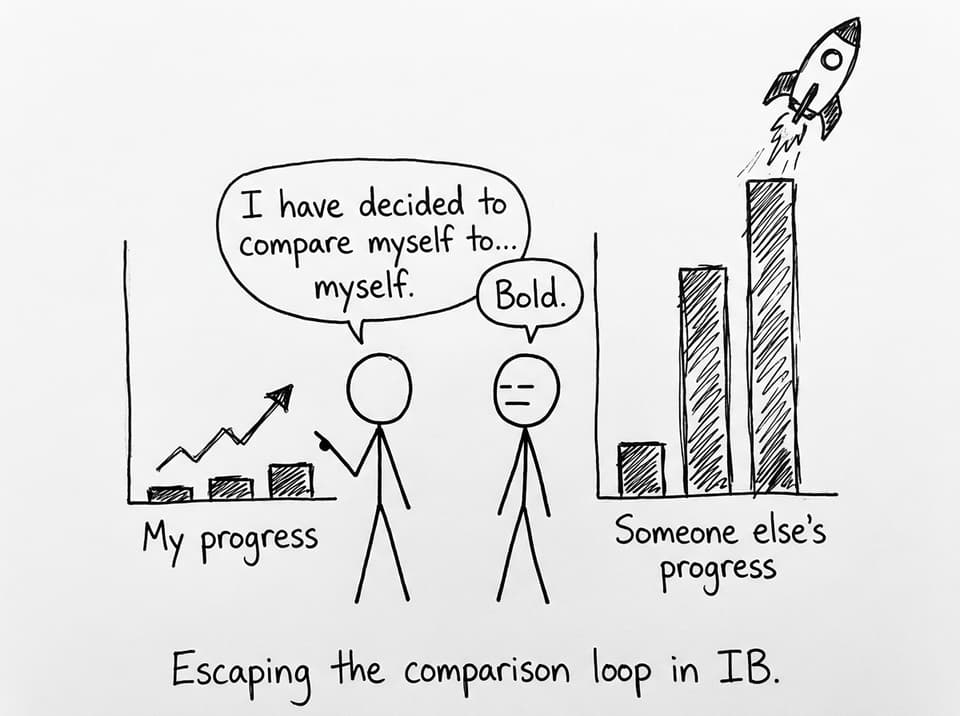
Stop comparing like it’s a sport
Comparison feels productive because it creates urgency. But it usually produces panic, not progress.
A better metric for IB students preparing for exams: compare your current self to your past self.
-
Are you making fewer repeat errors?
-
Are you finishing timed sections more calmly?
-
Is your recall faster this week than last week?
That’s real progress. And it compounds.
Closing: you don’t have to suffer to succeed in IB
Being a top IB student isn’t about pushing endlessly. It’s about building a routine you can sustain when the pressure rises: small proof blocks, realistic rehearsal, honest review, and recovery that isn’t negotiable.
If you want one place to run that system, RevisionDojo is built for it: Study Notes when you need clarity, Flashcards for daily recall, AI Chat when you’re stuck, the Questionbank for exam-style practice, Grading tools for feedback, and Predicted Papers plus Mock Exams for realistic timing. Add the Coursework Library when deadlines hover in the background, and Tutors when you need a human plan.
Pressure in the IB doesn’t disappear. But with the right loop, it becomes manageable; and your success stops feeling like a trade.