
Your brain isn’t broken. It’s doing what it was designed to do.
When IB exams get close, your mind starts running worst-case simulations like a laptop with 47 tabs open: “What if I blank?” “What if I fail?” “What if everyone else is calmer than me?” Stress feels like proof that you’re behind. But most of the time, stress is just your nervous system reacting to uncertainty.
The quiet shift comes when you stop treating anxiety as a personality flaw and start treating it as a signal: “Where is my preparation still vague?” In the IB, vagueness creates fear. Clarity creates calm.
A quick IB stress checklist (use this today)
If you want something simple before you go deeper, run this IB checklist once:
-
Pick one subject and one paper skill (essay structure, data response, calculations).
-
Do 25 minutes of active recall (questions or flashcards), not rereading.
-
Mark it, then write one “error rule” (what you’ll do differently next time).
-
Take a real break: water, light movement, food.
-
Decide tomorrow’s first task before you stop.
This “small proof” loop is also what RevisionDojo is built around: Study Notes for clarity, Flashcards for memory, Questionbank for exam practice, and AI Chat when you’re stuck.
Why IB exam stress happens (and why it feels personal)
IB stress usually isn’t one thing. It’s the stack.
You’re juggling six subjects, Internal Assessments, TOK, and the Extended Essay. Add university pressure and comparison, and your brain starts protecting you by sounding an alarm.
Common triggers:
-
Time pressure (there is always “more to do”)
-
Uncertainty about mark schemes and command terms
-
Perfectionism disguised as “high standards”
-
Cramming that creates burnout, then guilt
-
Fear that one bad paper defines your future
If you want a deeper motivation reset, this pairs well with IB Stress: How to Stay Motivated Without Burning Out.
Real strategies that reduce IB anxiety about failing
Build a schedule that your nervous system believes
A plan that looks impressive but feels impossible will increase IB anxiety.
A plan that is realistic builds trust.
Try this:
-
3 focused blocks per week (45 to 90 minutes)
-
a daily “base” (15 to 25 minutes) so you never hit zero
-
one timed session weekly to make pressure familiar
RevisionDojo makes this easier because you can move straight from Study Notes into practice without rewriting everything.
Replace rereading with active recall (it’s calmer, not harsher)
Anxious studying often looks like rereading because it feels safe. But safe isn’t the same as effective.
Instead, test yourself in small sets:
-
Do a short set in the Questionbank
-
Mark it and tag what to revisit
-
Use mistakes to choose the next topic
If you need a walkthrough, use IB Question Bank: How to Use It Effectively and the deeper guide Comprehensive IB Question Bank: Thousands of Practice Questions.
Get clear on what earns marks
A big chunk of IB stress is simply not knowing what “good” looks like.
Spend one session per subject clarifying:
-
command terms (analyze vs evaluate)
-
common response structures
-
where marks typically come from (definitions, steps, justification, conclusion)
This is where AI Chat and Grading tools can help: ask for a mark-scheme-style breakdown, then get feedback on your response so the target stops moving.
Reduce comparison by designing your environment
You don’t need heroic discipline. You need fewer triggers.
-
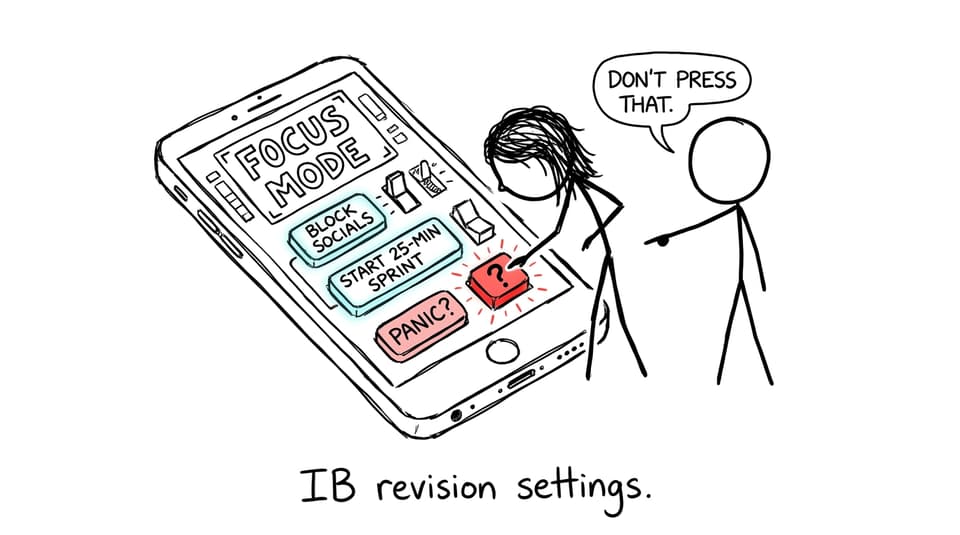
Put your phone in another room
-
Use a blocker during study sprints
-
Tell one friend you’re doing a “quiet week”
If your stress is tied to feeling “behind,” read Fear of Falling Behind in IB (And Why It’s Normal).
Sleep is not optional in the IB (it’s part of revision)
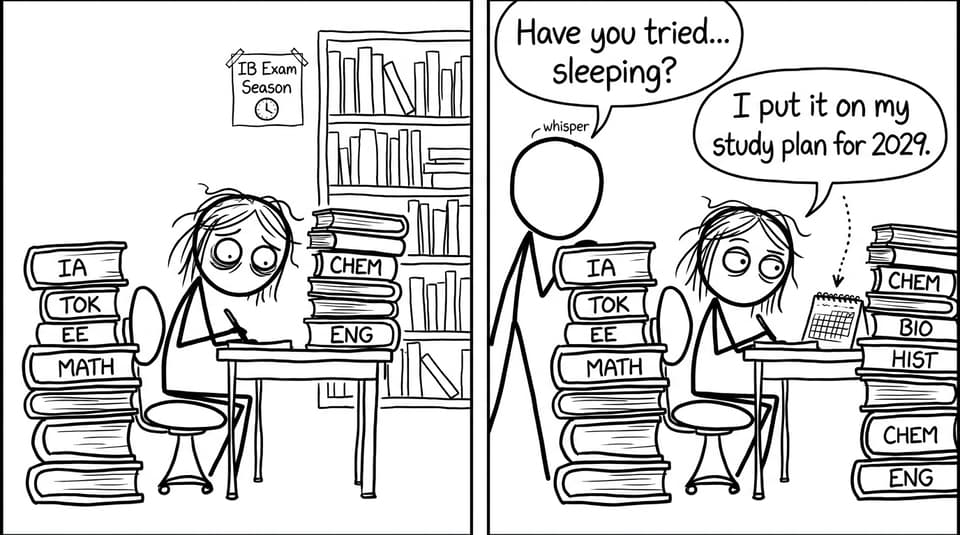
The cruel trick of IB season is that sleep feels like the first thing to sacrifice. But sleep is where memory consolidates and emotion settles.
Aim for 7 to 9 hours. If you can’t, protect the last 90 minutes before bed:
-
no heavy new content
-
light flashcards only
-
pack your materials, then stop
Daily recall becomes easier with spaced repetition from IB Flashcards and the RevisionDojo Flashcards feature.
Train a “calm script” for the moment panic hits
Panic is physical first. Treat it that way.
Try a 60-second reset:
-
Exhale slowly (longer than you inhale).
-
Box breathe once: 4 in, 4 hold, 4 out, 4 hold.
-
Write three keywords you know about the question.
-
Start with the easiest mark on the page.
If you want an exam-day routine, keep How to Stay Calm During IB Exams open on your phone for the week before exams.
Reframe “failing” into a plan, not a prophecy
In the IB, fear grows when it feels final.
Remind yourself:
-
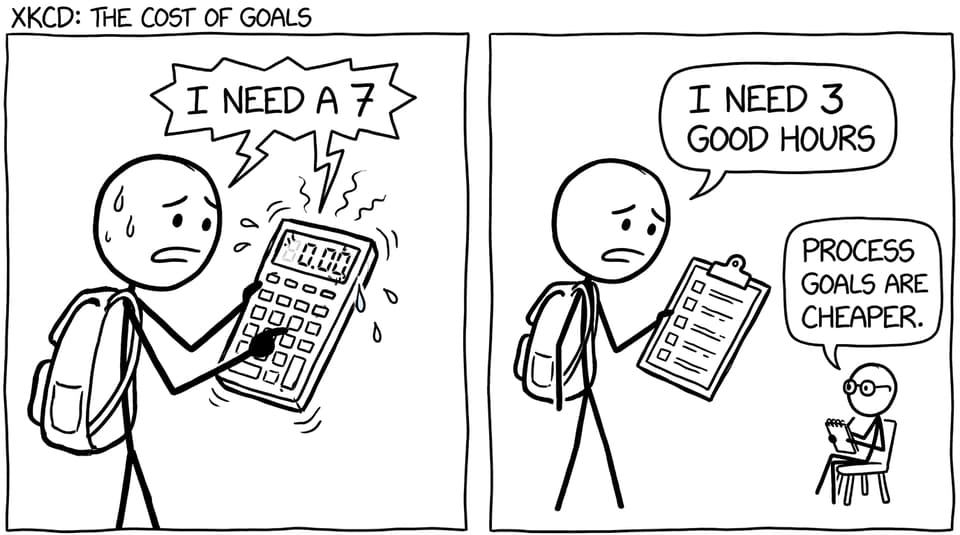
One paper is one data point, not a verdict.
-
There are resit options if things go wrong.
-
Most students pass the diploma globally.
A helpful companion for this mindset shift is Why You Feel Not Ready for IB Exams (Even If You Are).
How RevisionDojo helps when IB stress is the main problem
When stress is high, decision-making gets expensive. “What should I do next?” becomes its own source of anxiety.
RevisionDojo lowers that cost with an integrated loop:
-
Study Notes to fix confusion quickly
-
Flashcards to keep daily recall small and consistent
-
Questionbank to turn knowledge into marks
-
AI Chat to explain tricky ideas and generate mini-quizzes
-
Mock Exams and Predicted Papers to make pressure familiar
-
Grading tools to turn “I think I’m fine” into targeted feedback
-
Coursework Library to reduce background IA stress
-
Tutors when you need a calm, expert outside brain
Start here if you want everything in one place: RevisionDojo for IB.
Closing: make IB calm a skill you practice
The students who look calm in the IB aren’t magically unbothered. They’ve built routines that produce evidence: small daily recall, targeted questions, realistic timing, and a reset script for stress spikes.
If you want your next week to feel lighter, start one loop today: Study Notes for clarity, Flashcards for memory, Questionbank for proof, and one timed session to make exam pressure familiar. Then let RevisionDojo handle the structure while you focus on showing up.
Try your first focused set now in the Questionbank, and keep the goal simple: less panic, more proof.