
If you have ever watched two equally smart classmates argue about whether they should take Math AA or Math AI, you know the debate is rarely about maths alone. It is about doors. About what you might study later. About whether your future self will thank you or quietly panic at a university requirements page.
And because so many students frame it as “which one is easier?”, they miss the real question: which course makes sense for your university plan, your learning style, and your version of Math HL success.
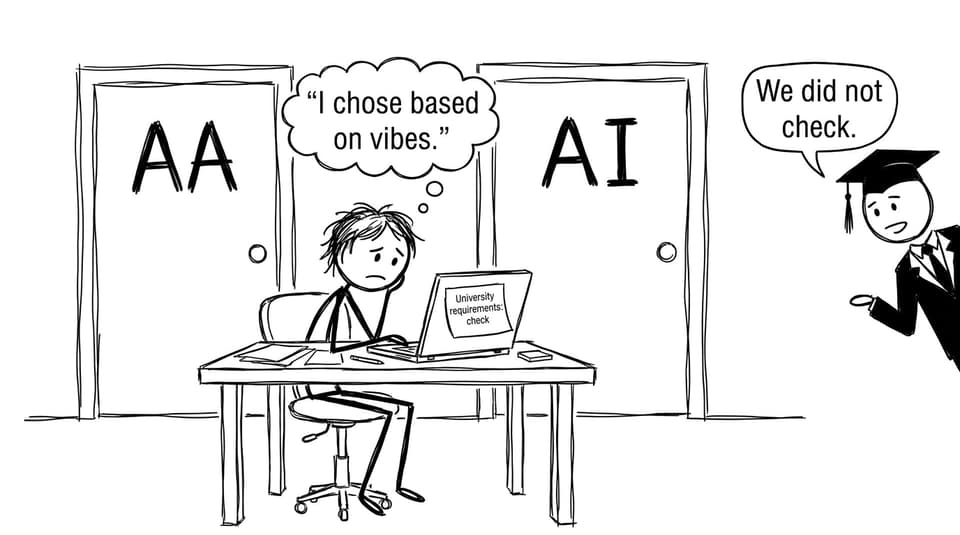
Quick checklist: choosing the right Math HL path
Use this as your 3-minute filter before you decide between AA and AI:
-
What degree are you applying for (STEM, econ, business, social sciences, arts)?
-
Do your target universities explicitly require Math AA HL?
-
Do you enjoy algebraic manipulation and calculus, or data and interpretation?
-
Are you comfortable with non-calculator problem solving (common in AA assessment styles)?
-
Which internal assessment feels more natural: proof/exploration or modelling with data?
If you do not know the answer to the second bullet, pause. That single line decides more university outcomes than any study “hack” ever will.
Math HL and the real difference between IB Math AA and AI
Both routes can be taken at Higher Level, and both can be challenging. The difference is where the challenge lives.
Math AA: the language of calculus, algebra, and structure
Math AA rewards students who like clean logic, symbolic work, and mathematical reasoning. You will spend more time living inside functions, calculus, sequences, proof-style thinking, and deeper algebra.
If your definition of a good study session includes, “I finally understood why that works,” AA tends to feel satisfying.
A good place to sanity-check AA topic coverage is RevisionDojo’s IB Mathematics Analysis and Approaches resources, which lays out the course content and pathways clearly.
Math AI: the language of modelling, statistics, and decisions
Math AI leans into real-world contexts: statistics, probability, technology-driven problem solving, and interpreting what numbers mean in context. Students who enjoy making sense of messy data often find AI more intuitive.
You can preview how broad AI becomes via IB Mathematics Applications & Interpretation resources.
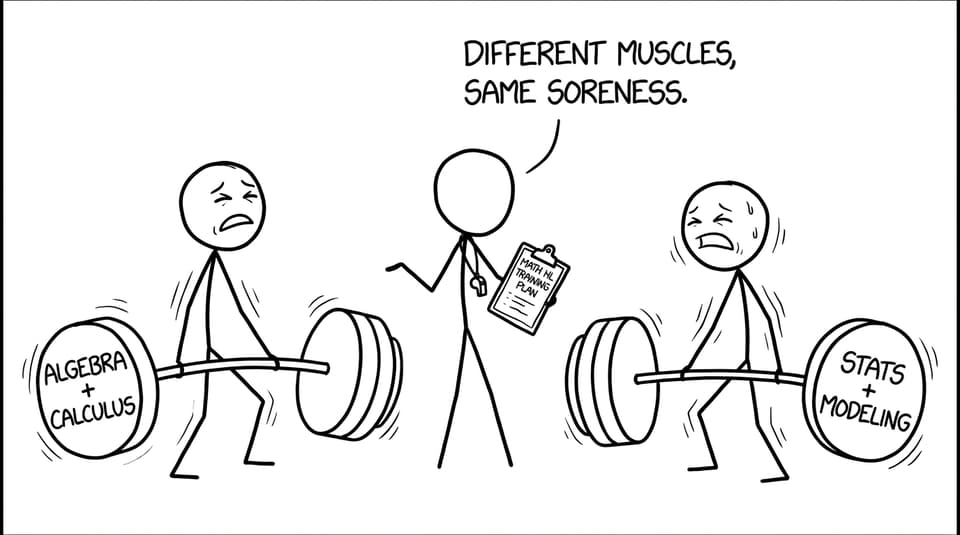
What universities usually expect (and why Math HL matters)
Universities rarely describe your math choice as a preference. They describe it as preparation.
When Math AA HL is commonly expected
If you are aiming for engineering, physics, mathematics, or many computer science programs, Math HL often means Math AA HL in practice. These programs want evidence you can handle calculus-heavy first-year courses.
Even when a university says “Math HL,” they sometimes mean “Math AA HL” without spelling it out. Always confirm on the program page.
When Math AI HL can be a strong fit
Math AI HL is often accepted for degrees that are quantitative but more data-facing: economics (sometimes), business analytics, psychology, geography, and social sciences with statistics. Some programs welcome the modelling mindset, especially when they teach applied methods early.
RevisionDojo’s advice here is simple: treat AI HL as a legitimate Math HL route, but confirm acceptance program-by-program.
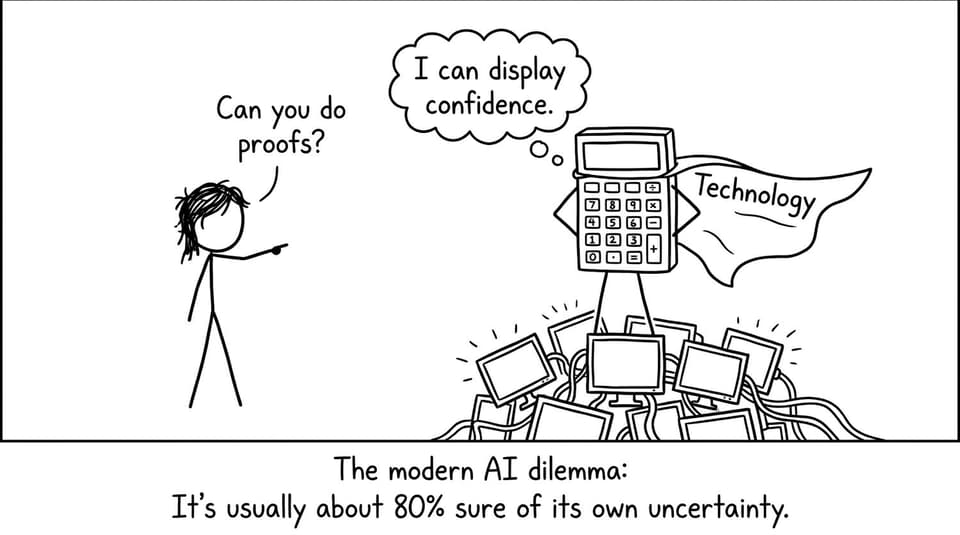
Assessment feel: how each course “punishes” last-minute revision
Students preparing for exams often underestimate how assessment style changes what revision needs to look like.
AA assessment tends to punish shaky fundamentals
If algebra is not automatic, AA questions get expensive fast. Small slips compound. That is why many AA students thrive with targeted drills.
RevisionDojo makes this practical: use the AA Calculus Questionbank to isolate weak skills, then rebuild speed and accuracy one micro-topic at a time. Pair that with the Flashcards feature for formulas, methods, and common traps.
If you are aiming for top grades in Math HL, the study approach matters as much as the course. The strategy in How to Score 7 in IB Math AA HL is a solid blueprint.
AI assessment tends to punish shallow interpretation
AI can feel calculator-friendly, but interpretation is where marks are won or lost. You need to explain what regression results suggest, what a model assumes, and why a method is reasonable.
To drill that skill, RevisionDojo’s AI Number and Algebra Questionbank helps you practise in exam style while building method clarity. Then use AI Chat to unpack “why that method” when you are stuck, rather than memorising steps you cannot justify.
Switching between AA and AI: when it is realistic
Switching early in IB Year 1 can be possible, especially before your class has diverged too far in topic sequence. Switching late is harder because:
-
you may have missed foundational topics specific to the other course,
-
your IA planning may no longer match the new focus,
-
the catch-up load can be heavy, especially moving into AA.
If you are switching because you are worried about workload, do not guess. Use a structured routine like The Ultimate IB Math Study Routine for Busy Students first. Sometimes the course is fine; the system is not.
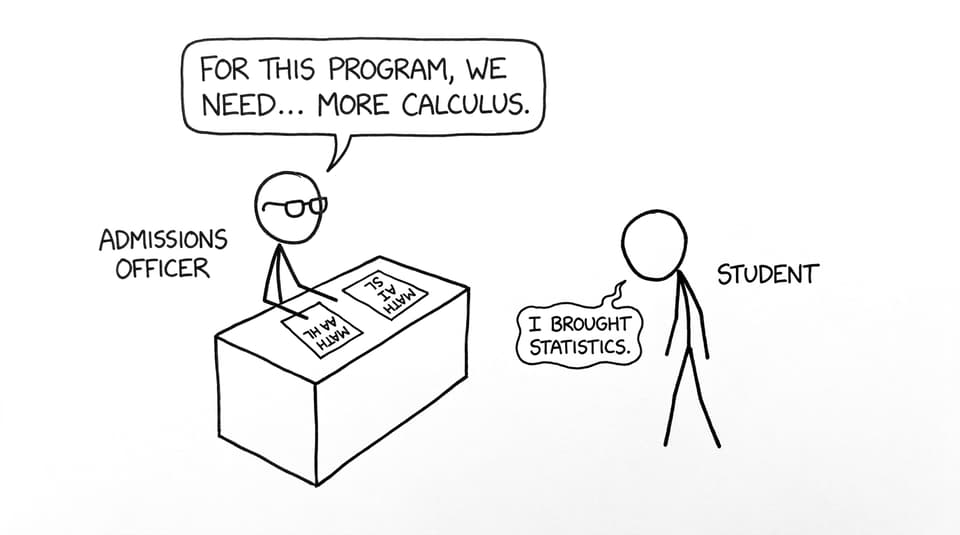
Conclusion: pick the Math HL route your future will use
Choosing between AA and AI is not a personality test. It is a decision about preparation. The best choice is the one that keeps your university doors open and matches how you learn under pressure.
If you want a clear next step, use RevisionDojo to compare content in IB Math AA and IB Math AI, then build a weekly plan with Questionbank, Study Notes, Flashcards, AI Chat, and exam-style practice through Predicted Papers and Mock Exams.
Because a strong Math HL result is rarely about choosing the “right” course once. It is about choosing, then training like you mean it.
