

If you’ve ever listened to a classmate announce their exact University, major, and future job title like they’re reading a prophecy, you’re not behind. You’re human.
Most IB students are trained to solve problems with a markscheme. Choosing a University major doesn’t come with one. It’s messier than an exam paper, and that’s why it feels heavy.
A survey of 500 high school students (classes 2019-2022) reported that 41% felt unprepared to choose a career or major, and 42% were only slightly confident in the education path they chose (YouScience, via District Administration). The quiet truth is that uncertainty is common. The louder truth is that it’s survivable.
Below is a calm, practical way to choose a University major while you’re also preparing for IB exams.
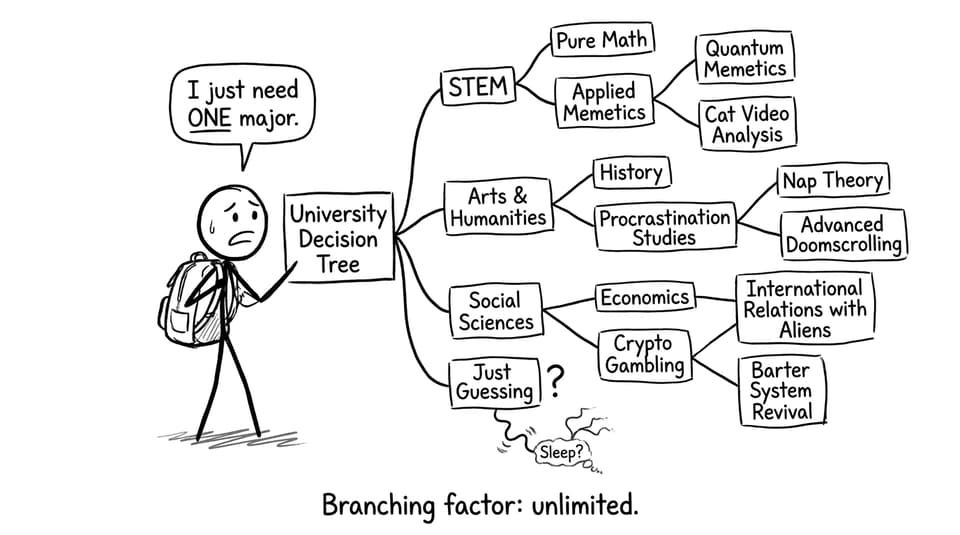
University major choice checklist (use this in 15 minutes)
Keep this simple. Your goal is not to predict your entire life. Your goal is to make a reasonable first step.
-
List 3 interests you consistently return to (even when you’re tired).
-
List 3 strengths you’ve repeatedly used in IB (writing, problem-solving, memorising, presenting, analysing data).
-
Pick 2 values you won’t compromise (stability, creativity, helping people, flexibility, money, autonomy).
-
Check subject-to-major fit (especially HLs).
-
Choose 2-4 majors that match your interests and your current subject pathway.
-
Shortlist Universities based on fit, affordability, location, and entry requirements.
-
Pressure-test your shortlist by doing “day-in-the-life” research (modules, careers, internships).
When you feel stuck, borrow structure from how you revise: clarify, test, review. RevisionDojo does this for IB with Study Notes, Questionbank, Flashcards, AI Chat, and Mock Exams; you can apply the same loop to your University decision.
Start with priorities, not prestige (University decisions are emotional)
The trap is thinking your first major is a permanent identity. It’s not. It’s closer to choosing a first route through a city you’ve never visited. You can change direction once you learn the streets.
Ask yourself three questions:
What are you optimising for?
Different students optimise for different outcomes:
-
Intellectual curiosity (you want to study what you genuinely like)
-
Career clarity (you want a direct path)
-
Financial security (you want a reliable return)
-
Family expectations (you want harmony)
-
Flexibility (you want options)
Write down your top two. Not five. Two.
What are you willing to trade?
Every University major comes with trade-offs: workload, time, uncertainty, competition, further study, or limited geography. Naming your trade-offs turns anxiety into a plan.
What does “success” look like at 25?
Not 45. Not retirement. At 25. That time horizon is close enough to imagine, far enough to be realistic.
If you’re also unsure about IB subject alignment, it helps to read: Which Subjects Should I Take at IB if I Don't Know What to Do in University Yet?
Use your IB subjects as clues (not cages)
Your HLs are often the strongest signal of what you’ll tolerate doing for years. Not what you should do, but what you can sustainably do.
-
If HL Math and Physics feel like a difficult puzzle you still want to solve, engineering and physical sciences may fit.
-
If HL Bio is hard but meaningful, life sciences, health, and psychology could fit.
-
If History essays exhaust you, be cautious about majors where long-form writing is the main currency.
This is also where you can be strategic: some University majors are “open door” majors, while others are strict about prerequisites.
For broader IB planning, you may also like: How Do I Choose My HL Subjects Wisely?
Think about where you can study (University fit beats fantasy)
Studying abroad can be life-changing. So can studying locally with financial stability and a support network. The better question is: What environment will let you learn well?
Consider:
-
Cost of living and tuition
-
Language of instruction
-
Culture fit and independence level
-
Visa/immigration realities
-
Mental health support and workload expectations
A common misconception is: “If I don’t get into a top-ranked University, I won’t succeed.” In reality, many graduates work outside the field they studied. Life moves. Interests shift. Industries change. The major matters, but it’s not a verdict.
If the exact major you want isn’t available where you can realistically study, choose a nearby major in the same area and specialise later through electives, internships, short courses, or postgraduate study.
Run a “low-stakes experiment” before you commit to a University major
When you revise, you don’t think your way into confidence. You practice your way into it.
Try the same with majors:
Do one weekend of honest exposure
-
Watch 2 lectures or intro videos in the field
-
Read a first-year module outline
-
Try one beginner project (code a tiny app, analyse a dataset, write a short policy memo)
Talk to someone one step ahead
Find a student in that major and ask:
-
What surprised you most?
-
What kind of person thrives here?
-
What do you wish you knew before starting?
Compare majors using three columns
-
“Energises me”
-
“I can tolerate this”
-
“Drains me”
The goal is not to find perfection. The goal is to avoid a mismatch you can predict.
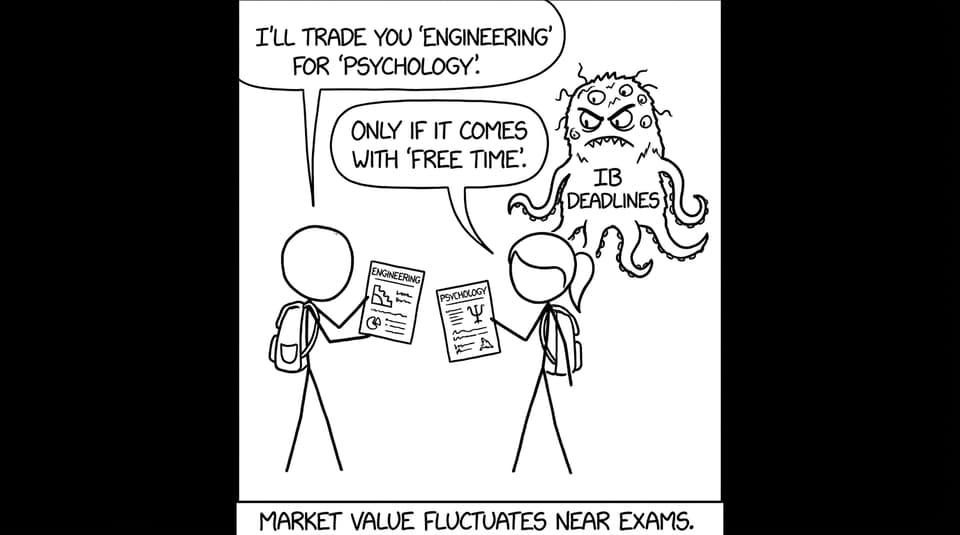
Don’t let exams eat the decision (use a simple workflow)
IB exam season makes every choice feel final because your brain is already tired. Build a tiny system.
Here’s a practical approach:
-
30 minutes: shortlist majors and each major’s entry requirements
-
30 minutes: shortlist Universities that offer them
-
20 minutes: check prerequisites against your HL/SL subjects
-
20 minutes: write a one-paragraph “why this major” draft (you’ll use it later)
If your revision strategy needs structure, borrow one from RevisionDojo:
-
Use Study Notes to stay efficient when time is scarce.
-
Use the Questionbank to keep exam technique sharp.
-
Use Jojo-style feedback loops from articles like Top Students Don't Study Like You Think (IB Edition) and How 45-Point IB Students Prepare for Exams.
Choosing a University major is easier when your IB revision isn’t chaotic.
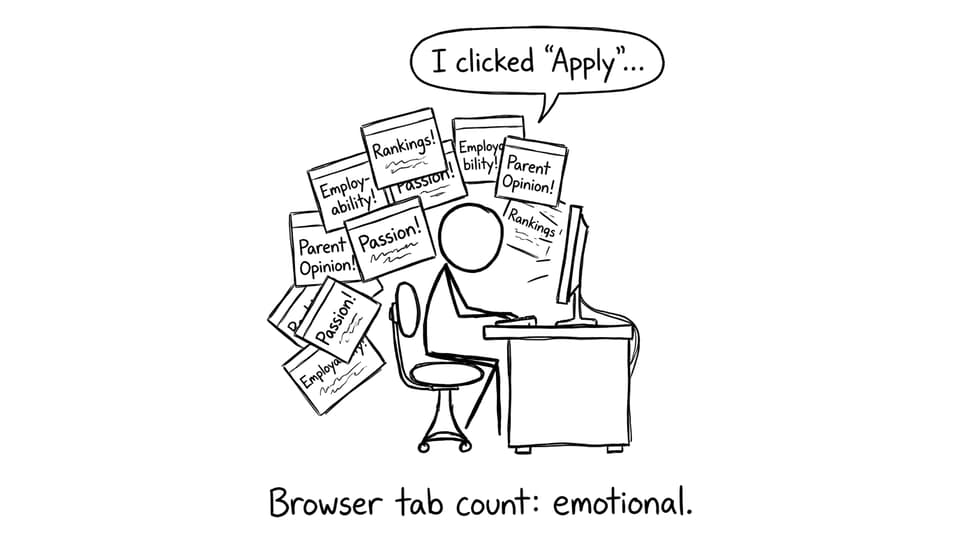
Closing: your University major is a first draft, not a final draft
You don’t need a 10-year plan to choose a University major. You need a starting point you can defend, explain, and adjust.
If you want to make that choice while still protecting your IB grades, build stability first: revise with tools that reduce noise and increase certainty. RevisionDojo gives you that foundation through Study Notes, Flashcards, AI Chat, Grading tools, Predicted Papers, Mock Exams, a Coursework Library, and Tutors, so you can walk into University applications with results you trust and a plan you can change.
When you’re ready, pick a University shortlist, choose a major that fits your current evidence, and move forward. Clarity tends to arrive after movement, not before.