
If you’ve typed “how to cheat in the IB MYP eAssessments” into a search bar, you’re not alone.
Most people don’t do it because they’re lazy or reckless. They do it because they’re tired. Because they’re behind. Because the calendar moved faster than they did.
And the frustrating truth about IB pressure is this: the moment you want a shortcut is usually the moment you most need a system.
This article won’t give cheating methods. It will give something more useful: a clear look at why cheating in IB MYP eAssessments is a bad bet, what actually happens when students try, and what to do instead so you walk into exam week calmer, sharper, and in control.
What the IB MYP eAssessments actually are
The IB Middle Years Programme (MYP) eAssessments are optional external assessments taken in MYP Year 5. They’re designed to test application, reasoning, and communication, not just memory.
You’ll usually see two parts:
-
On-screen exams (digital tests for subjects like Maths, Sciences, Language and Literature, Individuals and Societies)
-
ePortfolios (coursework-style submissions for areas like Design, Arts, and sometimes PHE)
If you want a clearer breakdown of what they look like and how to approach them, start with Tips for Success in MYP eAssessments and then build structure using MYP eAssessments: 30-Day Study Plan That Works.
Why students look for shortcuts (and why it makes sense)
Cheating rarely starts as a “bad person” decision. In IB contexts, it usually starts as a stress decision.
Common triggers:
-
You revised, but it feels like nothing stayed in your head
-
You can’t tell what’s “important” vs what’s just content noise
-
You left practice too late, so timing feels terrifying
-
You feel like everyone else has it together (they don’t)
The impulse is understandable. The outcome is not worth it.
The real risks of cheating in IB MYP eAssessments
Students sometimes imagine cheating as a private gamble. In reality, it’s a public one.
If you’re caught attempting academic misconduct in an IB assessment context, consequences can include:
-
Disqualification from results or loss of eligibility for the MYP certificate
-
Reporting to your school (and often your parents/guardians)
-
Disciplinary action inside school systems
-
Long-term damage to trust with teachers who would otherwise advocate for you
But there’s a quieter cost that matters just as much: you start treating your own ability as something you can’t rely on. That mindset follows you into DP, university, and anything that requires independent work.
If you want to understand how outcomes are measured and what “good” performance actually means, read What Is a Good MYP Score? Understanding the IB Middle Years Programme Grading.
Why cheating usually fails in eAssessments
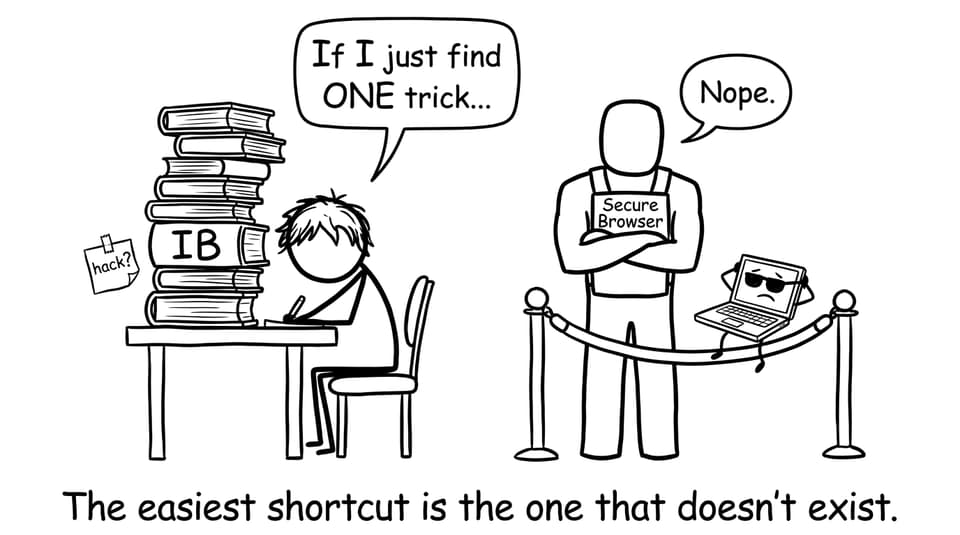
Even if someone wanted to risk everything, IB MYP eAssessments aren’t built like casual online quizzes.
Common anti-cheating layers include:
-
Secure browser environments that restrict access to other apps or websites
-
Time pressure that makes “checking” answers unrealistic
-
Randomized or varied prompts that reduce answer-sharing
-
Plagiarism and authorship checks for submitted work, especially in portfolio-style components
In other words: the system is designed for fairness, and fairness requires detection.
A simple checklist: what to do instead (that actually raises your score)
If you feel behind, you don’t need a miracle. You need momentum.
Here’s a compact IB-friendly checklist that works even if you’re starting late:
-
Do daily question practice (small, consistent sets)
-
Review mistakes with an error log (what went wrong, what rule fixes it)
-
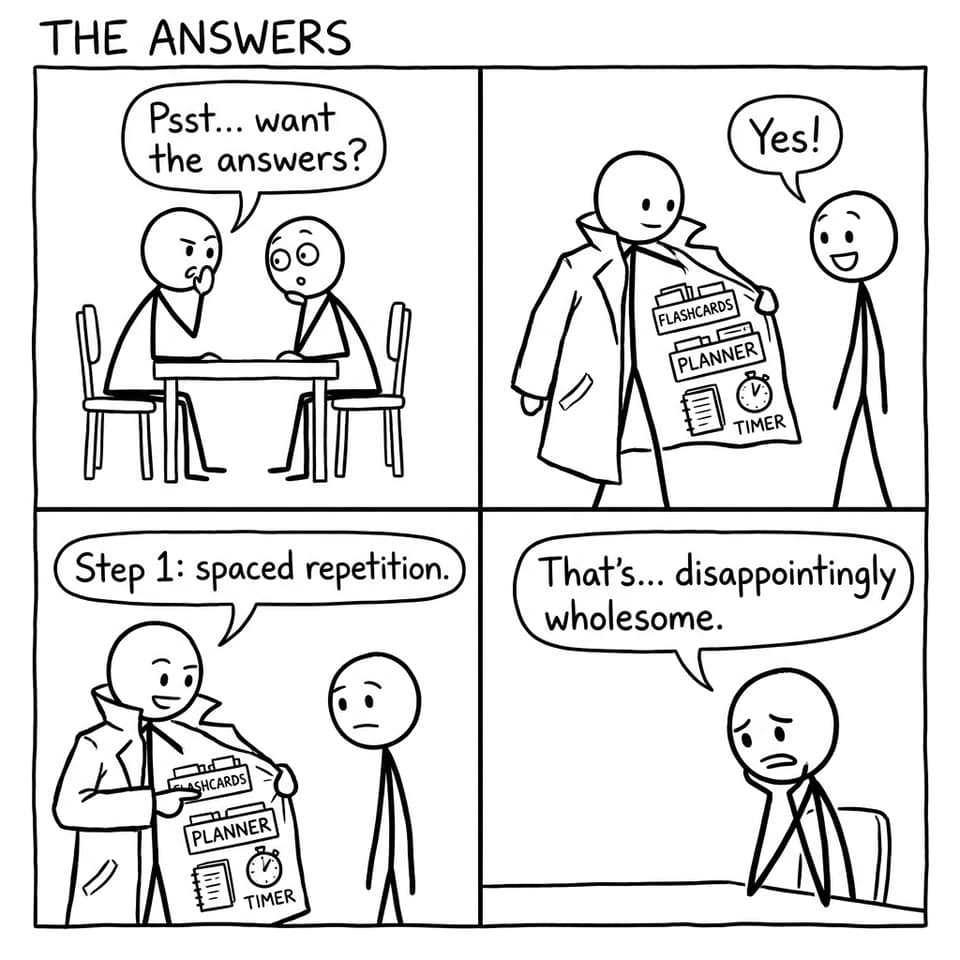
Study with active recall (flashcards, self-quizzing, blurting)
-
Add timed mini-sets so pace becomes familiar
-
Use criteria/command terms language when you evaluate your answers
That last point is underrated: many students don’t lose marks because they “don’t know the topic.” They lose marks because they don’t answer the question the way the IB expects.
The “honest advantage”: build a loop, not a wish
The best students don’t rely on motivation. They rely on a loop.
A strong IB revision loop looks like:
-
Learn the minimum you need (fast)
-
Practice exam-style questions (often)
-
Get feedback (immediately)
-
Fix one pattern (repeat)
RevisionDojo is built around that loop:
-
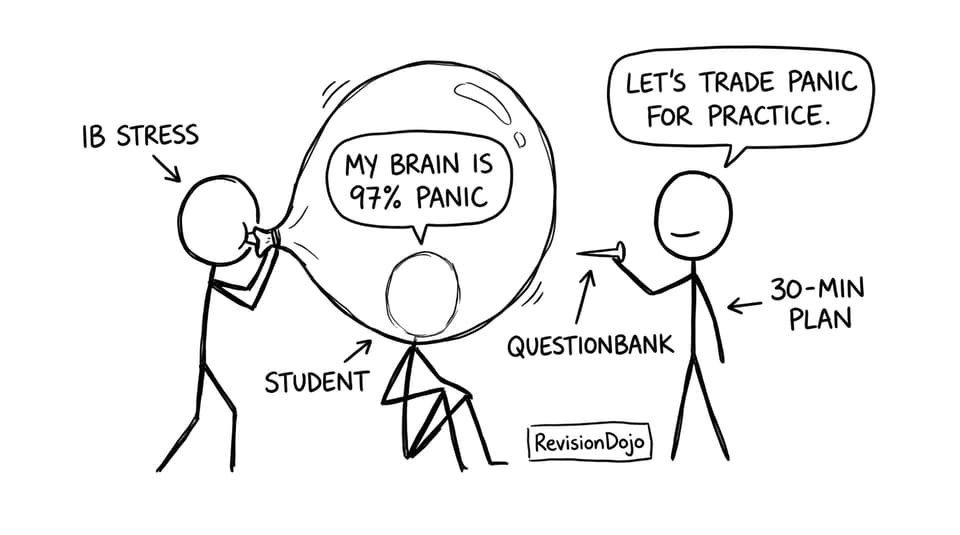
Questionbank to drill exam-style questions without guessing what to practice
-
Study Notes when you need fast clarity, not another textbook spiral
-
Flashcards for spaced repetition and active recall
-
AI Chat to quiz you, explain misconceptions, and generate practice prompts
-
Grading tools to show what a stronger response would look like
-
Mock Exams and Predicted Papers to rehearse exam timing and confidence (without surprises)
-
Coursework Library for portfolio-style inspiration and structure
-
Tutors when you need a human to unblock you quickly
Start at RevisionDojo | IB & MYP Resources or explore the dedicated hub: RevisionDojo for IB.
If you’re in specific MYP subjects, you can also jump straight into targeted resources like MYP Biology Resources or MYP History Resources.
Conclusion: choose the path that still works a year from now
Searching for ways to cheat in IB MYP eAssessments is usually another way of asking, “How do I stop feeling trapped?”
Here’s the good news: you’re not trapped. You just need a plan you can repeat.
If you want the most reliable, ethical advantage, build a daily practice loop using RevisionDojo’s Questionbank, Study Notes, Flashcards, AI Chat, and Mock Exams. You’ll walk into the eAssessments with something cheating can’t give you: real confidence, because you earned it.