


The first time most students feel the weight of IB is not on exam day. It’s on an ordinary Tuesday night, when your to-do list quietly grows teeth: reading, problem sets, a draft that needs “one more edit,” and the small panic of realizing tomorrow is also full.
The students who stay calm aren’t magically disciplined. They just build IB habits early enough that their work stops depending on mood. They make progress on days that feel average, not only on days that feel heroic.
Below are 10 proven tips to build good habits early in IB so you stay ahead, protect your energy, and walk into exams feeling trained instead of surprised.
A quick IB habit checklist (save this)
-
Pick a daily “minimum” you can do even on bad days
-
Use active recall (Flashcards) more than rereading
-
Practice with exam-style questions weekly
-
Track mistakes, then retest them
-
Reduce distractions by designing your environment
-
Add timed practice early, not late
-
Protect sleep and recovery as part of your IB plan
10 proven tips to build good habits early in IB
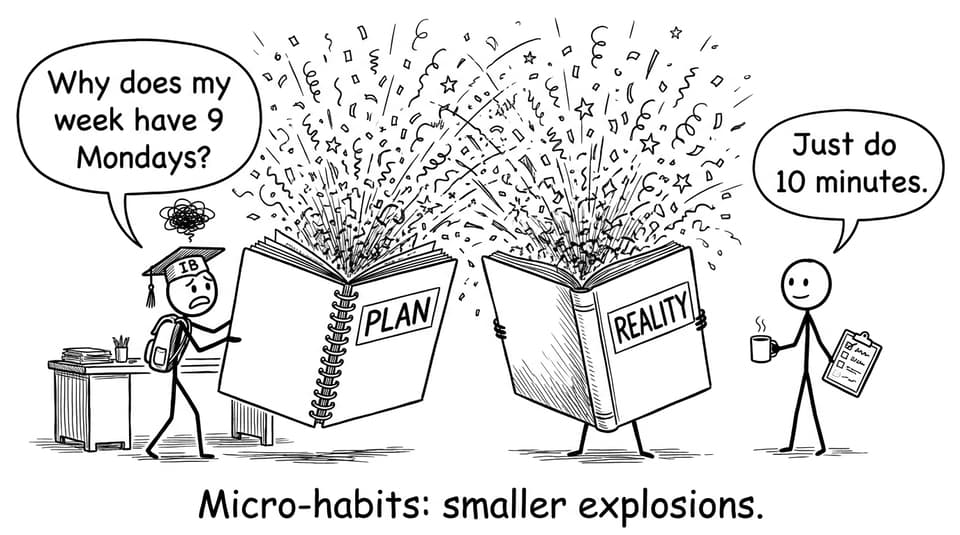
Make a “minimum viable” daily habit
The fastest way to quit a routine is to make it too big to repeat. In IB, your daily habit should be small enough that you can do it even when you get home late.
Try: 10 minutes of Flashcards + 10 minutes of one focused skill. Then stop. This sounds tiny, but it keeps your memory warm and makes restarting tomorrow easy.
If you want a template, borrow the structure from How to Build Habits That Stick During IB.
Plan your week in “paper-shaped” tasks
A common early IB trap is planning by subject (“Do Biology”). High performers plan by output (“Do Paper 2 data analysis questions”). It’s clearer, and it creates measurable wins.
Use a weekly framework like What’s a Realistic IB Study Plan for a 6 in Each Subject? and convert it into small, finishable blocks.
Study with a loop: learn, recall, apply, review
If your IB sessions feel long but unproductive, it’s usually because one gear is missing.
A strong loop looks like this:
-
Study Notes to clarify one subtopic
-
Flashcards to recall it without looking
-
Questionbank to apply it immediately
-
Grading tools (or your own markscheme checking) to review errors
For a step-by-step walkthrough, use How to Study for IB Exams: Step-by-Step Guide.
Do distraction-proof focus blocks
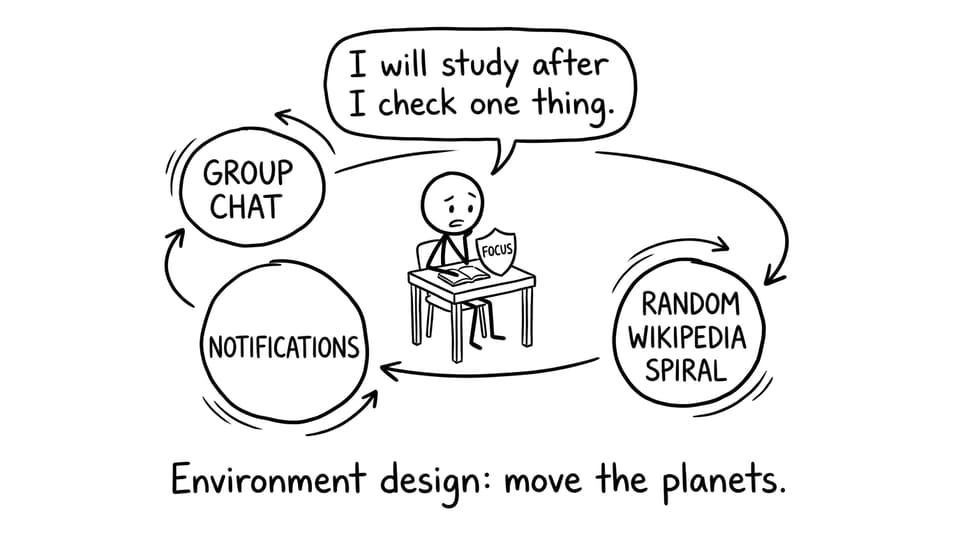
You don’t need more motivation. You need fewer escape routes.
Pick one rule for your next IB block: phone in another room, notifications off, one tab open. If focus is a struggle, start here: How Do You Study Efficiently for IB Without Getting Distracted?.
Review within 24 hours (short, not perfect)
In IB, the goal is not beautiful notes. The goal is not needing to relearn everything later.
A 10-minute review within 24 hours of class is a high-return habit: skim your notes, do a few Flashcards, then answer a couple of questions to prove you actually remember.
Keep a mistake log that creates your next task
Most students “mark and move on.” The best students mark and build the next step.
After any IB practice set, write:
-
what went wrong
-
why it happened
-
the smallest fix
-
when you will retest
This turns RevisionDojo’s Questionbank + AI Chat into a feedback loop instead of a one-off session.
Add timed practice early (gentle pressure)
Timed work is not a punishment for the final month. It’s how you teach your brain that exam conditions are familiar.
Start with one timed mini-session per week. Use The Ultimate Daily IB Study Schedule to place it where it fits.
Use tools to remove friction, not add complexity
The best IB systems feel boring because they’re repeatable.
RevisionDojo is built for that boring consistency: Study Notes for quick clarity, Flashcards for daily recall, Questionbank for targeted practice, AI Chat for fast unblocking, Mock Exams and Predicted Papers for simulation, Grading tools for tighter responses, plus a Coursework Library and Tutors when you need support.
If you want the big picture of what the program demands, start with International Baccalaureate (IB).
Build recovery like it’s part of the syllabus
Burnout isn’t just “too much work.” It’s too much work without clear ends, feedback, or rest.
Pick anchors: a consistent sleep window, one real break daily, and one social or physical activity weekly. If you’re already feeling drained, read Avoid Burnout in Year 2 of IB: 8 Proven Strategies.
Do a weekly reset (10 minutes, same time)
Once per week, ask three calm questions:
-
What moved my IB grades most this week?
-
What wasted time?
-
What will I repeat next week?
Students who do this early stay ahead later, because their plan adapts before problems become emergencies.
Conclusion: make IB easier by starting earlier
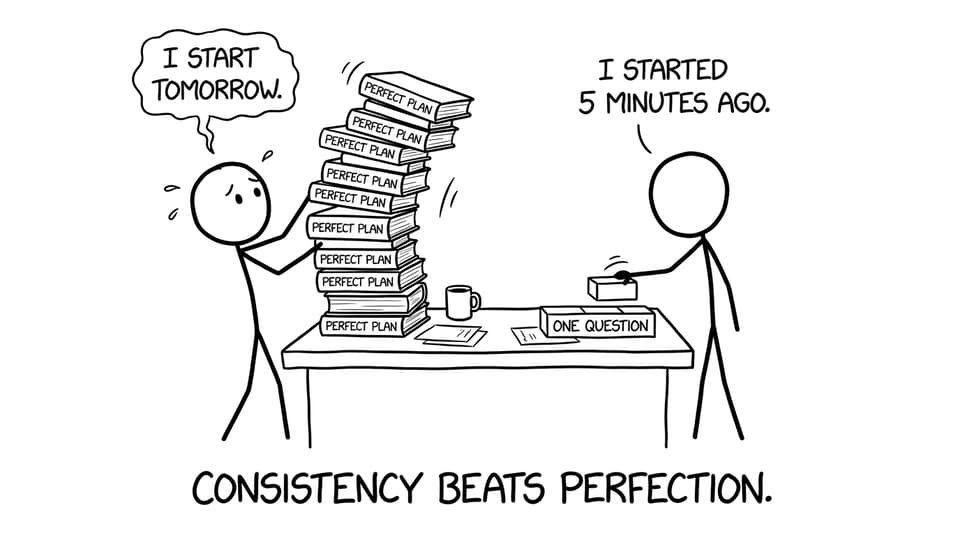
The quiet advantage in IB is not studying longer. It’s building habits early so your progress doesn’t depend on panic.
Pick one daily minimum. Add one weekly timed session. Track mistakes like data. Then let those small actions compound.
If you want a system that makes those habits easier to repeat, use RevisionDojo as your all-in-one IB workflow: Questionbank, Study Notes, Flashcards, AI Chat, Grading tools, Predicted Papers, Mock Exams, plus the Coursework Library and Tutors when you need backup. Start today with one small loop, and stay ahead tomorrow.