
The quiet truth about IB study hours
Some weeks in IB feel like you’re sprinting on a treadmill someone else controls. You do “a lot,” but it’s hard to prove it moved you closer to exam confidence. The fix usually isn’t heroic motivation. It’s a realistic weekly target, then a repeatable structure that turns hours into marks.
This guide gives you a smart range for IB study hours, how that changes as exams approach, and how to make your time actually count (with tools that reduce friction).
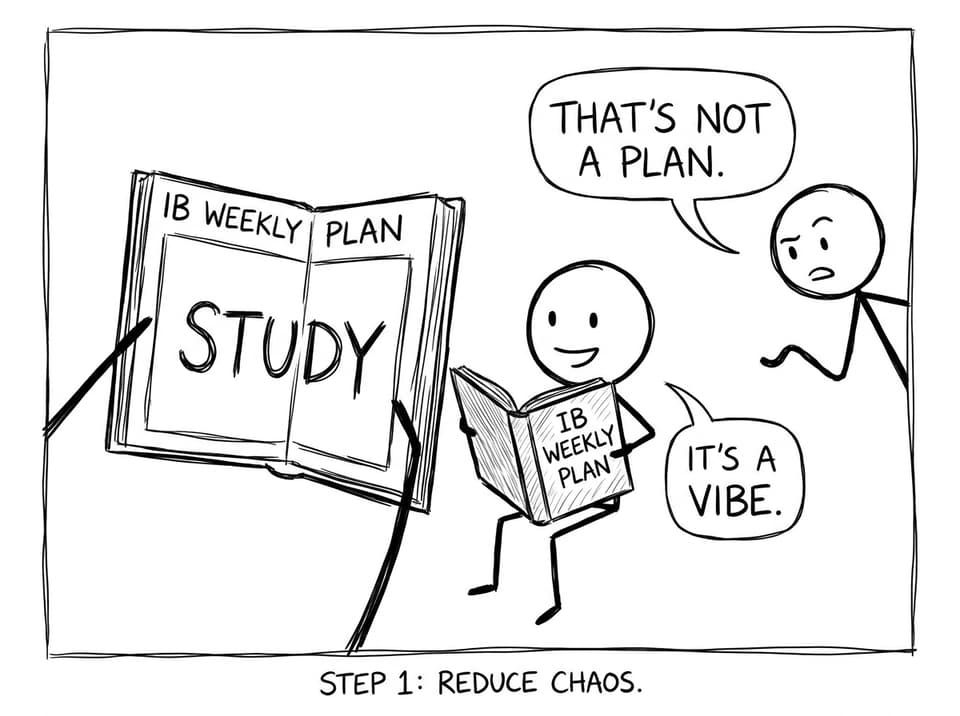
Quick checklist: your weekly IB plan in 5 minutes
-
Pick a weekly IB hours target you can repeat (not a fantasy number).
-
Allocate more time to HL than SL (HL usually needs more repetitions).
-
Make 60%+ of your time active (questions, retrieval, timed work).
-
Reserve a small block for TOK/EE/CAS so they don’t explode later.
-
Review mistakes weekly and re-test them.
If you want more detail by subject and level, use How Many Hours Should I Study Per Week in the IB?.
Recommended weekly study hours in IB (HL vs SL)
A solid rule of thumb for IB:
-
HL subjects: 6--8 hours/week per subject
-
SL subjects: 4--6 hours/week per subject
With a common 3 HL + 3 SL mix, that often lands near ~36 hours/week for subject study during heavy periods. Don’t panic if that sounds high: not every week looks like that. But it’s a useful ceiling for intense phases.
When you’re building a more balanced schedule, start with structure first. This guide helps: How to Create a Balanced IB Study Schedule.
Don’t forget the core: TOK, EE, CAS (small weekly blocks)
Most IB students get burned when the core becomes “weekend only.” A calmer approach is small, boring consistency:
-
TOK + EE: 1--2 hours/week combined (keep momentum)
-
CAS: typically 3--4 hours/week depending on your school
For realistic pacing and what to prioritize, see How Long Should I Revise for Each IB Subject?.
A smarter total: what most IB weeks look like
If you combine subjects + core + regular school demands (homework, IAs, presentations), many students land around 30--40+ hours/week in busy stretches. The point isn’t to hit a perfect number. The point is to know what your week costs so you can budget it.
A helpful template for weekly planning is What Is a Standard IB Schedule?.
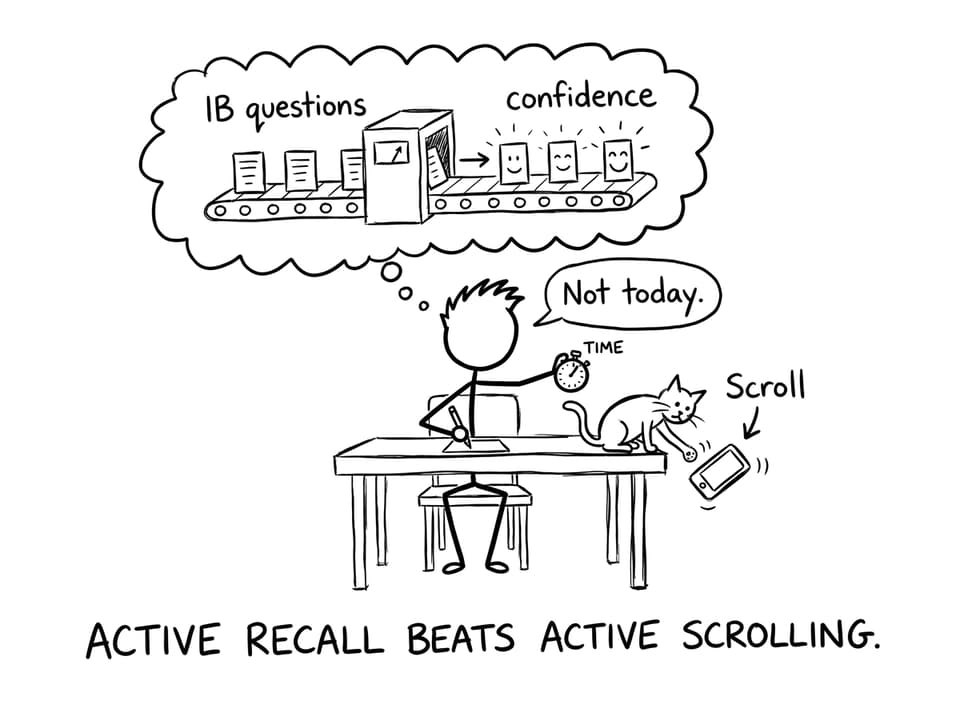
How IB study hours should change as exams get closer
In IB, the mistake is jumping from “mostly content” to “full panic mode” overnight. A steady ramp works better:
-
3--4 months before exams: ~10--15 hours/week of focused review and skills
-
2 months before exams: ~20--25 hours/week, more timed practice
-
Final month: ~30--40+ hours/week in short cycles (practice, mark, fix)
Use a timeline that doesn’t rely on last-minute bravery: How Long in Advance Should I Study for My IB Exams? and How Long Did It Take to Study for the IB Exams?.
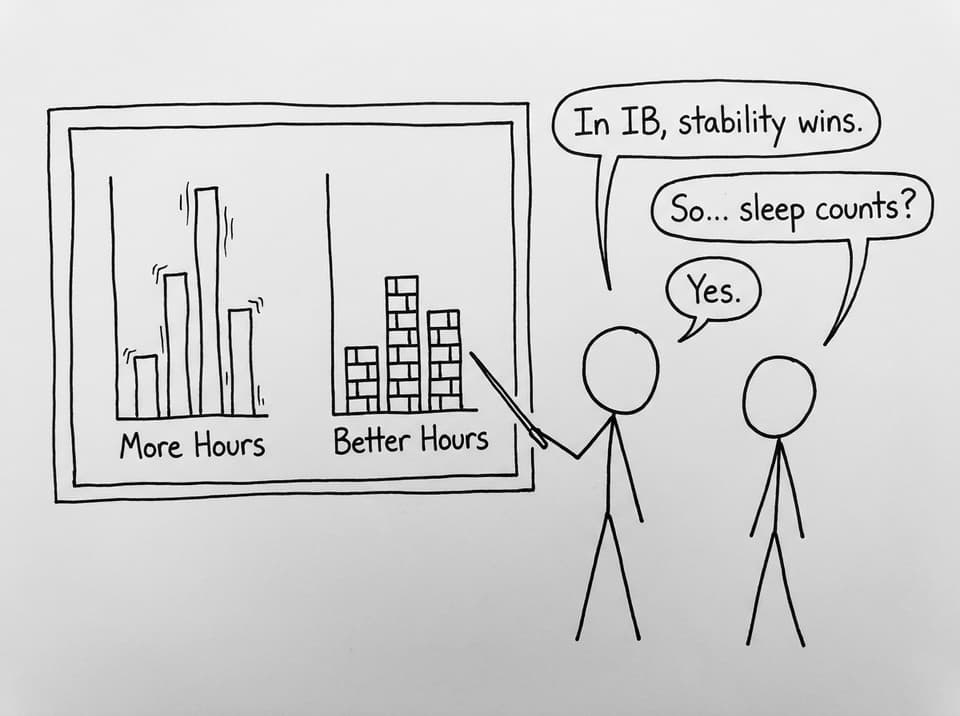
Study better, not longer: the “better hours” rule
Two focused hours can beat five distracted ones. In IB, “better hours” usually means:
-
Questionbank practice (fast feedback, repeated patterns)
-
Study Notes only long enough to repair a gap
-
Flashcards for spaced recall (daily, short)
-
AI Chat to clear confusion while it’s still fresh
-
Mock Exams and Predicted Papers for timed pressure training
-
Grading tools for essays and structured feedback loops
-
Coursework Library support when IAs feel vague
-
Tutors when you’re stuck and need a human shortcut
Start with targeted practice: Questionbank. Add daily recall with IB Flashcards. And if you want the full workflow, read RevisionDojo App: The Smarter Way to Prep for IB Exams.
A simple call-to-action: build your IB hours around evidence
Your best IB week isn’t the one where you studied the most. It’s the one where you can point to proof: questions attempted, mistakes corrected, timing improved, confidence earned.
If you want that proof without juggling ten resources, build your weekly loop with RevisionDojo: Study Notes for clarity, Flashcards for memory, a Questionbank for exam practice, AI Chat and Grading tools for feedback, plus Mock Exams, Predicted Papers, the Coursework Library, and Tutors when you need extra support. Start here: RevisionDojo for IB.


