

The moment you realize “math-heavy” means something different
The first time most students hear IB Computer Science is “logical,” they relax. Then they see binary, Boolean algebra, Big-O, and recursion on the same page and panic again. It feels like math has snuck in through a side door.
Here’s the calmer truth: IB Computer Science HL uses math, but it’s rarely the kind of math that looks like your Math AA HL textbook. It’s the practical kind--the kind that helps you reason, trace, and justify decisions under exam timing.
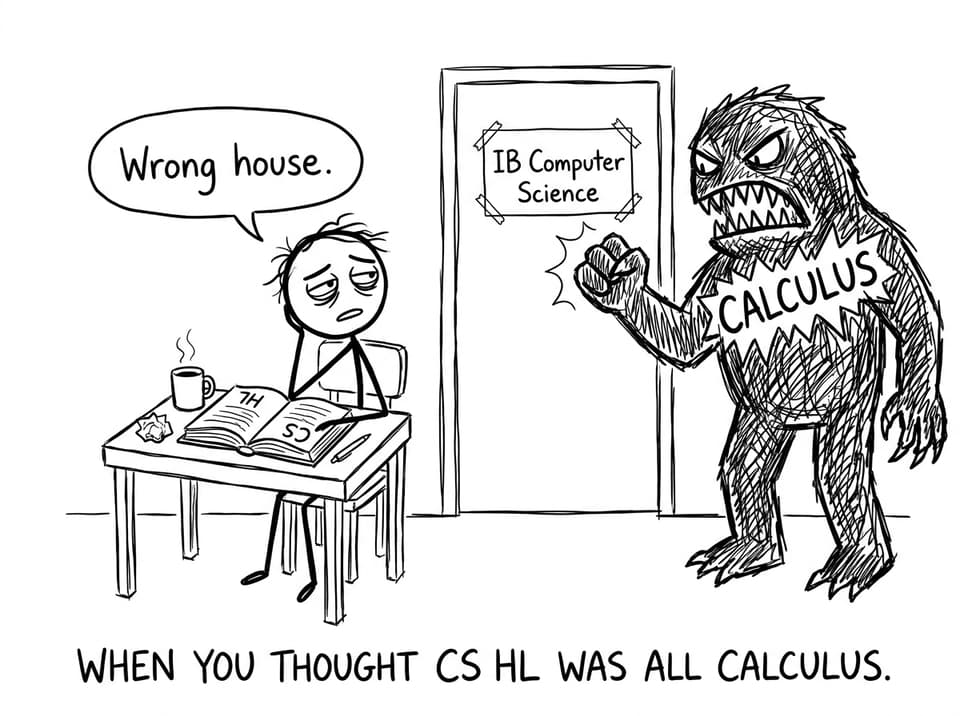
Quick checklist: the math you actually need
For IB Computer Science HL exam prep, aim to be comfortable with:
-
Number systems: binary, hexadecimal, conversions
-
Boolean logic: truth tables, AND/OR/NOT, basic Boolean simplification
-
Simple algebra: rearranging, substitution, keeping track of variables
-
Basic statistics: mean, median, interpreting small datasets
-
Discrete thinking: sets, graphs/trees conceptually, recursion as a pattern
-
Algorithmic efficiency: what O(1), O(n), O(n²) means in plain language
If you want a one-stop hub to organise this, start with IB Computer Science Resources and keep IB Computer Science Notes open as your “quick clarification” tab.
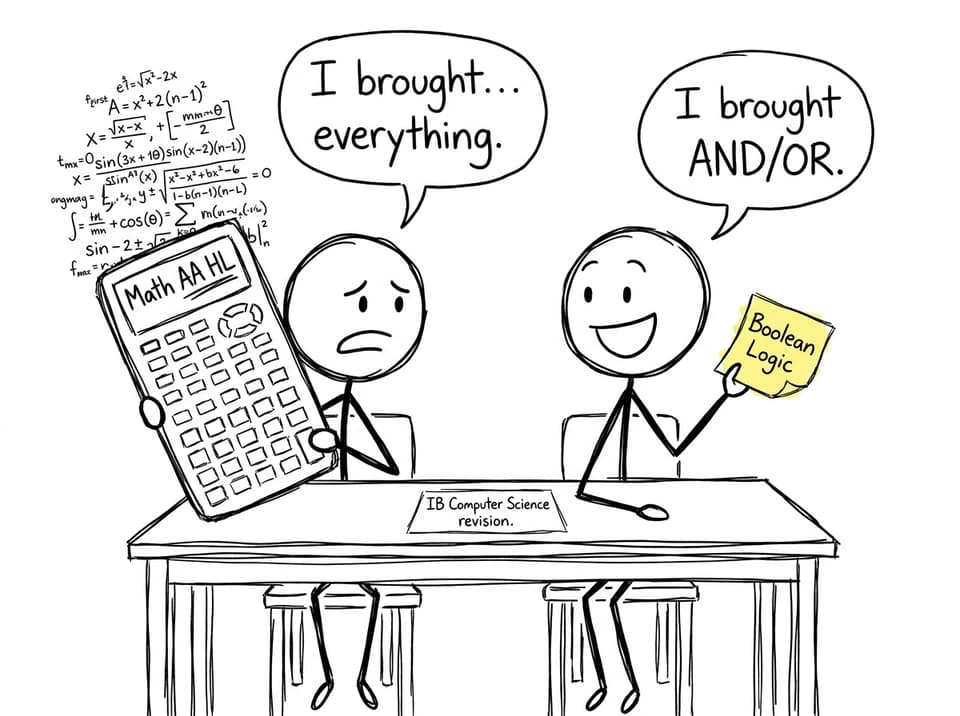
What “math” looks like inside IB Computer Science
Logical thinking beats calculus
Most of the math in IB Computer Science is there to help you make clean decisions: which condition triggers, how many times a loop runs, whether an algorithm scales, and how data is represented.
A simple example: tracing a loop is basically counting with discipline. A Boolean expression is basically “if” statements in slow motion. The exam rewards the student who can explain logic clearly, not the student who memorised a page of formulas.
To sharpen this fast, use the Questionbank to drill one micro-skill at a time (binary conversion today, truth tables tomorrow), then use AI Chat to ask, “Why did the markscheme want that wording?”
The math topics that show up repeatedly
In IB Computer Science, the usual repeat offenders are:
-
Binary/hex: conversions and representing data efficiently
-
Boolean algebra: simplifying conditions, interpreting truth tables
-
Arrays, recursion, graphs: discrete structures that require careful tracing
-
Big-O: comparing efficiency, especially when nested loops appear
If Paper 1 is your stress point, pair this article with The Most Important Topics to Revise for IB Computer Science Paper 1 so the math stays attached to exam-style tasks.
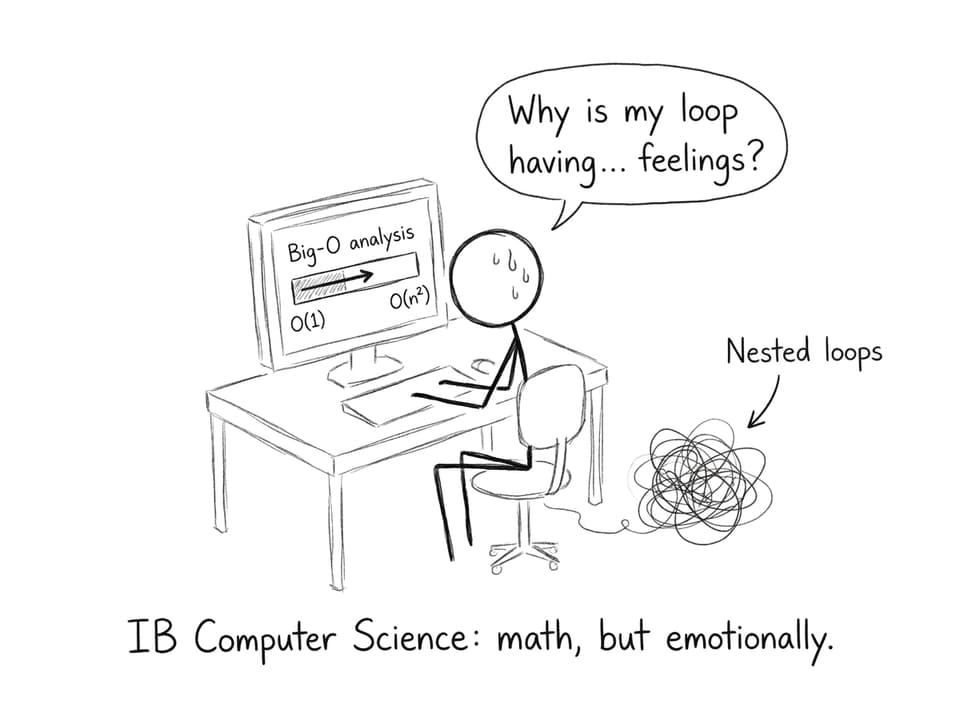
Math you don’t need (and why that’s good news)
You do not need advanced calculus, integration, or trigonometry for IB Computer Science HL in any consistent way. When students say the course is “mathy,” they usually mean it requires precision. The numbers are small; the thinking has to be sharp.
That’s good news because it means you can improve quickly: practice tracing, practice writing conditions, practice explaining efficiency. Those are learnable skills, not innate talent.
A practical prep plan for the next 14 days
If exams are close, here’s a simple loop that works for IB Computer Science:
-
Days 1--4: Notes + Flashcards for binary and Boolean logic
- Use IB Flashcards with Spaced Repetition (SRS) to keep definitions and operators automatic.
-
Days 5--9: Questionbank sets on algorithm tracing and simple Big-O
- Review mistakes and write one “rule” you keep breaking.
-
Days 10--14: Timed practice for stamina
- Add realistic full-paper practice with IB Computer Science Predicted Papers.
To structure your time, borrow the rhythm from How Many Hours per Week Should I Study for IB Computer Science HL.
Closing: treat the math like a tool, not a barrier
If you’re choosing or revising IB Computer Science HL, don’t ask, “How much math is there?” Ask, “How often do I need to think precisely?” That’s the real requirement.
Build the precision with IB Computer Science Notes, prove it with the Questionbank, lock it in with Flashcards, and rehearse under pressure using IB Computer Science Predicted Papers. That is how IB Computer Science stops feeling math-heavy and starts feeling controllable.