



If you ask ten students what IB stands for, you’ll get ten answers that sound like a coping mechanism.
One will say it’s “that two-year sprint where sleep becomes optional.” Another will say it’s “the program with the essays inside the essays.” But underneath the stress and the acronyms, IB is actually something calmer: a structured continuum of learning, built to grow with you.
So, how many programs does IB offer? Four. And understanding what each one is (and isn’t) makes exam prep feel less like guessing and more like planning.
Quick answer: How many IB programs are there?
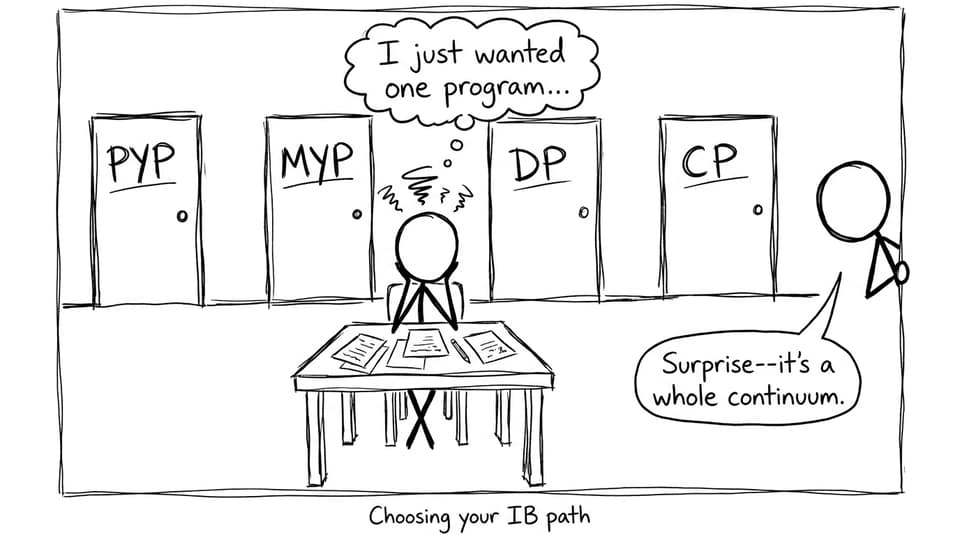
The IB offers four programmes:
-
PYP (Primary Years Programme): ages ~3-12
-
MYP (Middle Years Programme): ages ~11-16
-
DP (Diploma Programme): ages ~16-19
-
CP (Career-related Programme): ages ~16-19
If you’re an IB student preparing for exams, you’re almost certainly in the DP or CP. But it still helps to see the whole map, because it explains why your workload is shaped the way it is.
The four IB programmes (what they are really designed to do)
PYP: building curiosity before content
The IB PYP is built around inquiry. Instead of racing through facts, students practice asking good questions, noticing patterns, and reflecting on how they learn.
For exam-year students, PYP matters in a weirdly indirect way: it’s the origin story of the IB mindset. If you’ve ever been told to “show awareness,” “consider perspectives,” or “reflect,” that habit started here.
MYP: connecting subjects to the real world
The IB MYP leans into interdisciplinary learning. Students still study traditional subjects, but they’re trained to connect ideas across them, often through projects and applied tasks.
If DP feels intense, MYP is part of why. By the time students hit DP, IB expects them not just to know content, but to use it.
DP: the exam-focused centerpiece (and the one most students mean by “IB”)
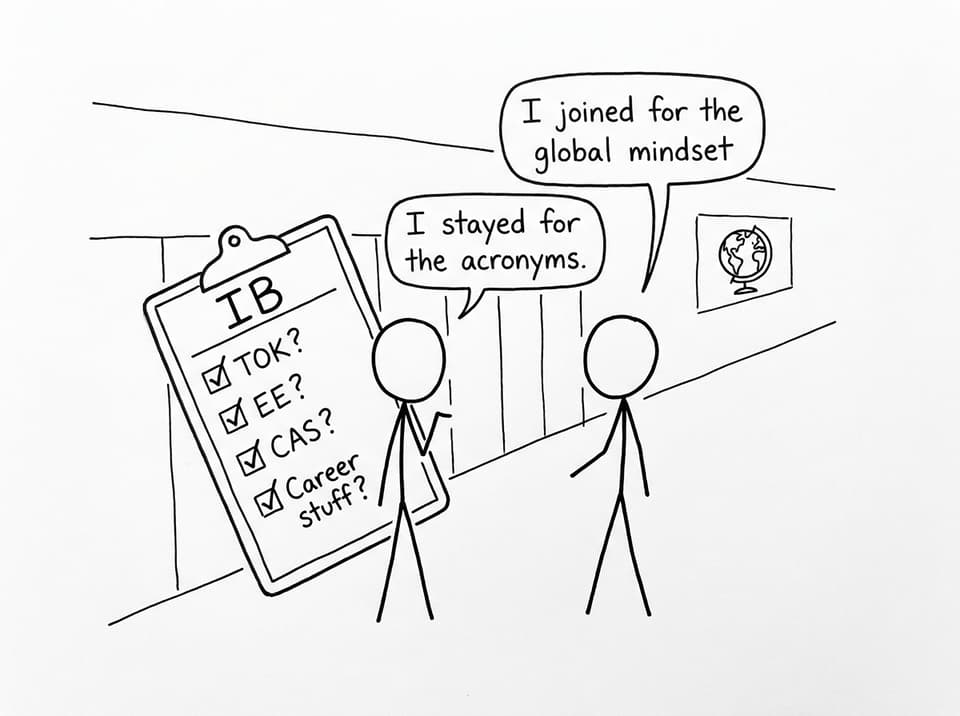
The IB Diploma Programme is the one tied most tightly to final exams. You study six subjects across groups, and you also complete the DP core: TOK, the Extended Essay, and CAS.
This is where students preparing for exams need clarity: DP isn’t only about “studying more.” It’s about studying in the way the IB marks.
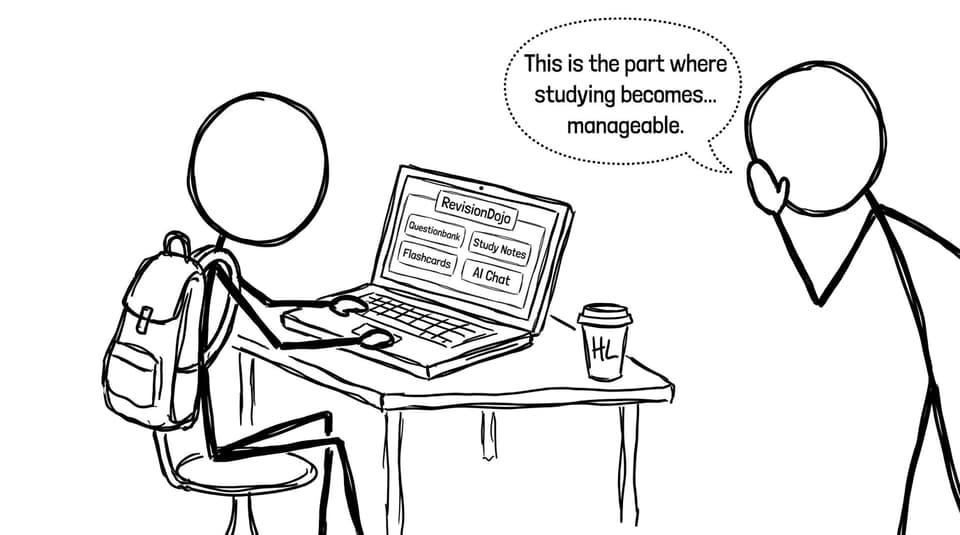
That’s why tools like RevisionDojo exist: you’re not just revising content, you’re training your exam behaviour.
If you’re building a serious routine, start here:
-
Use the RevisionDojo Questionbank for exam-style practice and markscheme thinking.
-
Pair it with Study Notes when a topic feels foggy.
-
Lock recall in using IB Flashcards with Spaced Repetition (SRS).
CP: career readiness with an IB backbone
The IB Career-related Programme (CP) is for students who want a more career-aligned pathway while still keeping the IB approach to critical thinking.
CP can be a strong fit if you want academic structure but also want your work to point toward a vocational or professional direction. It’s still rigorous, just differently shaped.
DP vs CP: the difference students actually feel week to week
For most exam-year students, the question isn’t “Which sounds better?” It’s “Which matches my goals and how I work under pressure?”
-
DP is broad and academic: six subjects plus TOK, EE, CAS.
-
CP blends academic study with a career-related focus.
If you’re in DP, you’ll want a clean system for both exam practice and core requirements. A good starting point is understanding what the DP core really demands: What Is the Core Requirement in IB? | Essential TOK, EE, and CAS Explained.
And if you’re worried you’re falling behind in TOK or CAS, read this before panic becomes a plan: What Happens If You Fail TOK or CAS in IB?.
A simple IB exam-prep checklist (DP and CP students)
When IB exams start approaching, the best students don’t become superhuman. They become consistent.
-
Do weekly timed practice using IB Predicted Papers by IB Examiners (Free) (for realism and stamina).
-
Build targeted practice sets in the RevisionDojo Questionbank (for weak-topic repair).
-
Use Digital IB Study Notes: Access Anywhere, Anytime to tighten understanding quickly.
-
Maintain daily memory reps with Flashcards.
-
Use RevisionDojo’s AI Chat when you’re stuck and need a fast explanation, not a 40-minute spiral.
-
For full simulation, build your own paper-style practice with RevisionDojo for IB.
Conclusion: four IB programmes, one smarter way to prepare
The IB offers four programmes, but students preparing for exams live mostly in the world of DP (and sometimes CP). The trick is remembering that the system isn’t trying to overwhelm you. It’s trying to shape you into someone who can think, write, and perform under pressure.
If you want your next month of IB revision to feel structured instead of frantic, build your routine around RevisionDojo’s Questionbank, Study Notes, Flashcards, AI Chat, grading tools, Predicted Papers, Mock Exams, Coursework Library, and Tutors. Less resource-hunting. More measurable progress.
Start here: RevisionDojo | IB & MYP Resources.