


The moment every IB teacher recognises
It usually happens in the same quiet way.
Two weeks before exams, a student who has been "keeping up" suddenly starts staying behind after class. They are not asking harder questions. They are asking basic ones, but with a new urgency: Where do I even start?
Every IB teacher has watched that pattern repeat. Not because IB students are lazy, but because the programme is dense: six subjects, internal assessments, TOK, CAS, and the Extended Essay. Without a system, revision becomes something you do when fear finally gets loud enough.
The good news is that IB teachers already know how to motivate consistent revision. They just tend to do it quietly: by building structure, making progress visible, and turning revision into something small enough to repeat.
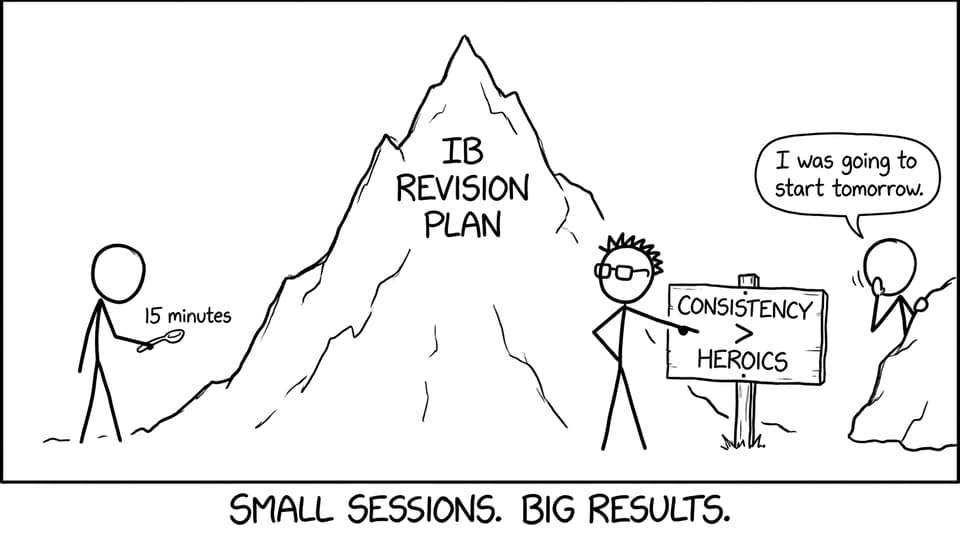
A quick checklist teachers use to make IB revision consistent
If you want a simple model you can copy this week, most effective IB teachers lean on five repeatable moves:
-
Shrink the task: 15-30 minutes beats a mythical 3-hour session.
-
Make revision observable: if you can’t see it, it won’t stick.
-
Attach feedback fast: motivation grows when improvement is measurable.
-
Build a rhythm: same days, same time, same trigger.
-
Reward consistency: streaks, routines, and follow-through, not just grades.
This is also why tools like RevisionDojo work so well in IB contexts: they turn vague effort into visible progress through the Questionbank, Study Notes, Flashcards, AI Chat, Grading tools, Predicted Papers, Mock Exams, Coursework Library, and access to Tutors.
Why consistent IB revision is hard (even for strong students)
The most frustrating part of the IB is that it can punish good intentions.
You can genuinely care, genuinely try, and still lose weeks to competing deadlines. Teachers see five pressures show up again and again:
The workload problem isn’t time, it’s switching costs
Students jump from Biology to English to Math to TOK reflections, and each switch has a cognitive toll. By the time you "get in the zone," the session is over. Teachers motivate consistent IB revision by designing study tasks that reduce switching: one topic, one objective, one short session.
Revision feels like effort without proof
If a student revises for an hour and still scores the same, their brain learns a dangerous lesson: this isn’t worth it. Teachers fix this by tying revision to rapid feedback loops, usually through exam-style practice.
A practical starting point is using a targeted question set from an IB Questionbank like Questionbank, because you can prove improvement in marks (not just in vibes).
How IB teachers motivate students: the strategies that actually work
They turn revision into a routine, not a mood
The best IB teachers motivate students the way coaches do: they remove decision-making.
Instead of "revise when you can," they create a predictable cadence:
-
Two short recall sessions during the week
-
One longer timed practice session on the weekend
-
One quick reflection on what to fix next
When students need a clear home base for that cadence, teachers often point them to an all-in-one workflow like the RevisionDojo app, where Study Notes flow into Flashcards, then into the Questionbank, then into timed practice.
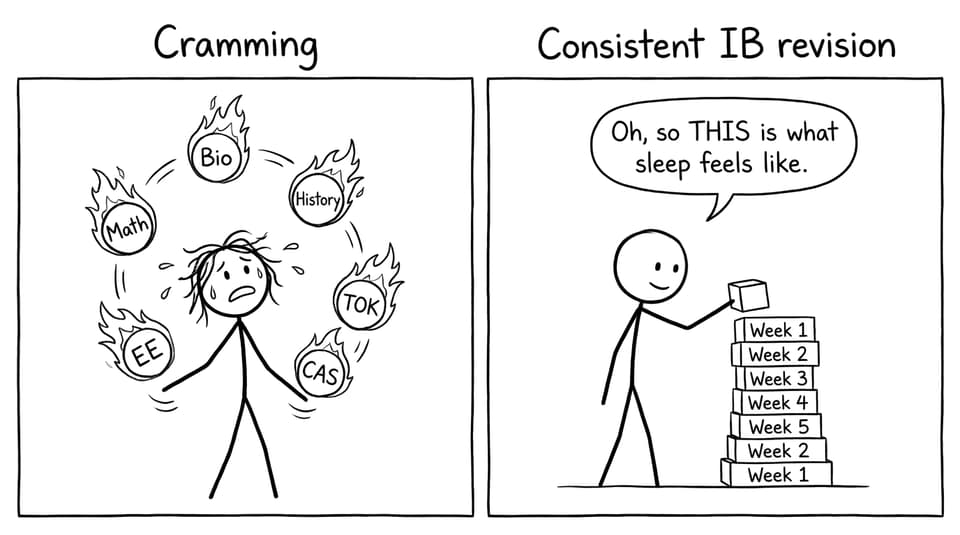
They make progress visible (because invisible effort dies)
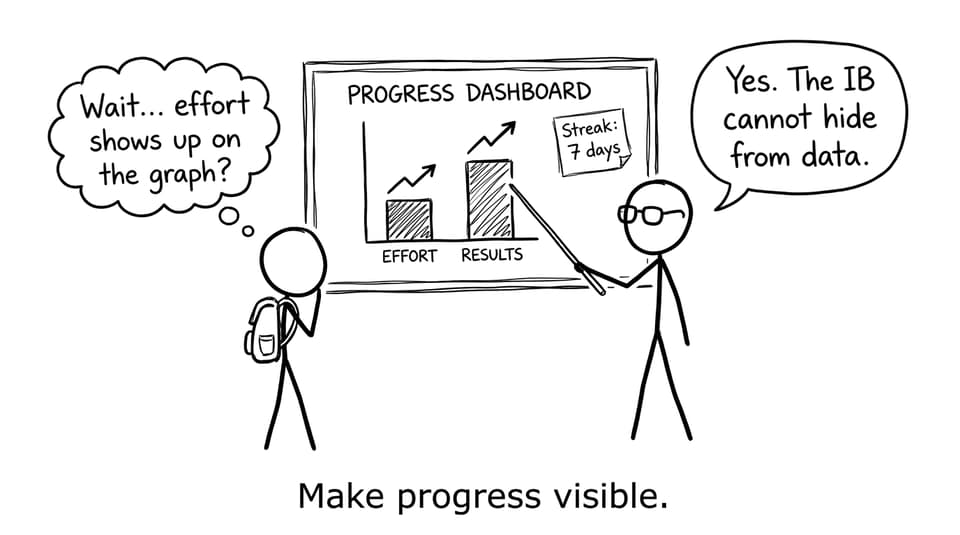
Motivation loves a graph.
IB teachers know that students don’t just need goals; they need evidence that the goal is moving closer. When progress is visible, revision becomes identity-based: I’m someone who keeps up.
That is why resources like IB Flashcards with Spaced Repetition (SRS) are so sticky for daily consistency: spaced repetition turns "I should review" into "the system tells me what’s due today," and students can literally see reviews completed.
They use micro-deadlines and micro-wins
A teacher rarely says, "Revise all of Topic 4." They say:
-
"Do 12 questions on this sub-skill."
-
"Make 10 flashcards from today’s lesson."
-
"Redo the three questions you missed yesterday."
This is also where RevisionDojo’s ecosystem helps: AI Chat can unblock confusion fast, Grading tools can show what the rubric wants, and the Coursework Library makes expectations concrete rather than mysterious.
They connect revision to performance under pressure
IB students often mistake familiarity for ability. Teachers correct that gently: by simulating pressure early enough that it stops being scary.
A clean progression many teachers use:
-
Notes for clarity
-
Flashcards for recall
-
Questionbank for application
-
Timed practice for stamina
For timed realism, teachers like using resources such as IB Predicted Papers by IB Examiners (Free), because students practise pacing, command terms, and decision-making under time.
If you want the bigger picture on why those simulations work, IB Predicted vs Specimen Papers: What They Mean is a helpful explainer.
They reward the habit, not just the outcome
A surprising number of IB students only feel "successful" when they get a top score. Teachers motivate consistent revision by praising the controllables:
-
Showing up daily
-
Doing corrections
-
Asking one good question
-
Reattempting after feedback
This is exactly the philosophy behind using analytics and routines in whole cohorts, which is why many schools explore RevisionDojo for Schools to make consistent IB revision a shared culture, not a private struggle.
A realistic weekly IB revision loop you can copy today
Here’s a teacher-style plan that is boring in the best way:
-
Mon (20 min): Use RevisionDojo Notes to Boost IB Retention for one topic, then write 5 recall prompts.
-
Tue (15 min): Flashcards review (due cards only).
-
Thu (25 min): A short targeted set from the IB Question Bank | How to Use It Effectively playbook.
-
Sat (45-60 min): One timed section using Mock Exams or Predicted Papers.
-
Sun (10 min): List your top 3 recurring mistakes. Ask AI Chat to explain the hardest one in a new way.
Do this for two weeks and your IB revision stops being a panic event. It becomes a rhythm.
FAQ
How do IB teachers motivate students who have "tried everything" and still don’t revise?
IB teachers usually stop arguing about motivation and start designing the environment. They make revision smaller, easier to begin, and harder to avoid. Instead of assigning "study Chapter 7," they assign a short, concrete action like a 15-minute question set or a flashcard review. Then they follow up quickly, because accountability loses power when it arrives a week later. Many teachers also normalise imperfect starts: doing something badly today is better than doing nothing perfectly tomorrow. Over time, the student doesn’t become motivated first; they become consistent first, and motivation follows.
What kind of feedback keeps IB students revising consistently?
The feedback that works is fast, specific, and connected to marks. IB students are juggling too much to benefit from vague encouragement like "revise more" or "be careful." Teachers motivate consistent IB revision by giving feedback that points to a repeatable fix: a command term mistake, a missing definition, a weak structure, or a timing issue. The best feedback also creates a next action within 24-48 hours, so students can reattempt while the mistake is still fresh. That is why exam-style practice with clear markscheme alignment is so powerful: students can see exactly what changes their score. When improvement is measurable, revision stops feeling like hope and starts feeling like control.
How can I stay consistent with IB revision when coursework deadlines keep exploding?
Teachers expect deadlines to interrupt you, so they build "minimum viable revision" plans. That means having a fallback routine you can do even in a heavy week: 10 minutes of flashcards, or one short question set, or a quick correction loop. The key is to protect the identity of being consistent, even when time is tight. If you miss a day, your job is not to punish yourself; it’s to restart in a smaller format the next day. Teachers also recommend batching: during a lighter week, prepare flashcards and topic lists so heavy weeks still have plug-and-play tasks. Consistency in IB is rarely about perfect weeks; it’s about quick recoveries.
Closing: the quiet power of consistent IB revision
IB teachers don’t motivate students with speeches. They do it with systems.
When revision is small enough to start, clear enough to track, and tight enough to get feedback, it becomes sustainable. And once it’s sustainable, it becomes surprisingly calm.
If you want to borrow that structure, build your routine inside RevisionDojo: start with Study Notes, lock it in with Flashcards, prove it with the Questionbank, get unstuck with AI Chat, and pressure-test with Predicted Papers and Mock Exams. Consistent IB revision isn’t about working harder. It’s about making the next session inevitable.