


A week before finals, an IB student can look calm in class and still feel like their calendar is a horror story. One deadline hides behind another. A draft becomes “just one more tweak.” Revision becomes “after I finish this.” Then suddenly it’s 1:00 a.m., and time feels less like a resource and more like a judge.
If you’re an IB student preparing for exams, here’s the good news: the best teachers don’t just teach content. They teach structure. And when IB teachers support students who struggle with time management, the entire exam season changes from panic-driven to plan-driven.
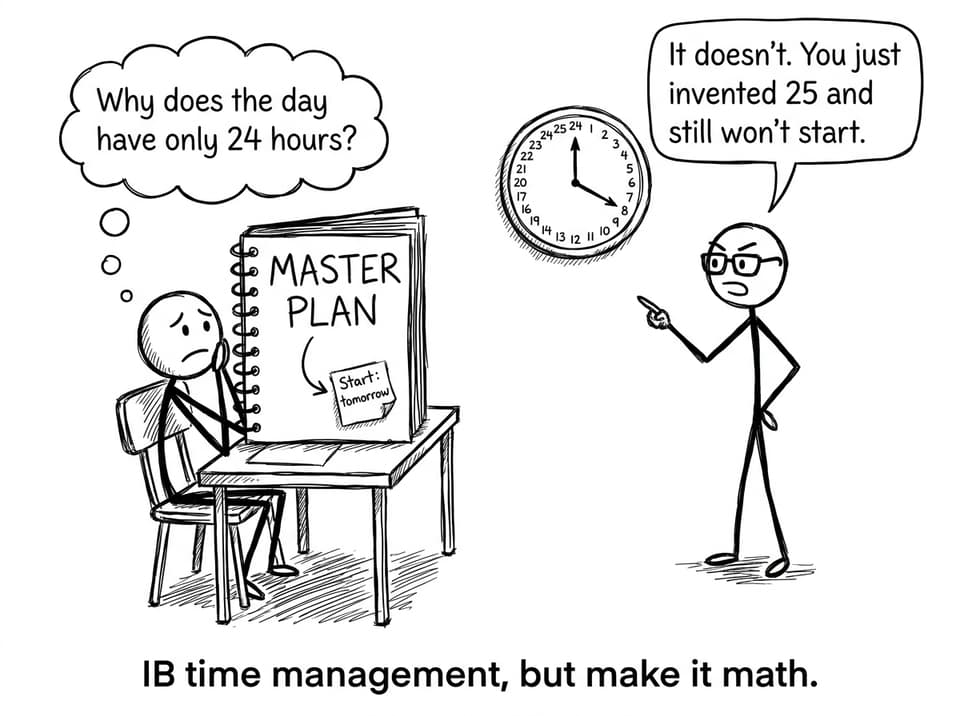
Why IB students lose time (even when they care)
Time management problems in IB usually aren’t laziness. They’re usually friction.
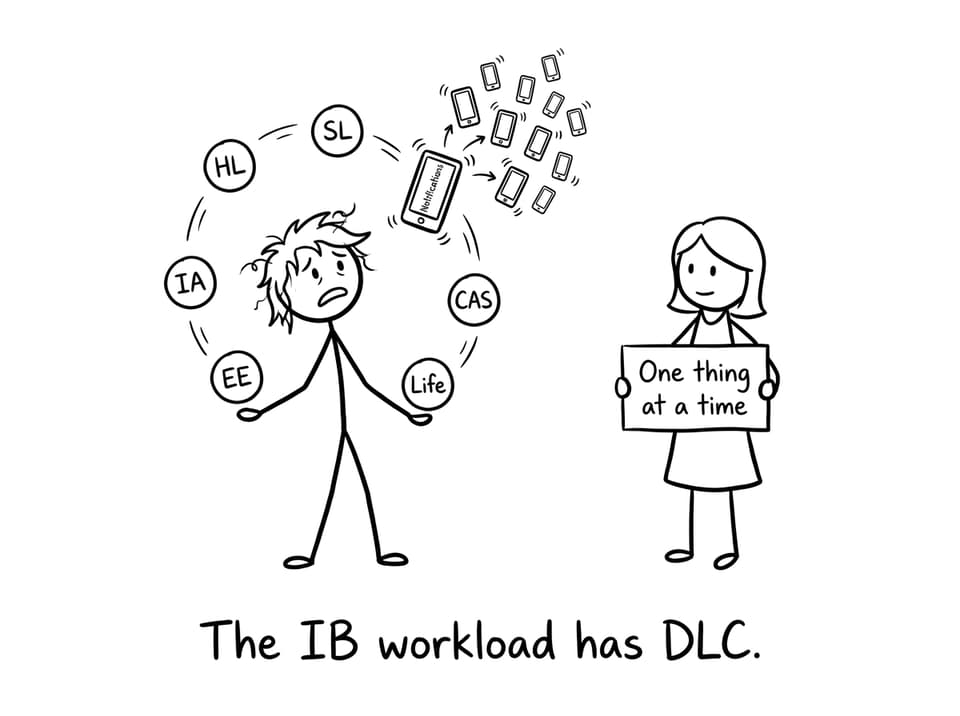
You’re balancing multiple subjects, Internal Assessments, TOK tasks, EE milestones, CAS commitments, and normal life. The workload isn’t just “a lot”; it’s emotionally noisy. Everything feels urgent, so prioritizing feels like guessing.
Common patterns teachers can spot early:
-
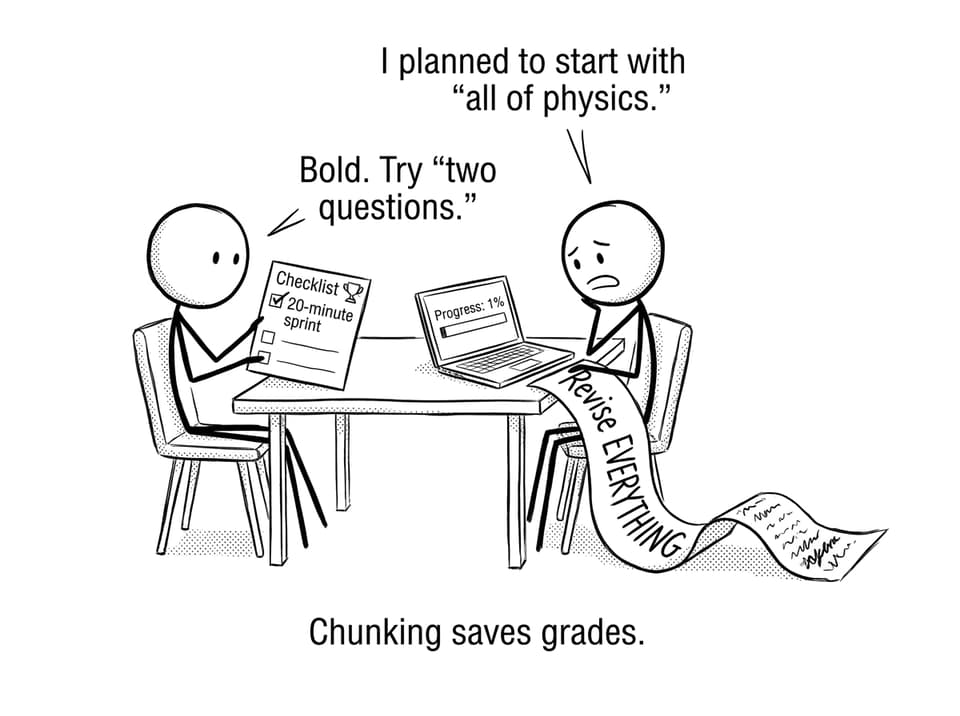
You plan in vague blocks (“revise Biology”) instead of concrete actions (20 questions on enzymes).
-
You underestimate how long writing tasks take (drafting, editing, referencing).
-
You confuse “studying” with rereading, which feels productive but moves slowly.
-
You don’t notice you’re behind until the gap is too big to ignore.
A strong IB teacher doesn’t shame that pattern. They build a system that makes the next step obvious.
A quick IB time management checklist teachers can teach
If your teacher helps your class adopt a simple baseline routine, it often beats any fancy planner.
-
Backward plan from deadlines (then add buffer time)
-
Break big work into “next tiny actions”
-
Use time boxes (25-50 minutes) instead of open-ended study
-
Set a weekly review ritual (10-15 minutes)
-
Default to active recall (questions + flashcards) instead of passive notes
This matches the core ideas in RevisionDojo’s guides on time management tools and techniques that actually work and time management techniques for IB students.
How IB teachers can support time management in a way that sticks
The best support is consistent, specific, and visible. Here are teacher moves that actually change your week.
Turn “study more” into “do this next” (IB clarity beats motivation)
Teachers can model how to translate a goal into an action:
-
“Finish Chemistry” becomes “do 15 stoichiometry questions, then correct mistakes.”
-
“Revise English” becomes “one timed paragraph plan + one body paragraph.”
That’s why tools like RevisionDojo’s Questionbank matter: they make study sessions measurable. Instead of wondering what to do, you can practice by topic, then track what you missed.
For students, this is time management disguised as confidence.
Build a weekly cadence (IB time management is a rhythm)
Great IB teachers often run a repeating cycle:
-
One day for learning (short Study Notes to patch gaps)
-
Several days for practice (Questionbank sets)
-
One day for spaced repetition (Flashcards)
-
One checkpoint for timing (Mock Exams and Predicted Papers)
RevisionDojo is built around that loop: Questionbank, Study Notes, Flashcards, AI Chat, Grading tools, Predicted Papers, Mock Exams, Coursework Library, and Tutors, all in one place so your attention doesn’t scatter.
If you want a student-friendly version of this routine, share (or follow) The Ultimate Daily IB Study Schedule.
Use feedback loops to stop the “rewrite spiral”
A hidden time trap in IB is perfectionism. Students rewrite notes, rewrite drafts, rewrite plans. It feels safe because it avoids being wrong.
Teachers can interrupt this by requiring fast feedback cycles:
-
Attempt a set of questions.
-
Mark and log mistakes.
-
Ask one targeted question.
-
Reattempt quickly.
RevisionDojo supports that with AI Chat for quick clarifications, plus Grading tools for coursework feedback that’s rubric-aware (especially useful when IAs and the EE start stealing revision time). For a broader reset, see IB: I Study All Day but Remember Nothing.
Track consistency, not intensity (IB time management is compounding)
Teachers can reduce student burnout by praising streaks and small wins:
-
10 minutes of flashcards daily
-
one short timed section weekly
-
steady progress on a single weak topic
This is where RevisionDojo’s dashboards and progress tagging help. Students see evidence of effort, not just a feeling of being behind.
A simple classroom example (what changes when structure shows up)
Imagine a teacher notices the class is leaving exam preparation until the last minute. Instead of assigning “more revision,” they set a weekly routine:
-
Monday: one topic, short Study Notes
-
Tuesday/Thursday: Questionbank practice sets
-
Friday: 15-minute mistake review + Flashcards
-
Every other week: a timed block using Mock Exams
Within a month, students usually feel something rare in IB: control. Not because the workload shrank, but because time stopped being mysterious.
For more targeted timing advice, students can also use IB English time management strategies or subject-specific timing like time management in IB Math exams.
FAQ
How can my IB teacher help if I keep missing deadlines?
A good IB teacher will treat missed deadlines as a planning problem, not a personality flaw. The most effective move is to help you backward plan from the real due date and then set intermediate checkpoints that are small enough to finish in one sitting. You’ll usually need tasks rewritten into “next actions” (outline one section, do one data analysis step, write one paragraph) instead of broad goals. Teachers can also build accountability by collecting mini-deliverables weekly, not just the final piece. If your school uses RevisionDojo, your teacher can pair those checkpoints with Questionbank sets, Flashcards, and progress tracking so the plan becomes visible. Over time, you start missing fewer deadlines because you stop relying on last-minute willpower.
What should I do if I plan a lot but still procrastinate in IB?
In IB, planning can become a form of procrastination because it feels productive without the risk of being wrong. The fix is time boxing: decide in advance that you’ll work for 25-50 minutes, then stop, regardless of perfection. Start with a task that produces an output you can check, like a Questionbank set or a timed paragraph plan, rather than rereading notes. Teachers can support you by setting “minimum viable work” expectations (for example, 10 questions plus corrections) so you can succeed even on low-energy days. If you get stuck, use a fast unblock method like AI Chat, then return immediately to practice. Procrastination shrinks when the first step is small and the next step is obvious.
How does RevisionDojo support IB time management during exam season?
RevisionDojo helps because it turns vague study intentions into a repeatable workflow: learn a little, practice a lot, review mistakes, and repeat. Students can use Study Notes to quickly patch understanding, then switch to active recall with Flashcards and exam-style practice in the Questionbank. When timing matters, Mock Exams and Predicted Papers make practice feel closer to the real thing, which is essential for exam pacing. For coursework pressure, Grading tools and the Coursework Library reduce the “I don’t know what good looks like” time sink, so revision doesn’t get crowded out. If you need more support, Tutors add a human layer to clarify priorities and fix recurring weaknesses. In short, the platform reduces decision fatigue, which is a major hidden cause of poor time management in IB.
Make time your ally (and let IB support feel practical)
IB time management isn’t about becoming a different person. It’s about building a system that still works when you’re tired, stressed, and busy. When teachers give you structure: clear next actions, weekly rhythms, and feedback loops, you stop negotiating with time and start using it.
If you want your school to support this kind of consistent IB routine at scale, explore RevisionDojo for Schools. And if you’re a student building your own plan, start with small daily loops: Flashcards, one focused Questionbank set, one correction session. In IB, that’s how calm becomes earned.