


When the syllabus changes, your Teacher feels it first
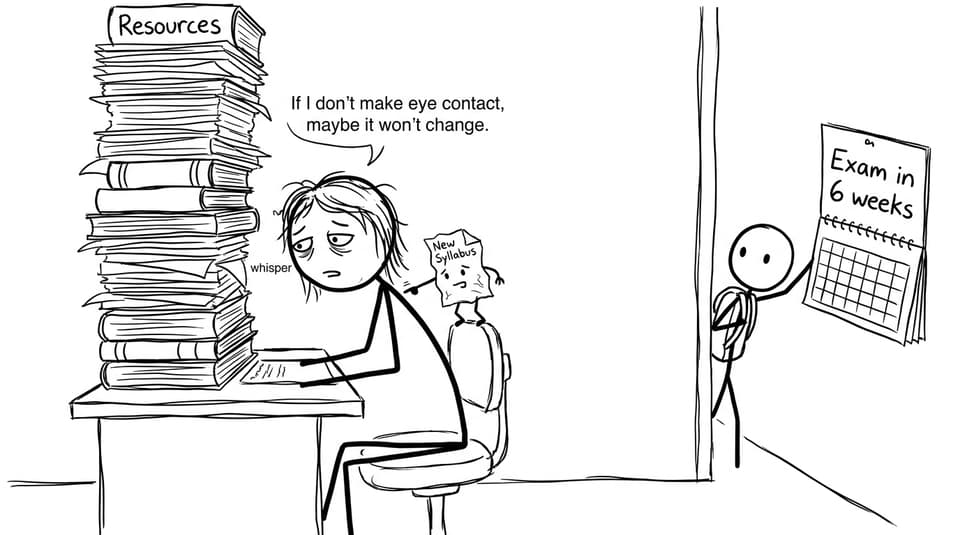
The moment an IB syllabus shifts, something subtle happens in your classroom. Your Teacher pauses a second longer before answering, flips through slides with a slightly suspicious look, and starts saying phrases like “let me double-check the guide.” It’s not indecision. It’s responsibility.
Syllabus changes are meant to improve clarity and skills. But for a Teacher, they also create a quiet avalanche: lessons need remapping, question styles need rethinking, and anything “almost right” becomes risky. For you, the student, the impact is personal: you don’t just want content. You want certainty that what you’re revising is still examinable.
That’s the real problem this post solves: how a Teacher can keep lesson resources updated when the syllabus changes, and how you can benefit immediately as an IB student preparing for exams.
A quick checklist students can use to “audit” a Teacher’s resources
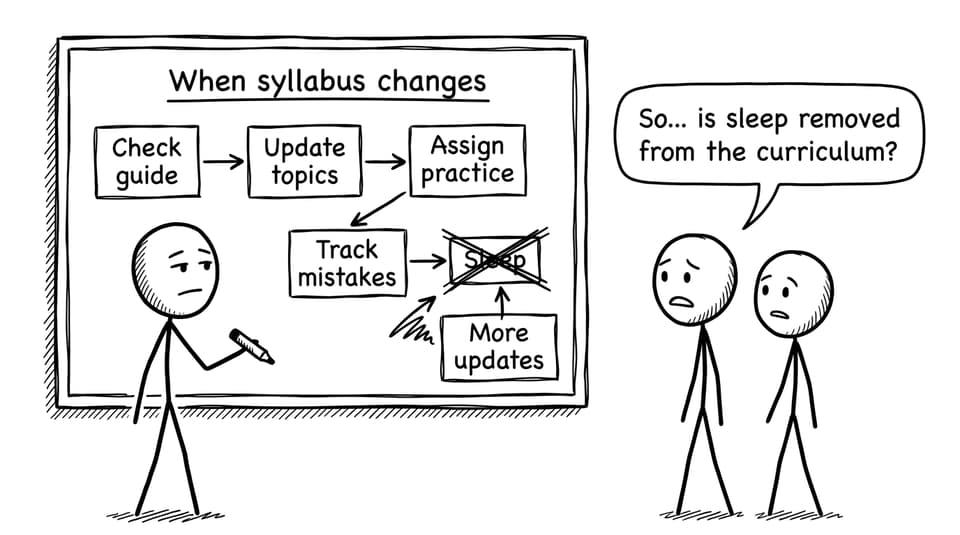
You can’t control when the IB updates a subject, but you can control how quickly you spot misalignment. Use this checklist whenever your Teacher hands out new (or suspiciously old) materials:
-
Ask what changed: content, assessment structure, command terms, or weighting.
-
Check the date on slides, booklets, and markschemes your Teacher shares.
-
Match the topic name to the current guide structure (units get renamed a lot).
-
Look for the new skills emphasis (often more data response, evaluation, or application).
-
Request one “updated practice set” to confirm question style still fits.
If you want a student-friendly overview of wider updates, share this with your Teacher or use it yourself: IB Curriculum Changes 2025: How to Adapt Fast.
Why syllabus changes overload even a great Teacher
A good Teacher isn’t just delivering information. They’re maintaining a system: sequence, homework rhythm, assessments, and feedback loops. When the syllabus changes, the system breaks in specific places.
Content moves, but class time doesn’t
A syllabus update can reorganise topics into new themes, merge sections, or remove a sub-point you once drilled weekly. Your Teacher has to decide what to cut, what to compress, and what to rebuild, all while keeping your class moving.
Questions keep the same “vibe” but change the rules
The hardest part is not the content. It’s the marking logic. A Teacher can teach a concept perfectly and still misjudge what earns marks if command terms, paper styles, or assessment objectives shift.
That’s why practice resources matter so much. Your revision needs questions that match the current expectations, not last cycle’s habits.
If you’re trying to build a reliable practice routine while things change, this guide is useful: IB Question Bank: How to Use It Effectively.
What “updated resources” should look like (from a student’s point of view)
Your Teacher may talk about alignment, but you’ll feel it in three concrete ways.
Updated resources feel mapped, not random
When resources are current, your Teacher can say, “This connects to this syllabus statement,” and you can see the chain: concept, skill, question type, markscheme logic.
RevisionDojo is built around that chain. Students can revise with Study Notes that stay close to syllabus structure, then move straight into the Questionbank for exam-style practice, supported by AI Chat when you’re stuck. Start here if you want one stable home base: RevisionDojo for IB.
Updated resources include fast feedback
When the syllabus changes, feedback becomes the difference between “I studied” and “I’m ready.” A Teacher can’t always mark everything instantly. That’s where RevisionDojo’s Grading tools and feedback loops help you correct misunderstandings quickly, while your Teacher focuses on teaching.
Updated resources create consistency across a department
If each Teacher updates alone, students get mixed signals: different topic orders, different expectations, different “this is important” lists. The best outcome is shared alignment.
This is one reason schools adopt a unified platform like RevisionDojo for Schools: it reduces contradictory guidance and keeps cohorts moving with the same syllabus map.
How RevisionDojo helps your Teacher stay current (and why you should care)
You’re not reading this because you want your Teacher to have an easier life (though that’s fair). You’re reading it because you want the right material for the exam you’ll actually sit.
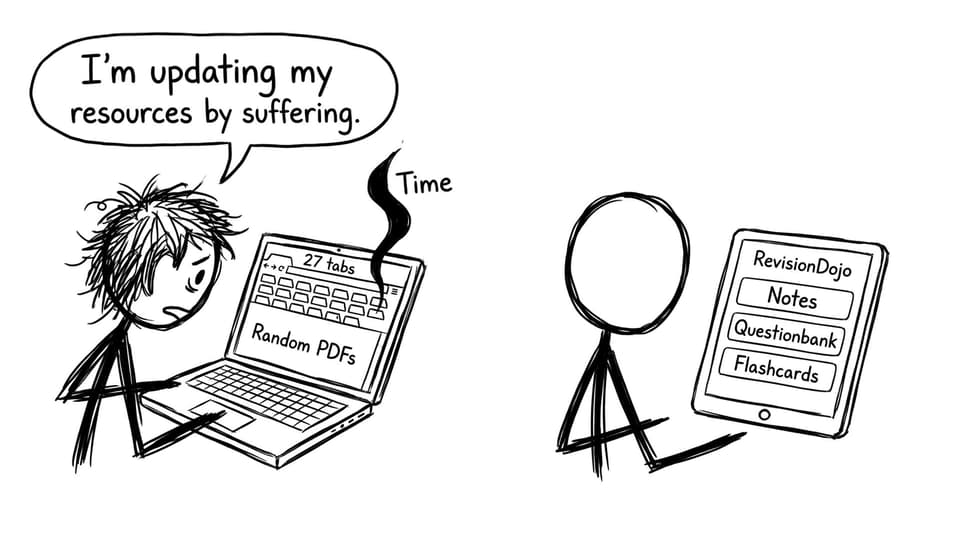
Here’s how RevisionDojo’s ecosystem supports that outcome:
-
Questionbank: targeted practice that reflects current syllabus phrasing and skills. Your Teacher can assign practice without rebuilding worksheets from scratch.
-
Study Notes: a clean reference spine when textbooks lag behind syllabus updates. See how students use them strategically in IB Subject Note Collections.
-
Flashcards: daily recall that doesn’t depend on whether your Teacher had time to make new decks. Explore: IB Flashcards with Spaced Repetition.
-
AI Chat: the moment you hit a new-style question and don’t know what the command term wants, you can ask and keep moving.
-
Predicted Papers and Mock Exams: updated exam rehearsal so you’re not practicing timing on outdated formats. Start here: IB Predicted Papers and learn the difference with IB Predicted vs Specimen Papers: What They Mean.
-
Coursework Library: when criteria shift, examples reduce guesswork. Browse: IB Coursework Examples: IA, EE and TOK Exemplars and IB Coursework Guides.
-
Tutors: when a syllabus change creates a “teaching gap” mid-year, targeted support can be the fastest fix.
The big idea is simple: your Teacher doesn’t need to constantly reinvent resources if the platform they rely on evolves with the course.
Transition-year survival tips (for students and your Teacher)
Ask for the “current exam lens”
When your Teacher introduces a topic, ask: “How is this tested now?” That one question forces alignment: command terms, data response style, essay structure, or calculation method.
Turn uncertainty into a practice loop
When syllabus updates feel vague, don’t argue about them. Train for them:
-
Read the relevant Study Notes
-
Drill 10-15 questions in the Questionbank
-
Convert mistakes into Flashcards
-
Use AI Chat to patch logic gaps
-
Re-test under time
If you want to make timed practice less chaotic, this helps: Best IB Mock Exam Platform: Why Students Pick RevisionDojo.
FAQ
How quickly can a Teacher realistically update resources after a syllabus change?
A Teacher can update the plan quickly, but updating every worksheet, quiz, and markscheme-aligned task takes much longer. The first step is usually a mapping phase: identifying what moved, what got removed, and what is now emphasised. Then comes the painful part: rewriting assessments so they match new command terms and mark allocations. During this period, students often experience a mismatch between what’s taught and what’s practiced, simply because high-quality practice takes time to rebuild. This is why using an ecosystem like RevisionDojo matters: it shortens the lag between “new syllabus exists” and “new practice is available.” For students, the win is clarity: you spend revision time on what still counts.
If my Teacher is using older questions, will that ruin my exam prep?
Not automatically, but it can create blind spots. Older questions can still build understanding, especially for core concepts that remain stable across cycles. The risk is that you get good at answering in an old style and then feel surprised by new phrasing, new data formats, or different skill weighting. A smart approach is to treat older questions as concept training, then validate your readiness with up-to-date exam-style sets. You can also ask your Teacher directly which parts of a question set are “still representative” and which are “legacy practice.” RevisionDojo helps by letting you practice in a format designed to mirror current expectations, then refine with feedback.
What can students do if different Teachers interpret the new syllabus differently?
This happens more than schools like to admit. Different Teachers may prioritise different topics, sequence them differently, or disagree on how strongly a skill will be assessed. Your job is not to pick a side, but to triangulate: use the subject guide structure, use updated practice, and watch what the marking logic rewards. When you notice contradictions, ask for specifics: “Which syllabus statement does this link to?” or “Which command term skill is being tested here?” Platforms like RevisionDojo reduce this conflict by giving students one consistent map across Notes, Questionbank practice, and timed Mock Exams. If your school can align around shared tools via RevisionDojo for Schools, the student experience becomes calmer and more consistent.
A calmer takeaway for every IB student (and every Teacher)
Syllabus changes don’t usually make the IB “harder.” They make it less forgiving of outdated habits. Your Teacher is trying to protect you from that, even when it looks like they’re just “updating slides again.”
If you want the fastest way to stay aligned while your Teacher adapts, build your revision around resources designed to stay current: RevisionDojo Study Notes, Questionbank, Flashcards, AI Chat, Grading tools, Predicted Papers, Mock Exams, Coursework Library, and Tutors.
When the syllabus shifts, don’t wait for perfect certainty. Use better systems, ask sharper questions, and practice in the format you’ll be assessed on. That’s how a Teacher keeps resources updated, and how you keep your exam prep steady.