
The moment your IA stops being “work” and becomes a relationship
IB students can tell, almost instantly, what kind of feedback cycle they are in.
In one version, a teacher returns an IA draft with a dense wall of comments. It’s thorough, but it’s hard to translate into action. Students skim, feel overwhelmed, and ask: “So… what do I actually fix first?”
In the other version, the teacher gives fewer words but sharper direction. The rubric is visible. The next steps are obvious. The student revises with purpose.
This post is about how IB teachers can deliver that second version of IA feedback in less time -- and why that matters to you as an IB student preparing for exams. When teachers can feedback faster, you iterate more. When you iterate more, you walk into exams with clearer thinking, stronger writing, and fewer “I didn’t know what they wanted” regrets.
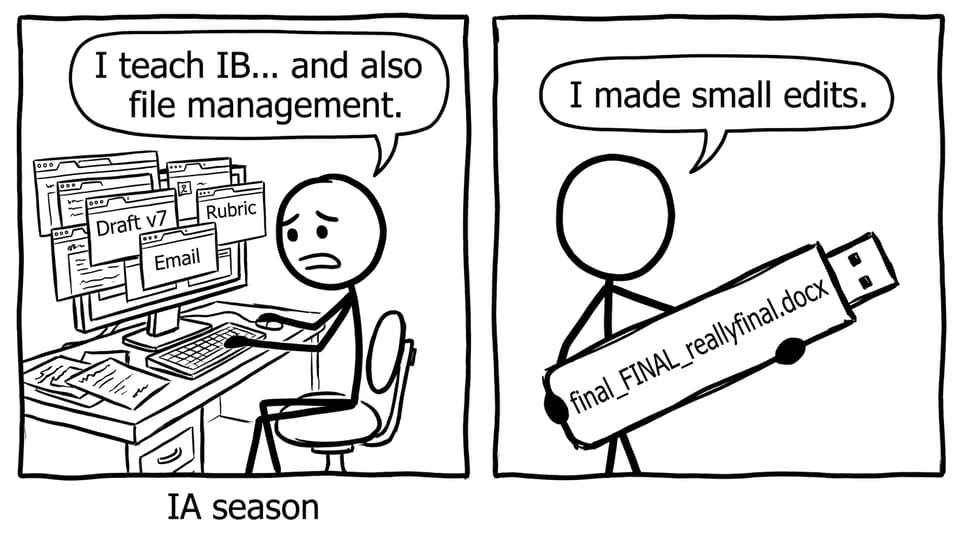
A quick checklist students can use to “invite” better IB feedback
If you want better IB IA feedback, you don’t only wait for it -- you design for it. Use this mini-checklist before you submit any draft:
-
Highlight the criterion you want checked (pick 1--2 max).
-
Add a one-sentence claim: “My biggest risk is Criterion C because my analysis is thin.”
-
Include one precise question: “Does my evaluation actually link back to my research question?”
-
Point to locations (page/paragraph) where you attempted the criterion.
-
List your sources in draft form so academic honesty feedback is faster.
This turns feedback from “teacher writes everything” into “teacher verifies and upgrades.” In IB, that is the difference between a slow cycle and a fast one.
Why IB IA feedback takes so long (and what students misunderstand)
Most students assume IA feedback is slow because teachers are “busy.” True, but incomplete.
The real time sink is that IB feedback isn’t just correction. It’s translation.
Teachers translate:
-
Your intention into criterion language.
-
Your evidence into markband boundaries.
-
Your writing into what an examiner would reward.
And they do it repeatedly across unique topics, messy version control, and last-minute uploads. The time isn’t only spent reading. It’s spent re-explaining the same IB patterns in new disguises.
That’s why systems beat heroics.
The fastest route to better IB feedback: make the rubric the “interface”
The highest-leverage move an IB teacher can make is simple: stop giving free-form advice first, and start with criterion-linked feedback.
As an IB student, you should love this approach because it eliminates vague comments like “needs more depth.” Instead, you get:
-
Which criterion is underperforming
-
What the descriptor requires
-
What evidence in your draft does (or doesn’t) match it
-
One next action
RevisionDojo is built around that idea. Schools using its IA workflows can keep rubrics visible, keep comments reusable, and keep drafts organized.
Helpful reading if you want to understand this system-level approach:
-
How RevisionDojo Enhances IB Internal Assessment (IA) Feedback and Moderation
-
How RevisionDojo Makes IB Feedback More Actionable for Students
Comment banks aren’t “generic” -- they’re how teachers stay precise
A comment bank sounds like copy-paste. In practice, it’s how teachers protect quality.
A strong IB comment bank is not: “Explain more.”
It is: “Add one sentence that links your result to your research question using ‘therefore’ or ‘this suggests’ and name the variable explicitly.”
When teachers reuse comments like this, feedback gets:
-
more consistent across the class,
-
easier for students to implement,
-
faster to deliver without losing accuracy.
RevisionDojo supports this workflow through structured marking and reusable feedback patterns. And when students pair that with exam preparation tools (like Study Notes, Flashcards, and a Questionbank), the same criterion habits carry into timed writing.
If you’re building exam habits alongside IA work, these are worth bookmarking:
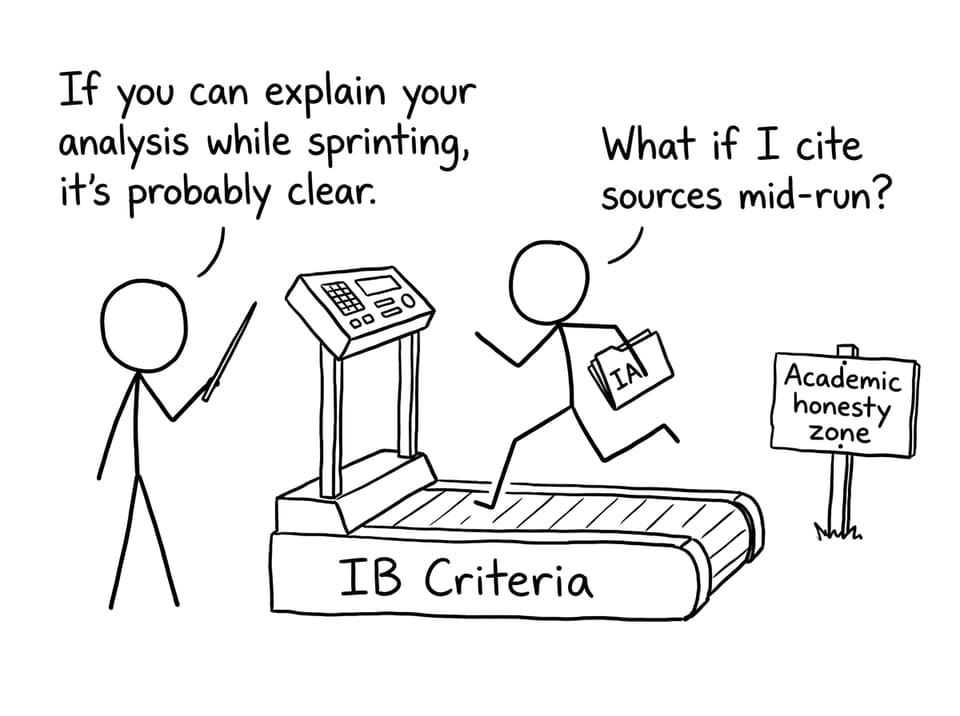
How RevisionDojo helps teachers give faster IB IA feedback (and helps you revise)
From a student perspective, the best feedback is the kind that creates momentum.
RevisionDojo is designed to reduce the “hidden labor” of IB feedback so teachers can spend time on the parts that actually raise marks: reasoning, evidence, and clarity.
Here’s what that looks like in real life:
-
Grading tools that keep feedback aligned to IB criteria, so comments don’t drift into personal preference.
-
A Coursework Library that gives you models and structure, so teachers don’t have to re-teach formatting basics.
-
AI Chat for quick clarification when you’re stuck between feedback and revision.
-
A Questionbank, Mock Exams, and Predicted Papers that help you transfer the same rubric thinking into exam responses.
-
Study Notes and Flashcards that keep knowledge retrievable, so your IA revisions don’t compete with exam prep.
-
Tutors when you need a human to diagnose what’s really limiting your mark.
If you want to understand how to turn feedback into a repeatable learning loop, this pairs well:
A realistic example: “less writing, more upgrading”
Imagine two IB students submit Psychology IA drafts.
Student A gets 25 minutes of bespoke comments, most of them explaining the rubric from scratch. Student A feels helped, but still isn’t sure what matters most.
Student B gets 10 minutes of criterion-based notes: one strength, one weakness, and one prioritized action per criterion. Student B revises in one sitting and resubmits quickly.
Over a month, Student B gets more cycles. And in IB, cycles win.
That’s the core idea: reduce comment volume, increase revision velocity.
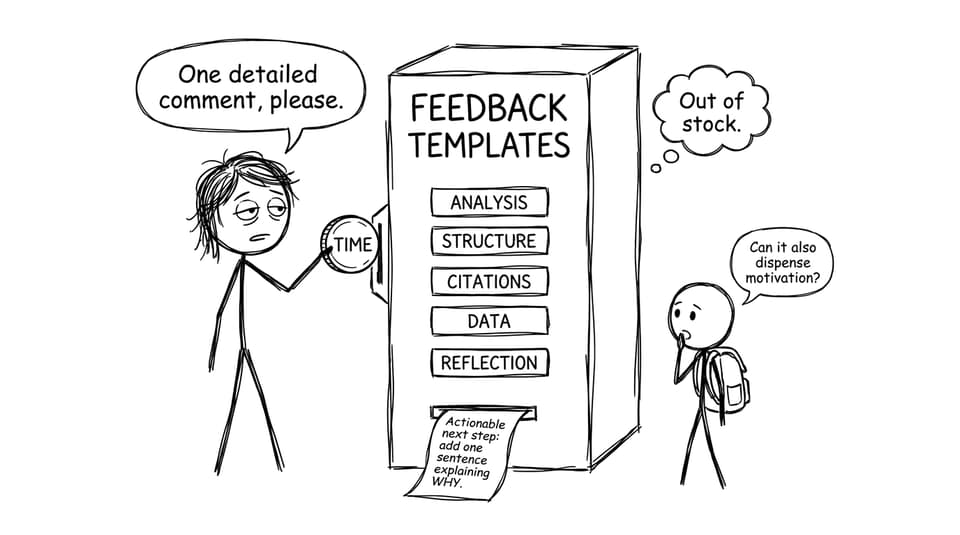
The takeaway: IB feedback gets better when it becomes a loop
IB teachers don’t need more weekends. IB students don’t need more red ink. Both need a tighter loop: criterion-based comments, reusable feedback patterns, faster revisions, and clearer evidence of improvement.
If you want that loop, explore RevisionDojo for Schools and build a system where IA feedback is faster, calmer, and more actionable -- right when exam preparation pressure is rising.
