


The strange thing about IB exams is that they rarely punish ignorance first.
They punish uncertainty.
A student can know the topic, revise the definitions, and still walk into an IB Paper 1 or Paper 2 feeling like they’ve never seen a question before. Their hands move slower. They second-guess command terms. They leave marks on the table, not because they didn’t study, but because the exam felt unfamiliar.
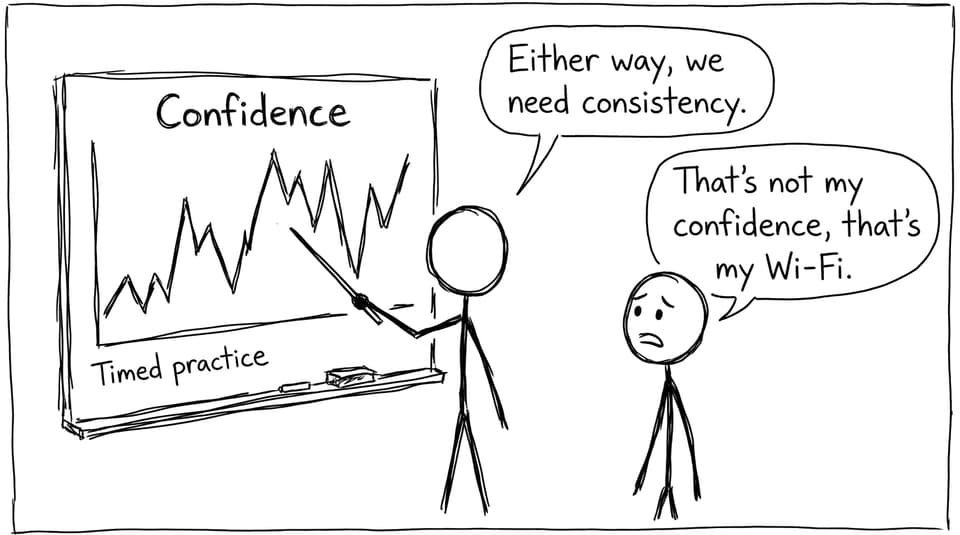
Good teachers notice this early. The class is solid. Homework is fine. But in timed conditions, confidence drains away.
This is where exam confidence is built: not with louder motivation, but with calmer structure. And increasingly, that structure comes from using the right practice loops and tools inside platforms like RevisionDojo.
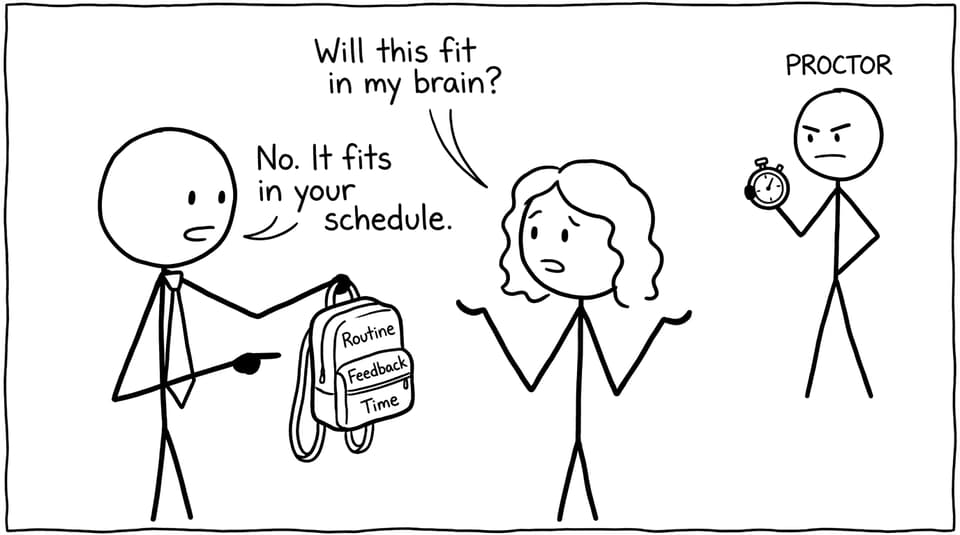
A quick checklist teachers can use this week (IB-ready)
If you want IB students to feel composed under pressure, start with five repeatable moves:
-
Start low-stakes timed questions early (10-15 minutes, not full papers).
-
Teach command terms as a skill, not a glossary.
-
Make markschemes readable (what earns marks, what loses them).
-
Build a feedback loop: attempt, diagnose, re-attempt.
-
Track progress visually so students can see improvement.
If you want a single place to run that loop, RevisionDojo’s Questionbank, Study Notes, Flashcards, AI Chat, and Grading tools are designed to work together so practice doesn’t become resource-hunting.
Why IB students lose confidence (even when they know the content)
Most IB exam anxiety isn’t random. It’s usually a predictable result of revision that stays passive for too long.
They can recall facts, but can’t “read” the question
In the IB, misunderstanding a command term can turn a strong answer into a low-mark answer. “Explain” is not “state.” “Evaluate” is not “describe.” Students often learn content first and the exam language later, which is backwards for confidence.
Time pressure makes strategy collapse
Students who do well in class often do so with gentle pacing: pauses, questions, reassurance. In an IB exam room, silence and the clock change everything. Without timed practice, students don’t have a pacing strategy to fall back on.
They repeat mistakes without noticing the pattern
Confidence doesn’t come from doing more questions. It comes from understanding why marks were lost and proving to yourself you can fix it.
This is why tools that tighten the feedback loop matter, especially when teachers are managing multiple classes and deadlines.
The teacher’s role: make the exam feel familiar
There’s a quiet advantage teachers can give IB students: making the exam feel less like a performance and more like a routine.
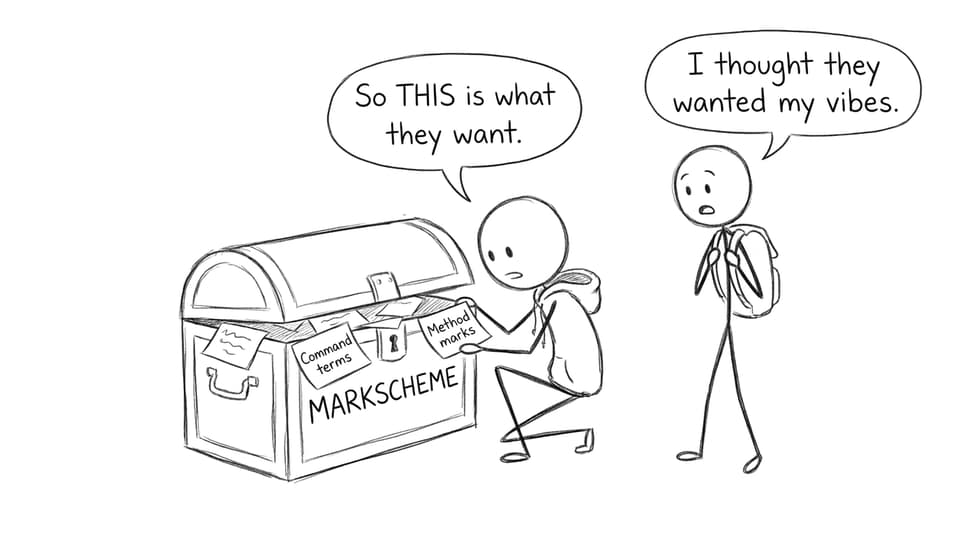
Teach markschemes like they’re a translation guide
A markscheme is not just an answer key. It’s a map of what the examiner values.
A simple classroom move: after any practice, ask students to underline the scoring phrases in the markscheme, then rewrite their answer to include those ideas more directly.
RevisionDojo supports this kind of clarity through examiner-aligned practice and feedback in its Grading tools, so students learn what “good” looks like while they’re still building habits.
Use short timed bursts to normalize pressure
Confidence grows faster with frequent exposure than with occasional marathons.
Try this rhythm:
-
Monday: 12-minute timed set (mixed difficulty).
-
Wednesday: 12-minute set focused on the weakest command term.
-
Friday: 12-minute set with stricter pacing.
Using a targeted IB question bank makes this easy to sustain without spending hours building worksheets. RevisionDojo’s Comprehensive IB Question Bank is built for exactly this style of repeatable practice.
Turn “feedback” into a loop, not an event
Many students treat feedback like a verdict. Teachers can reframe it as a process:
-
Attempt under time
-
Get specific feedback
-
Fix one pattern
-
Re-attempt
That loop is the emotional engine of confidence: students stop fearing mistakes because mistakes become useful.
For a practical student-facing routine that mirrors this, share How to Build Exam Confidence Through Consistent Practice and have students adopt it for one subject first.
A classroom story: the content didn’t change, the practice did
An IB Math teacher once described a familiar problem: students could solve questions on the board, but froze on Paper-style sets. The issue wasn’t calculus. It was context.
So the teacher changed one thing: every week, students did a small timed set and then a “mistake replay.” They redid only the questions they got wrong, but with a one-sentence rule written at the top (for example: “If it says ‘show that,’ structure the algebra so the target appears naturally.”).
Within a couple of months, students stopped saying “I’m bad at exams” and started saying “I know what to do first.” That sentence is basically what IB confidence sounds like.
To scale this beyond one class, many departments use RevisionDojo for Schools to assign practice, track trends, and reduce teacher workload while keeping students accountable.
How RevisionDojo helps IB teachers build exam confidence (without adding workload)
RevisionDojo works well when teachers want consistent IB practice but don’t want to become full-time resource curators.
-
Questionbank: targeted exam-style questions by topic and level, ideal for weekly timed bursts.
-
Study Notes: fast, syllabus-aligned review that makes reteaching more efficient. See IB Subject Note Collections.
-
Flashcards: spaced repetition for definitions, processes, and formula recall. Students can start with IB Flashcards with Spaced Repetition.
-
AI Chat: quick clarification when students get stuck mid-revision, so confusion doesn’t snowball into avoidance.
-
Grading tools: clearer alignment with markbands so students know how marks are earned.
-
Predicted Papers and Mock Exams: exam rehearsal that builds pacing and stamina (and makes the real exam feel less new). Explore IB Predicted Papers and guidance like IB Standard Level Mock Exams.
-
Coursework Library and Tutors: extra support when confidence dips because students feel behind or unsure what “good” looks like.
For stress-specific routines that complement exam practice, students can also use Exam Stress Management Tips for IB Candidates.
Closing: confidence is proof, not a personality trait
The most confident IB students aren’t always the loudest. They’re the ones with receipts: timed practice completed, mistakes understood, feedback applied, patterns improved.
Teachers can give students that evidence by building routines that make the exam feel familiar, and by using a platform that turns practice into a clean loop rather than a chaotic scramble.
If you want a simple next step, explore RevisionDojo for Schools and set one weekly timed task using the Questionbank, supported by Study Notes, Flashcards, and AI Chat. Once students start seeing progress, IB exam confidence stops being a hope and starts being a habit.