
The quiet truth about your IA
Most IB students treat the IA like a one-off obstacle: get it done, submit it, move on. Then the Extended Essay arrives and suddenly everything feels bigger, slower, and more serious.
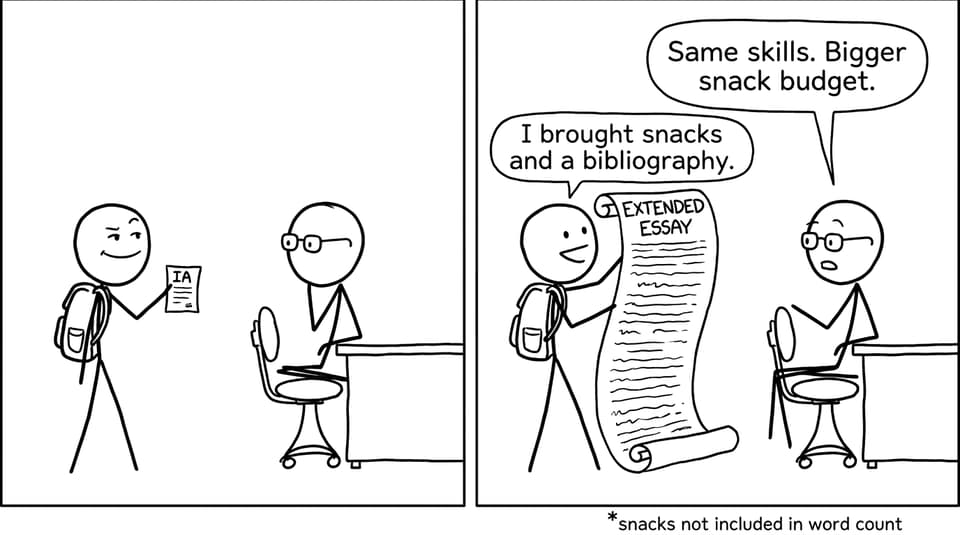
But here’s the calmer truth: your IA has already trained you for the Extended Essay. Not in a motivational way. In a practical, marks-on-the-line way. If you build strong IA habits now, the EE stops feeling like a mystery project and starts feeling like a longer version of skills you already own.
A quick checklist: the IA skills that scale up
-
Narrowing a research question (focus)
-
Explaining what evidence means (analysis)
-
Judging quality, not just reporting it (evaluation)
-
Running your work like a project (planning)
-
Writing with control and clarity (academic voice)
If you want the clearest overview of what strong coursework looks like across subjects, start with the RevisionDojo Coursework Guides.
Focus: your IA research question is EE training
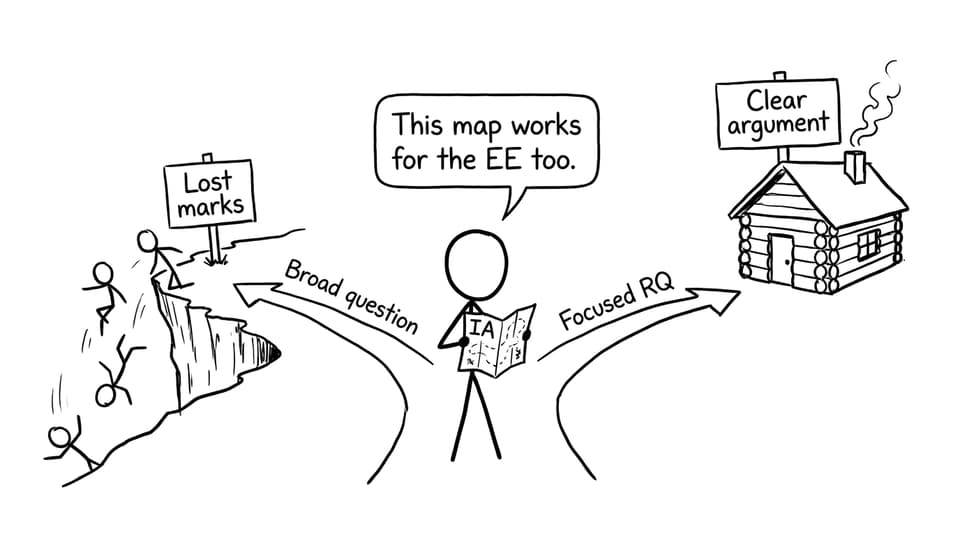
In your IA, you learn the painful lesson that broad questions create shallow work. A wide topic feels safe, but it quietly drains your argument.
The Extended Essay rewards the same discipline. The student who can narrow scope, define terms, and commit to a specific angle already has the hardest EE skill.
Use this as a quick drill: if your IA question could be answered with “it depends,” your EE question will likely collapse under 4,000 words.
To tighten that focus, use How to Write a Strong IA Research Question as your model, then apply the same narrowing logic to your EE.
Analysis: the IA habit that makes your EE feel “smart”
A high-scoring IA doesn’t just present information. It shows thinking.
That’s exactly what your Extended Essay needs: not more quotes, not more sources, but more clarity about why each piece of evidence matters. The students who struggle in the EE are often the ones who practiced summarising in the IA.
If you want a practical way to level up quickly, read How to Use Data Effectively in Your IA Analysis. Even if your EE is not data-heavy, the core idea transfers: interpret, connect, explain significance.
Evaluation: critical judgment, not self-criticism
The word “evaluation” scares people because it sounds like you are admitting failure. In a strong IA, evaluation is simply you showing mature judgment: limitations, reliability, alternative interpretations, and how choices shaped outcomes.
In the EE, evaluation expands. You evaluate sources, methods, and the strength of your line of reasoning. If you already practice evaluation in your IA, your EE reflection becomes easier because you’re describing decisions, not apologising for them.
A helpful companion read is Can Your EE and IA Use the Same Material?, especially if you’re staying in the same topic area. Skills can transfer from IA to EE, but submission content should not.
Planning: the IA teaches you to manage long deadlines
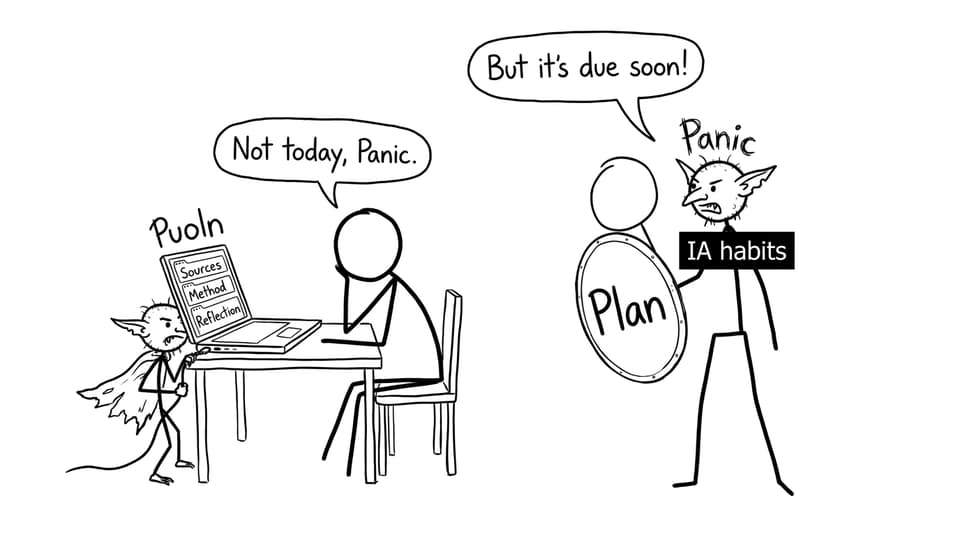
The Extended Essay doesn’t defeat students because it’s difficult. It defeats them because it’s long, quiet, and easy to postpone.
Your IA is the first time many students learn to work without constant supervision. That project-management skill is the real bridge to EE success.
If you need a structure that makes both tasks feel manageable, use How to Break an IB IA or EE Into Manageable Stages. It’s the same idea: clarity first, then targeted research, then analysis, then refinement.
Where RevisionDojo fits (especially during exam season)
When exams are close, the smartest move is to keep coursework efficient.
RevisionDojo helps you do that without guessing:
-
Use the Coursework Library and Coursework Exemplars to calibrate what “good” looks like.
-
Use Grading tools to check whether your IA writing is actually analytical enough to scale into EE-style thinking.
-
Use AI Chat to pressure-test a research question or outline before you spend hours writing.
-
Keep your daily exam momentum with Questionbank, Study Notes, and Flashcards so the EE doesn’t swallow revision time.
-
When you want human feedback, add Tutors for targeted review instead of endless rewrites.
Also bookmark the hubs: IB IA Guides and IB Extended Essay Guides.
The takeaway: your IA is already the first draft of your EE mindset
If you treat the IA as training, the Extended Essay becomes less dramatic. You’re not starting over. You’re scaling up focus, analysis, evaluation, planning, and academic voice.
Make your next move simple: open the RevisionDojo Coursework Guides, pick one IA skill to strengthen this week, and let that habit carry directly into your EE, while your exam prep stays steady with RevisionDojo’s tools.