



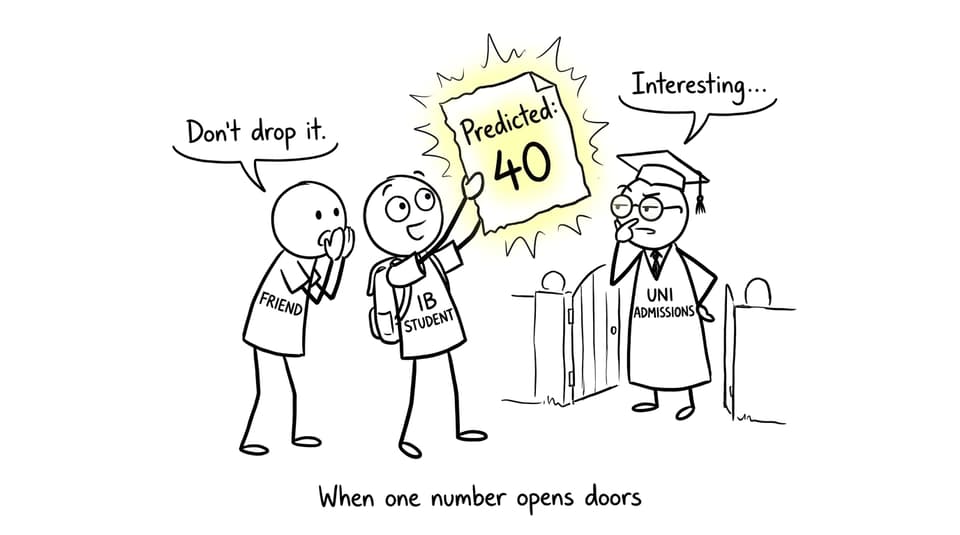
A predicted 40 in IB can feel like a quiet door clicking open.
Not because it guarantees anything. It doesn’t. But because it’s one of the few numbers in the IB that admissions teams instantly recognize as “this student can swim in deep water.” It’s proof of something harder to measure than intelligence: consistency under pressure.
The tricky part is what happens next. A predicted 40 can make you calm, or it can make you terrified of losing it. This post breaks down what a predicted 40 in IB really means, why top universities care, and how to turn that prediction into the final score you want.
What a predicted 40 in IB actually signals
In IB, context matters. A 40 isn’t just “high.” It’s meaningfully above the global average (often cited around the low 30s), and it usually places you roughly in the top slice of the cohort worldwide.
A predicted 40 typically looks like:
-
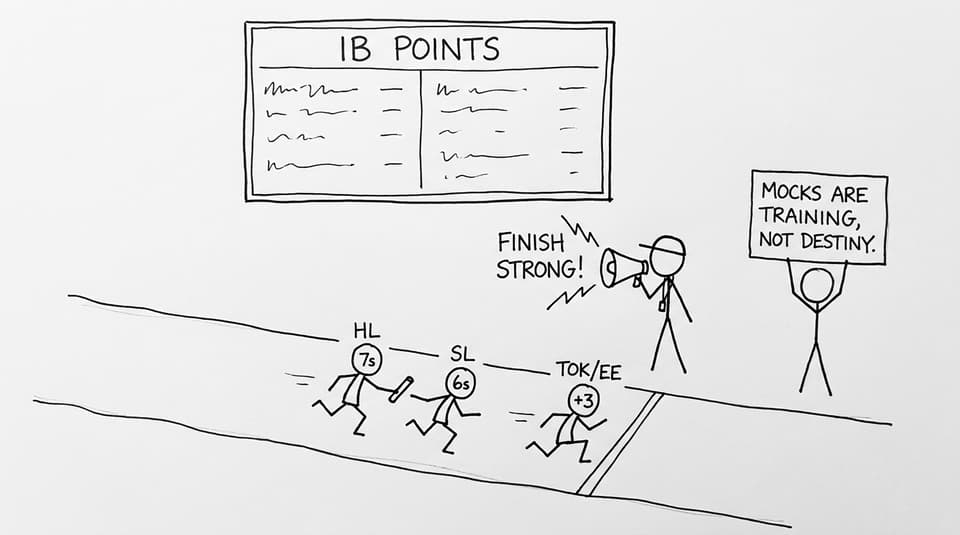
Strong Higher Level (HL) performance (often 6s and 7s)
-
Solid Standard Level (SL) stability (usually 5s and 6s)
-
2-3 core points from TOK and the EE (when things go well)
In other words, it’s not one lucky test. It’s evidence that across multiple subjects, across different assessment styles, you’re producing work that holds up.
A quick checklist: do you really “own” the 40 yet?
Use this fast IB reality check:
-
Can you repeat your mock performance under timed conditions?
-
Do you know which papers cost you the most marks (Paper 1 vs Paper 2 vs Paper 3)?
-
Are your core points (TOK/EE) predictable, or still a gamble?
-
Do you have a system for fixing mistakes, not just collecting them?
If two or more answers feel uncertain, your predicted 40 is promising, but still fragile.
Why a 40 predicted in IB is a game-changer for top universities
Top universities are not only selecting smart students. They’re selecting students who will keep producing under new constraints: heavier reading lists, harder problem sets, faster marking cycles, and less teacher scaffolding.
A predicted 40 in IB helps because it compresses a story into a number: “This student can handle rigor.”
US admissions (Ivy-level and top private universities)
In the US, admissions is holistic, but academic readiness is still the entry ticket. A predicted 40 in IB typically puts you in the competitive academic band for many top schools, where essays, recommendations, and activities become the differentiators.
Think of it like this: the predicted 40 doesn’t win the race, but it gets you onto the track with the fastest runners.
UK admissions (offers with score ranges and HL requirements)
UK admissions often looks more like a contract: “Meet these conditions.” A 40 predicted in IB can align well with common offer ranges for highly selective courses, especially when your HLs match the program’s subject requirements.
Canada and other competitive systems
Many Canadian programs translate IB strength into high percentage equivalents. A predicted 40 can sit in the “serious contender” zone for competitive faculties.
Scholarships and early opportunities: where IB 40 matters most
Here’s what a predicted 40 in IB often changes in real life:
-
You’re more credible for early application rounds
-
You’re more likely to be shortlisted for merit-based awards (where available)
-
You can justify stronger academic claims in your application narrative
But scholarships rarely reward the number alone. They reward the proof behind the number: top coursework, strong teacher comments, and a record of improvement.
Predicted vs final in IB: the gap students underestimate
Predicted grades in IB are built from teacher judgment plus evidence: internal assessments, timed tests, mock exams, class performance.
Final grades are built from external exam performance (and moderated coursework). That difference matters because the final IB score is less forgiving to students who “know the content” but haven’t trained exam execution.
If you want to protect a predicted 40, treat it as a baseline. Then build the habits that make the final score boringly inevitable.
How to hold (or raise) a predicted 40 in IB with RevisionDojo
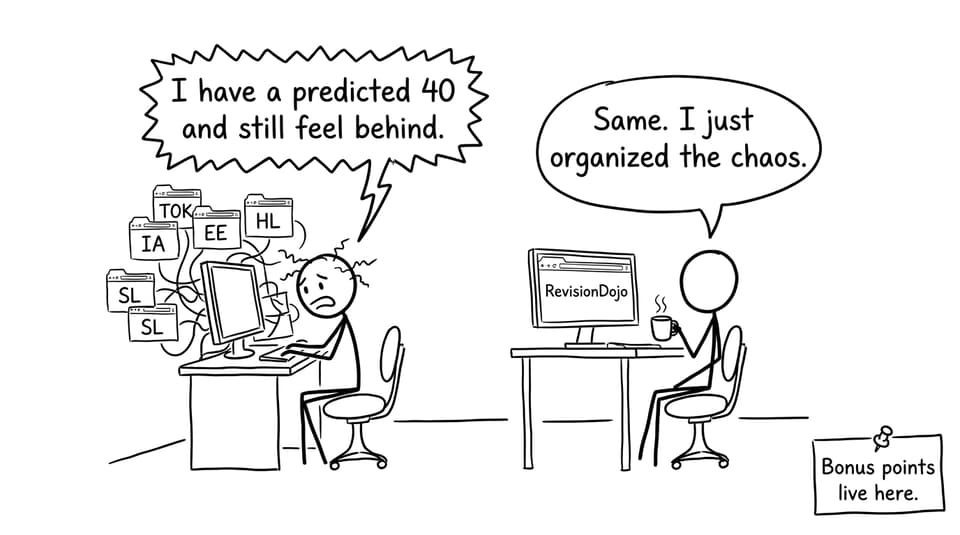
A predicted 40 in IB usually isn’t saved by studying harder. It’s saved by studying cleaner.
RevisionDojo is built for that kind of clean system:
-
Drill weak topics using the free Questionbank
-
Rebuild understanding with syllabus-aligned RevisionDojo for IB
-
Pressure-test your timing with IB Predicted Papers
-
Use realism plus feedback loops from Best IB Mock Exam Platform
-
Reduce core-point uncertainty with the IB Coursework Grader and IB Coursework Examples: IA, EE and TOK Exemplars
-
If you need clarity fast, lean on RevisionDojo’s AI Chat (Jojo) to explain markschemes, misconceptions, and command terms
Two targeted reads that many predicted-40 students find calming:
A simple 2-week “keep the 40” plan
This works well for IB students preparing for exams:
-
Daily (10 minutes): RevisionDojo Flashcards to keep recall alive
-
4 sessions/week (30-45 minutes): Study Notes + a focused Questionbank set
-
1 session/week (timed): a Predicted Paper or a Mock Exam block
-
1 review session: list your top 10 recurring errors and write a rule for each
This is how strong students stay strong: not with dramatic effort, but with repeatable loops.
The quiet power of a predicted 40 in IB
A predicted 40 in IB is a rare kind of confidence: it’s earned.
Now make it useful. Use it to apply ambitiously. Use it to negotiate your stress down into a plan. And use it as a reminder that the final IB score is built the same way the prediction was built, one focused session at a time.
If you want a single place to run that system (Questionbank, Study Notes, Flashcards, AI Chat, Grading tools, Predicted Papers, Mock Exams, Coursework Library, and Tutors), start with RevisionDojo.