

When the marketing mix looks perfect on paper (and still fails)
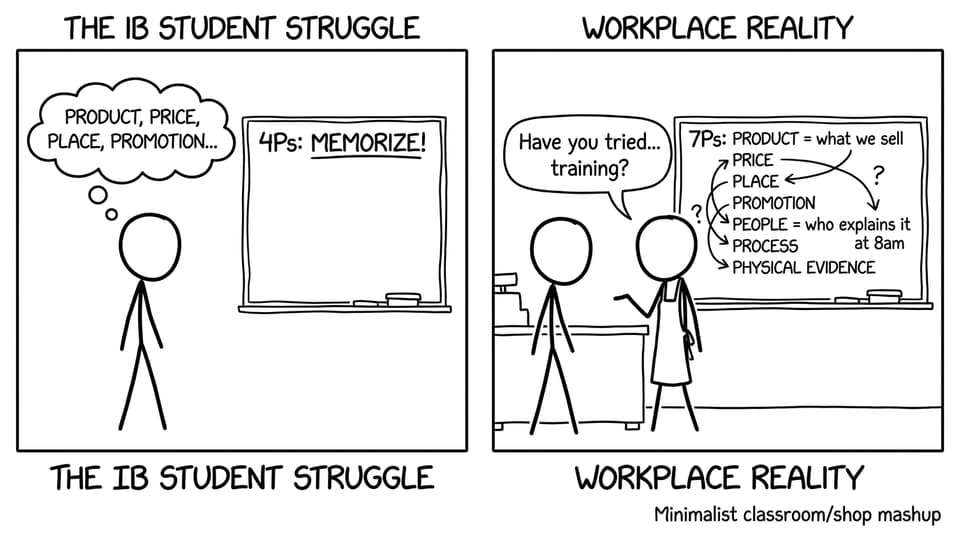
The first time you see the marketing mix in IB Business Management, it feels tidy: product, price, promotion, place. Four boxes, four decisions, one plan.
Then real life happens.
A customer asks a simple question. The employee hesitates. The confidence in the “premium price” wobbles. The promotion sounds scripted. The product is technically available, but not where it should be. In IB Business Management, this is the quiet truth behind many case studies: strategy is designed by managers, but it is delivered by people.
Quick exam checklist: how training strengthens the marketing mix
Use this quick checklist in IB Business Management answers when a question links HR and marketing:
-
Product: staff knowledge improves the customer experience
-
Price: trained employees justify value and reduce discount pressure
-
Promotion: consistent brand messaging through personal selling and service
-
Place: smoother inventory, logistics, and store execution
-
Bonus link (7Ps): training directly improves People, Process, and Physical evidence
For a syllabus-aligned overview, revise 4.5 The seven Ps of the marketing mix.
Product: skills turn features into a “felt” experience
In IB Business Management, “product” is not just the physical good or service. It is also what the customer experiences while deciding, buying, and using it.
That is where training matters. A trained employee can explain features in plain language, demonstrate use, and set realistic expectations (which reduces complaints and returns). Even in service businesses, the “product” is often the interaction itself: speed, accuracy, empathy, and consistency.
If you want to connect this to the broader planning process, review marketing planning notes and the matching marketing planning lessons.
Price: training helps employees defend value (without sounding defensive)
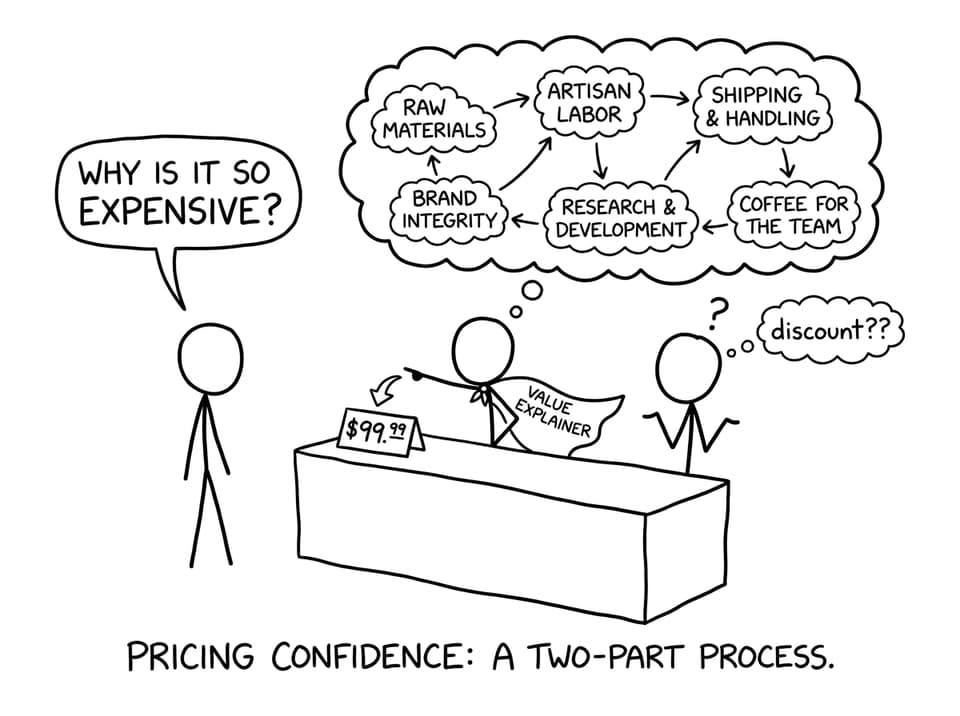
A premium price is a promise. In IB Business Management, that promise collapses when staff cannot explain why something costs more.
Training gives employees language for value: quality, differentiation, after-sales support, guarantees, ethical sourcing, or time saved. Without that, staff often fall back on awkward silence or quick discounts, which can damage brand positioning and margins.
To practise writing this as a point-explain link, drill exam-style prompts in the marketing mix questionbank.
Promotion: employees are “living media”
Promotion is not just advertising. In IB Business Management, promotion includes every moment a customer hears the message and decides whether to trust it.
Employees affect promotion through personal selling, handling objections, responding online, and even the tone of a welcome. Training makes these moments consistent: brand voice, key benefits, correct claims, and professional behaviour. That consistency makes promotions feel true rather than theatrical.
For rapid recall before exams, use Unit 4 flashcards.
Place: availability depends on competence
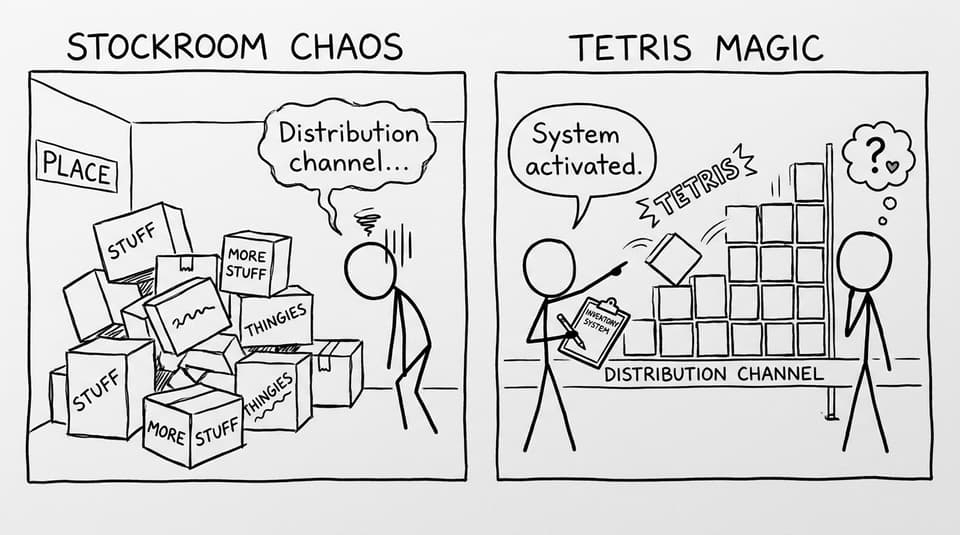
“Place” can sound like geography. In IB Business Management, it is really about access: the product being in the right location, at the right time, in the right condition.
Training improves the operational basics behind place: stock checks, shelf presentation, order accuracy, delivery handling, and problem escalation. Untrained teams create invisible friction: empty shelves, messy displays, delayed deliveries, and wrong items. The customer feels it as inconvenience, and the marketing mix weakens.
For more context on how marketing value is created, see How does the marketing mix help businesses create value for customers.
How to turn this into top-mark answers (fast)
In IB Business Management, examiners reward clear links. A simple structure works:
-
Define the relevant P (or 7P)
-
Explain how skills/training changes employee behaviour
-
Link to customer perception, sales, costs, or brand image
Then practise. RevisionDojo is built for this workflow: targeted Study Notes, spaced-repetition Flashcards, and exam-style Questionbank practice with AI Chat to fix weak explanations.
The quiet advantage most competitors miss
A marketing mix can be copied. A competitor can match your price, imitate your promotion, and sell through similar channels. But in IB Business Management, the hardest thing to copy is a team that consistently delivers the promise.
If you want to revise this topic with less stress and more precision, use RevisionDojo’s Questionbank, Study Notes, and Flashcards for Unit 4, then test yourself with Predicted Papers and Mock Exams. When your explanation gets stuck, AI Chat and Tutors help you turn vague ideas into sharp, mark-ready analysis, exactly what the IB rewards.
Explore the full IB Business Management resources hub and focus your next session on the marketing mix in IB Business Management.