
If you ask ten students how hard the IB is, you will get ten different answers. But the pattern is familiar: the IB doesn’t usually break people with one impossible topic. It wears you down with everything happening at once--six subjects, deadlines, and a constant expectation that you can explain not just what you know, but why it matters.
The good news: the IB is difficult in a predictable way. Once you understand what creates the pressure, you can build a system that makes it manageable.
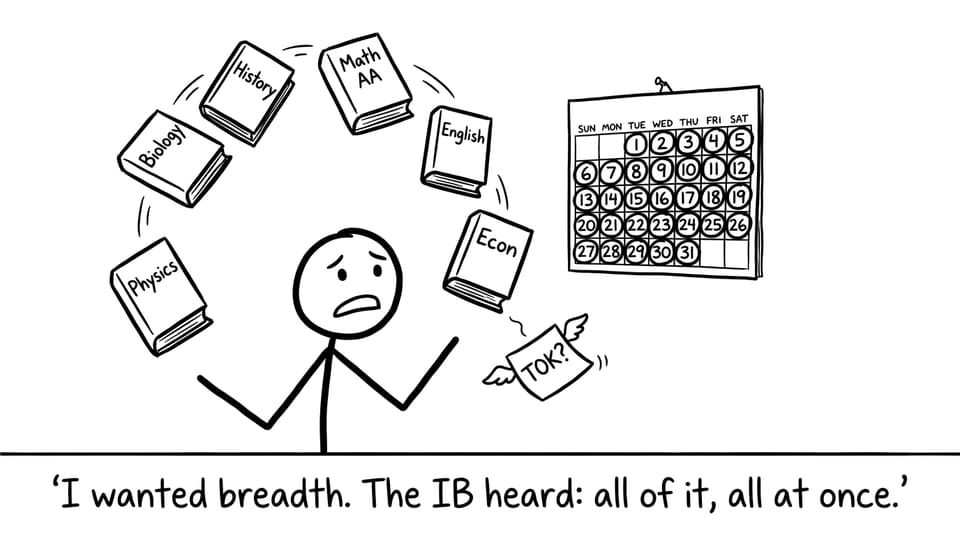
What makes the IB so demanding?
Here’s the simplest way to describe IB difficulty: breadth + depth + pacing.
-
Breadth: you study six subjects across different disciplines
-
Depth: HL content and essay-style thinking push past memorization
-
Core: TOK, the Extended Essay (EE), and CAS add parallel responsibilities
-
Assessment load: Internal Assessments (IAs) run alongside exam preparation
If you want a clearer breakdown of how the whole programme fits together, read How does the IB Diploma work? A clear breakdown.
Why the IB feels harder than other programs
The IB is a constant context switch
A normal week can include math problem sets, a literature commentary, lab work, and then TOK reflection. That switching cost is real. The IB rewards students who plan early, because “catching up later” is surprisingly expensive.
A practical starting point is How to Create a Balanced IB Study Schedule -- it’s the difference between steady effort and panic bursts.
Command terms turn knowledge into performance
In the IB, “knowing” and “scoring” are different skills. Words like evaluate, discuss, and assess are basically instructions for how to earn marks.
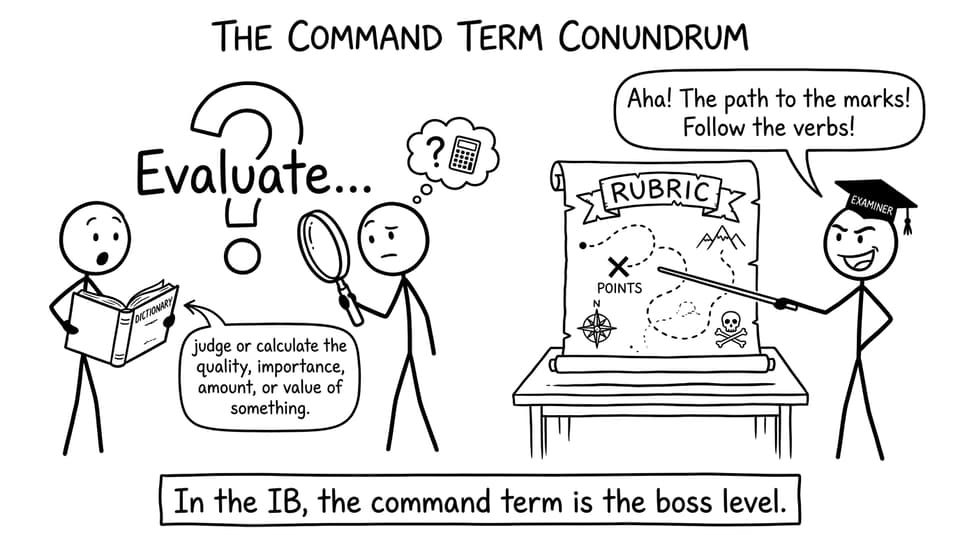
This is why exam-style practice matters. The RevisionDojo Questionbank trains you to respond the way IB mark schemes reward--and the feedback loop helps you fix mistakes faster.
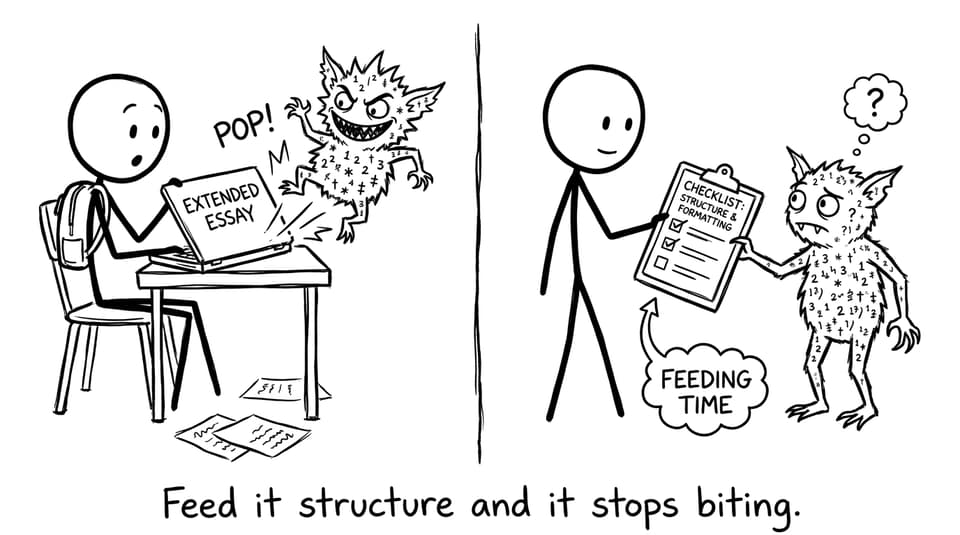
The core (TOK, EE, CAS) adds long-term pressure
TOK and the EE are not “extra work.” They are a different kind of work: independent thinking, sustained writing, and reflection. If you’ve ever opened an EE document and felt your brain go quiet, you’re not alone.
Use these guides to reduce uncertainty:
A quick IB difficulty checklist (and what to do)
When the IB feels “too hard,” it’s usually one of these:
-
You’re rereading instead of practicing -- use Digital IB Study Notes, then immediately test yourself.
-
You don’t know what to revise next -- use analytics from RevisionDojo’s Questionbank and targeted Study Notes (Study Notes feature).
-
You’re stuck without feedback -- use AI Chat, Grading tools, and the Coursework Library to get unstuck, then book Tutors if you need a human explanation.
-
You’re not simulating exam conditions -- build stamina with Mock Exams and Predicted Papers inside RevisionDojo.
To see how an integrated workflow looks, read RevisionDojo App: The Smarter Way to Prep for IB Exams.
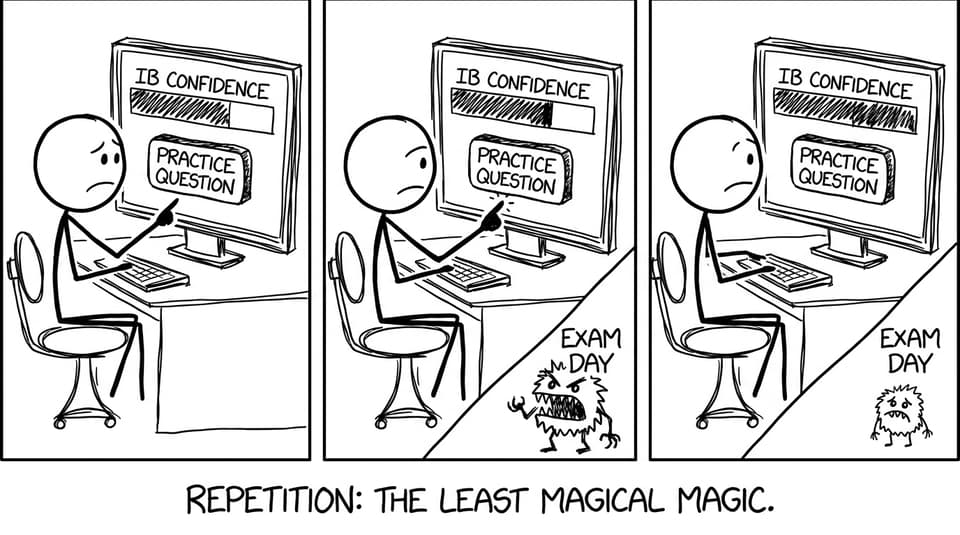
Final thought: the IB is hard, but it’s learnable
The IB is difficult because it asks you to be many kinds of student at once: scientist, writer, analyst, and planner. But difficulty isn’t a verdict--it’s a design feature you can respond to.
If you’re an IB student preparing for exams, build one calm system: learn with RevisionDojo Study Notes, drill with the Questionbank, lock in memory with Flashcards, get help via AI Chat and Tutors, and sharpen performance using Mock Exams, Predicted Papers, and the Grading tools. The workload stays big, but it stops being mysterious--and that’s when the IB becomes manageable.
