
How Difficult Is IB Math HL Compared to Other IB Subjects? A Realistic Comparison
The first time many students meet IB Math AA HL, it’s not a dramatic moment. It’s quieter than that. You walk out of class with pages of “working” that somehow don’t work. You look at your friend in Biology HL, who is drowning in content but at least knows what drowning looks like. And you think: How Difficult Is IB Math HL Compared to Other IB Subjects? A Realistic Comparison isn’t an abstract question anymore. It’s your Tuesday.
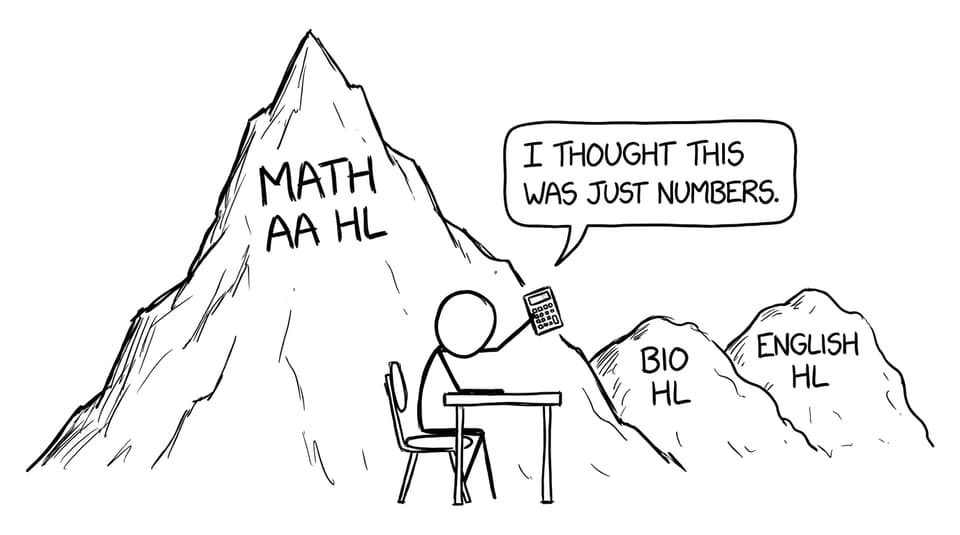
IB Math HL can feel brutal because it doesn’t just ask for answers. It asks for reasons. And it asks for them quickly, repeatedly, under exam pressure. Still, difficulty in the IB isn’t a single ladder where one subject sits on top forever. It’s more like different mountains with different climates.
Quick checklist: what “difficulty” actually means in IB
Before you decide whether IB Math HL is “harder” than other subjects, use this checklist. Difficulty usually comes from a mix of:
-
Conceptual load (how abstract the ideas are)
-
Volume load (how much content you must cover)
-
Cumulative penalty (how badly gaps compound over time)
-
Exam transfer (how often questions look unfamiliar)
-
Precision demands (how strict notation, method, and communication are)
This is why the same student can find English A HL exhausting and Math HL energizing, while their classmate experiences the opposite.
What IB Math HL is built to do (and why that matters)
IB Math AA HL isn’t designed as a general “be good at school math” course. It’s designed to prepare you for degrees where mathematics is the language of the subject: engineering, physics, math, economics, data science.
That design shows up in the way the course pushes:
-
Abstract reasoning over routine procedure
-
Proof and justification (not just plugging values)
-
Multi-step problem solving in unfamiliar contexts
-
Tight mathematical communication (notation, structure, logic)
If you want a clear picture of the syllabus scope, it’s worth skimming the topic hub: IB Mathematics Analysis and Approaches Resources. Seeing everything laid out at once explains a lot of the reputation.
Why IB Math HL feels uniquely hard
The concepts are dense, and they stack
Math HL topics connect like gears. If one gear slips, the whole machine starts making noise.
A few classic pressure points:
-
Algebra foundations that suddenly matter inside calculus
-
Functions and graph features that show up everywhere
-
Proof techniques (like induction) that punish “I kind of get it” thinking
-
Complex numbers and vectors that demand comfort with symbolism
This is also why targeted revision beats random revision. If calculus is your weak point, you don’t need more “general math practice.” You need calculus, specifically. RevisionDojo makes this easy with focused hubs like Calculus (IB Math AA) and Statistics and Probability (IB Math AA).
The course is cumulative in a way many subjects aren’t
Biology HL is heavy, but you can often revise a chapter as a chapter. Chemistry HL is layered, but parts can still be isolated.
Math HL is different: small gaps compound. If your algebra is shaky, differentiation rules become harder. If your trig is weak, vectors and calculus applications become slower. The penalty for gaps is unusually high.
The exams reward transfer, not familiarity
Many Math HL struggles aren’t about intelligence. They’re about the moment you realize you can’t “pattern match” your way to safety.
IB-style Math HL questions often test:
-
selecting the right tool (not being told which one)
-
linking ideas across topics
-
writing clear reasoning, not just arriving at a number
For practical exam prep, these two guides pair well with the way the papers actually feel:
How IB Math HL compares to other IB subjects (realistically)
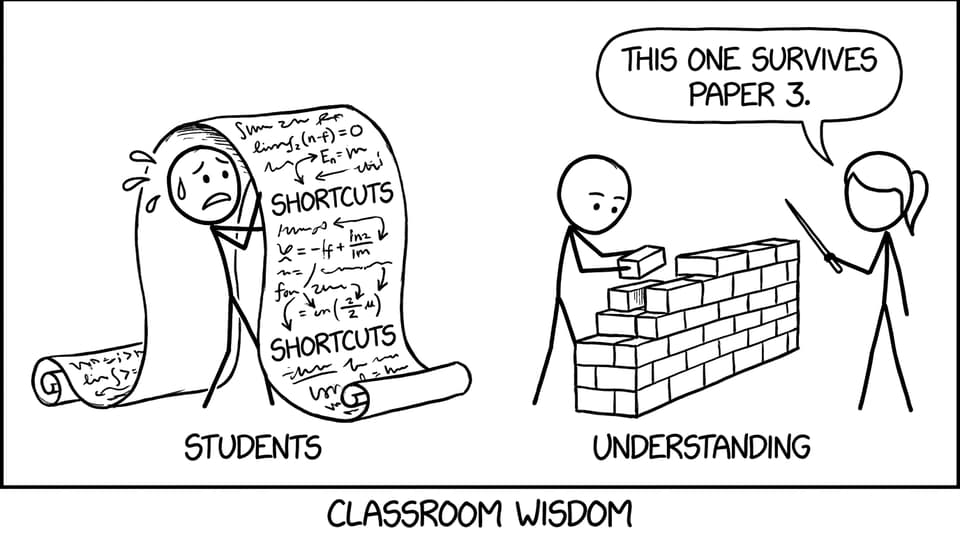
IB Math HL vs Physics HL
Physics HL often shares Math HL’s “transfer” vibe: unfamiliar contexts, multi-step reasoning, and precision. The difference is that Physics can sometimes feel more intuitive once the concept clicks, because it’s anchored to physical meaning.
Math HL has fewer “real world handles.” If you want to see what high structure looks like in another subject, browse IB Physics Resources.
IB Math HL vs Chemistry HL
Chemistry HL is demanding through volume + application + lab thinking. It’s less abstract than Math HL, but the workload can be relentless.
If Math HL feels like a chess match, Chemistry HL can feel like managing a busy kitchen: many ingredients, timing matters, and small errors multiply. A good overview of that workload is IB Chemistry HL: Complete Guide for Success, and you can explore the depth on IB Chemistry Resources.
IB Math HL vs Biology HL
Biology HL is famously content-heavy. The challenge is recall, linking processes, and writing clearly under time pressure. But it usually doesn’t punish one missing “foundation skill” the way Math HL does.
If you want to compare raw content volume and practice options, see IB Biology Resources.
IB Math HL vs English A HL
English A HL can be harder than Math HL for students who dislike ambiguity. Your “method marks” aren’t written in a formula booklet. You’re graded on interpretation, craft, and argument quality.
Math HL is strict; English HL is elastic. Some students thrive in structure. Others thrive in nuance.
So is Math HL the hardest?
For many students, yes. But the honest answer to How Difficult Is IB Math HL Compared to Other IB Subjects? A Realistic Comparison is this: Math HL is most difficult when you need certainty, but the course rewards reasoning. If you hate being unsure, it can feel emotionally heavier than content-heavy subjects.
Who tends to struggle (and who tends to do well)
Students often struggle in Math HL when they:
-
rely on memorizing steps instead of understanding ideas
-
practice in long, rare bursts instead of short, frequent sessions
-
avoid asking questions early (small confusion becomes a gap)
-
treat mistakes as “proof” rather than “data”
Students often do well when they:
-
practice most days, even 20-30 minutes
-
keep an error log and revisit it weekly
-
learn definitions and structure (not just tricks)
-
get fast feedback instead of guessing alone
This is where RevisionDojo’s ecosystem matters. The Questionbank gives high-volume, syllabus-aligned practice; Study Notes tighten understanding; Flashcards keep recall active; AI Chat helps you get unstuck without losing an hour; Grading tools sharpen how you communicate method; and Predicted Papers and Mock Exams build timing and stamina in realistic formats.
A useful starting point is: How to Use the Questionbank for Targeted Math Revision and The Ultimate IB Math Study Routine for Busy Students.
A practical way to decide if Math HL is the right pick
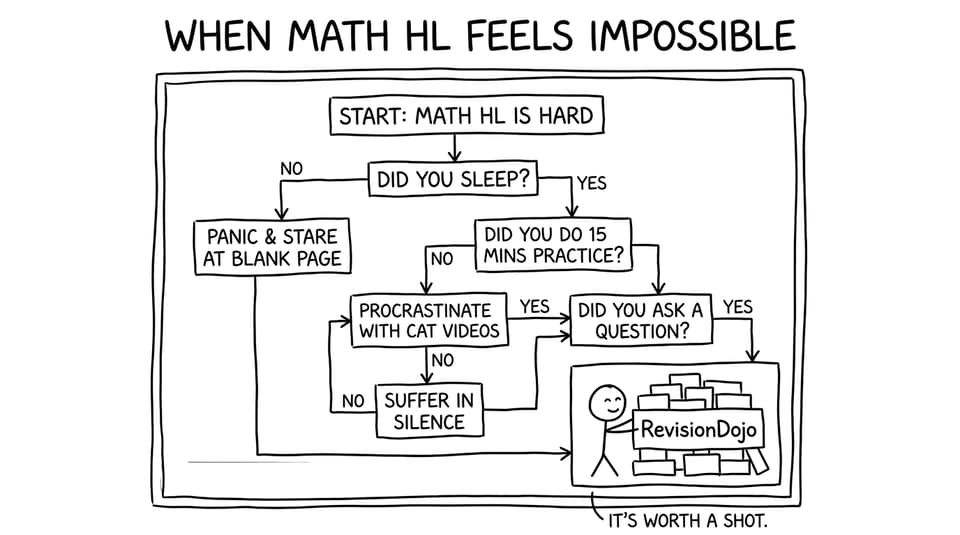
Ask yourself three questions:
-
Do I need Math HL for my university path?
-
Do I enjoy slow, careful thinking more than quick memorization?
-
Can I commit to steady practice even when progress feels invisible?
If you’re unsure, try a two-week “trial” mindset: pick one topic (like calculus), study it properly, then do mixed questions. RevisionDojo’s Calculus Questionbank (Math AA) makes this kind of trial clean and measurable.
Final takeaway
If you keep asking, How Difficult Is IB Math HL Compared to Other IB Subjects? A Realistic Comparison, the fairest answer is this: Math HL is often the toughest because it combines abstraction, cumulative foundations, and exam transfer all at once. But it’s also one of the most “fair” subjects in the long run, because consistent practice translates directly into results.
If you want a calmer path through the difficulty, build your system early: use IB Mathematics Analysis and Approaches Resources, drill with the Calculus Questionbank (Math AA), and rehearse exam conditions with Mathematics Analysis and Approaches Predicted Papers. Then use RevisionDojo’s Notes, Flashcards, AI Chat, Grading tools, Coursework Library, and Tutors to keep the workload contained.
Difficulty isn’t the enemy. Studying without a system is.