




When an IB examiner reads your IA, they are not looking for poetic lab notes. They are looking for a method they could hand to a stranger and still get the same kind of results. That’s the quiet power of a strong methodology section: it turns your work from “I tried something” into “I ran an investigation.” In the IB, that difference matters.
And the best part? A great methodology is not about writing more. It’s about writing the right details.
IB methodology checklist (the details that actually score)
Use this as your quick IB methodology checklist before you submit:
-
Restate your research question/aim in one line.
-
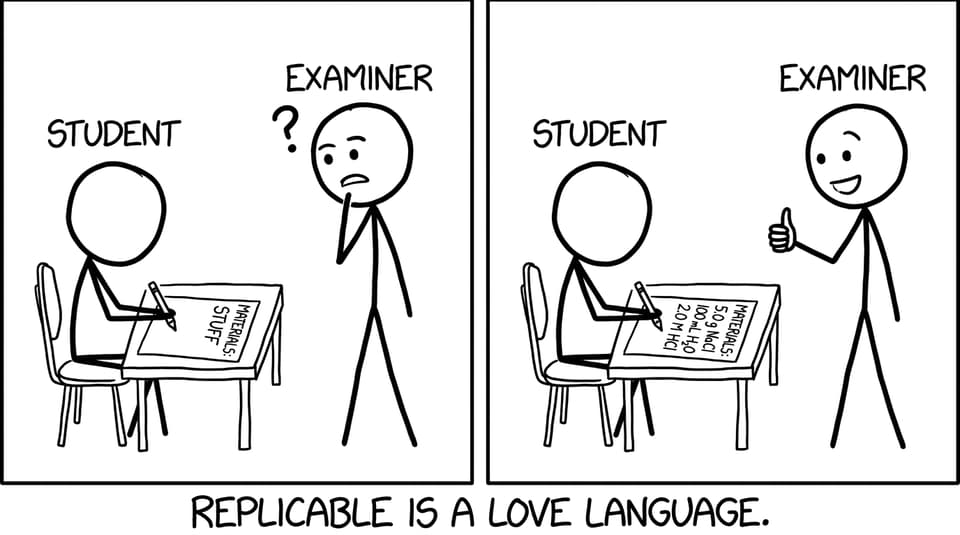
List materials with quantities, concentrations, and key specs.
-
Write a replicable procedure (step-by-step, in past tense).
-
Identify independent, dependent, and controlled variables.
-
Explain how you will measure results (including units and timing rules).
-
Add safety/ethics and waste disposal notes.
-
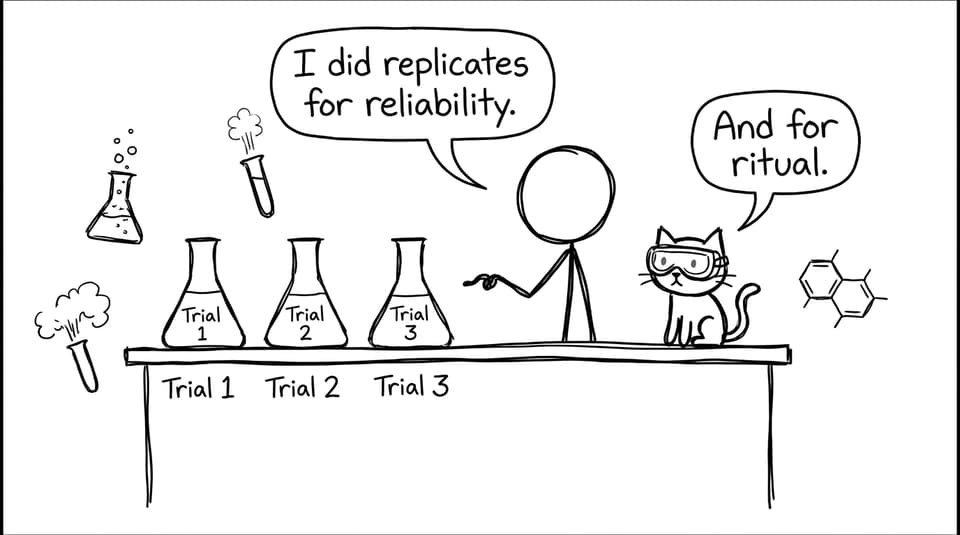
Include replicates and a brief reliability plan.
If you want a fuller walkthrough, keep How to Write a Clear IA Methodology Section open while you draft.
Why an IB methodology section needs specific detail (not extra paragraphs)
In the IB, “clear” usually means “specific.” A methodology that says “mix the solutions and record the time” sounds fine until someone asks: Which volumes? Which concentrations? How did you decide the endpoint? That’s where marks quietly disappear.
A practical way to judge detail is this: if a classmate could run your investigation without messaging you once, your methodology is probably strong.
For a bigger picture of what examiners reward across criteria, read What IB Examiners Actually Look For in an IA.
IB Chemistry example: sodium thiosulfate + hydrochloric acid (rate)
Here’s a clean IB-style methodology model you can adapt.
Materials and equipment
-
Sodium thiosulfate solution (0.10 mol dm⁻³)
-
Hydrochloric acid (1.0 mol dm⁻³)
-
Distilled water
-
Conical flask (250 mL)
-
Measuring cylinders (50 mL, 10 mL) or pipettes (state which)
-
Stopwatch (digital)
-
White paper with a black cross
-
Thermometer (or temperature probe)
-
Safety goggles and nitrile gloves
Procedure (replicable steps)
-
All glassware was rinsed with distilled water prior to use to reduce contamination.
-
A white paper sheet with a black cross was placed on the bench. A conical flask was centered directly above the cross.
-
50.0 mL of 0.10 mol dm⁻³ sodium thiosulfate was measured using a 50 mL measuring cylinder and transferred into the flask.
-
5.0 mL of 1.0 mol dm⁻³ hydrochloric acid was measured using a 10 mL measuring cylinder.
-
Hydrochloric acid was added to the flask, the stopwatch was started immediately, and the flask was swirled in a consistent circular motion for 2 seconds.
-
The flask was observed from above at a fixed height. Timing stopped when the black cross was no longer visible through the solution.
-
Room temperature was recorded before each trial (target 25°C). Trials were only conducted when the temperature remained within ±1°C.
-
The method was repeated five times per concentration. Mean time was calculated and used to discuss reliability.
Variables (explicitly labeled)
-
Independent variable: concentration of sodium thiosulfate (prepared via dilution with distilled water)
-
Dependent variable: time for the cross to disappear (s)
-
Controlled variables: volume of acid, total reaction volume, temperature, swirling method, viewing height/angle, same paper cross
Safety considerations
-
Goggles and gloves were worn to prevent eye/skin contact.
-
The reaction was carried out in a well-ventilated lab.
-
Waste solutions were disposed of according to school chemical disposal guidance.
If you’re working on kinetics, RevisionDojo’s IB Chemistry Topic R2.2 Rate of Chemical Change Questionbank is ideal for tightening the link between method, data handling, and exam-style analysis.
Make your IB methodology easier with RevisionDojo tools
A strong IB methodology is easier to write when your planning is organized:
-
Use the IB Internal Assessment Guides to match your method to criterion language.
-
Compare structure against real models in the Chemistry IA Examples library.
-
Tighten theory links with topic notes like Collision theory and rates of reaction (Chemistry notes).
-
Stress-test your draft using the IB Coursework Grader for rubric-aligned feedback.
RevisionDojo also supports your wider IB prep: Questionbank practice, Study Notes, Flashcards, AI Chat for quick clarifications, Grading tools, Predicted Papers, Mock Exams, a Coursework Library, and Tutors when you want human feedback.
Closing: the IB methodology is your credibility
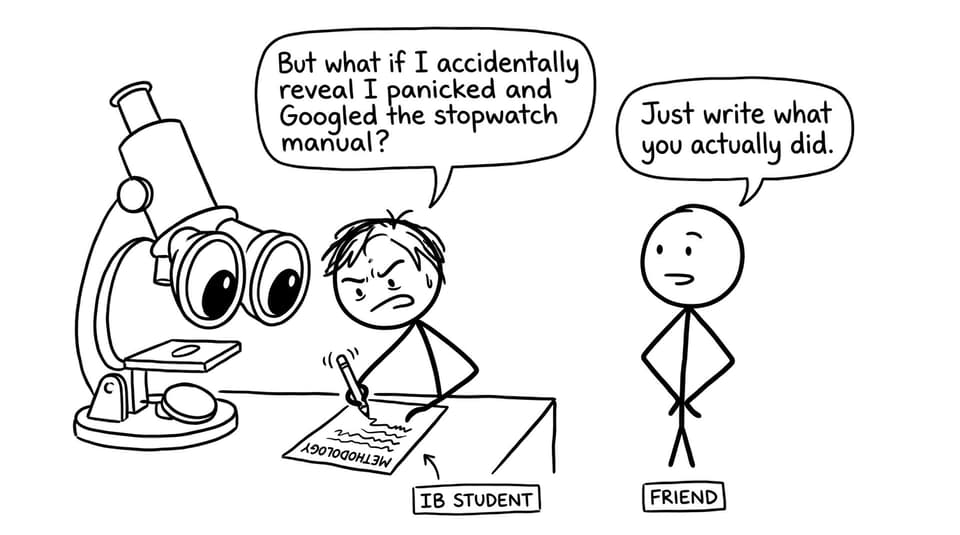
A great IB methodology section is not “extra writing.” It’s the part of your IA that proves your results deserve to be taken seriously. Write what you actually did, make it replicable, and lock down the variables that could quietly undermine your conclusion.
When you’re ready to refine your draft, use RevisionDojo’s IA Guides, Coursework Library, and the Coursework Grader to sharpen clarity fast, then reinforce your understanding with the Questionbank, Study Notes, Flashcards, AI Chat, Predicted Papers, and Mock Exams. Your methodology can be simple, calm, and precise, and that’s exactly what high-scoring IB work tends to look like.