
If you’ve ever walked out of an IB lesson thinking, “I get the topic… but I don’t get my mistakes,” you already understand the real problem.
Most IB classes teach one syllabus to many brains. And brains are messy: you can be brilliant at definitions, shaky on application, and completely undone by a single command term like evaluate. That’s where AI becomes useful, not as a shortcut, but as a mirror.
Used well, AI helps teachers personalize instruction so your IB revision stops feeling like guesswork and starts feeling like a plan.
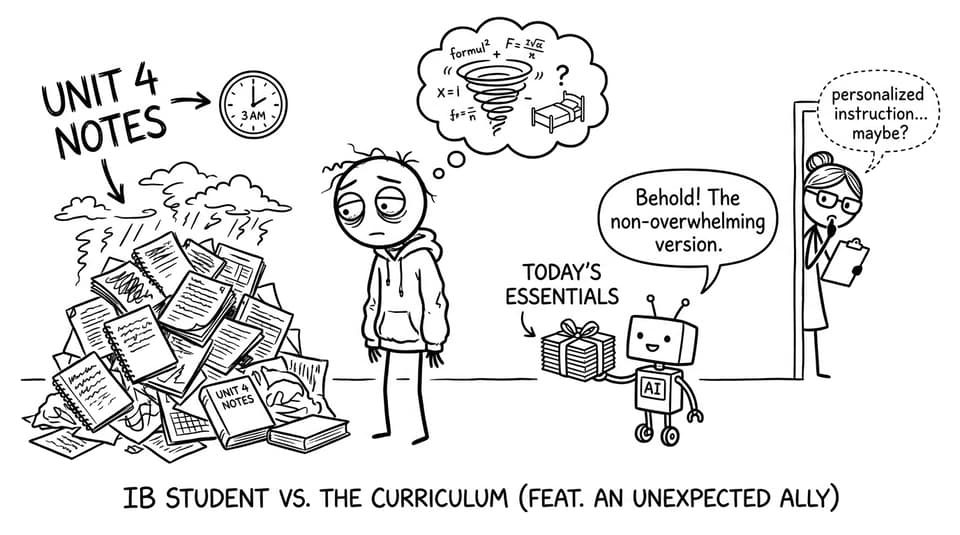
The quick checklist: what “personalized IB instruction” looks like
When AI is supporting your teacher (and not replacing them), you’ll usually see:
-
Clear diagnosis of what you miss most in IB questions
-
Faster feedback loops, so errors don’t fossilize
-
Targeted practice by topic, skill, and command term
-
Differentiation that doesn’t feel like “being singled out”
-
A consistent routine that builds exam confidence
RevisionDojo was built around this exact loop: explain, practice, grade, adjust.
How AI helps teachers personalize IB learning (and why students feel it)
Turning IB practice into a personal map
The most powerful shift is that AI can adapt practice at scale. Instead of everyone doing the same worksheet, your teacher can point you toward the exact skills you need next.
On RevisionDojo, this is easiest when classes use the Questionbank to spot patterns and assign focused sets: Questionbank. If your mistakes cluster around one unit, that’s not a character flaw. It’s data.
To make that data usable, students can pair practice with quick reference: Study Notes and the broader hub: RevisionDojo for IB.
Faster feedback without draining the teacher
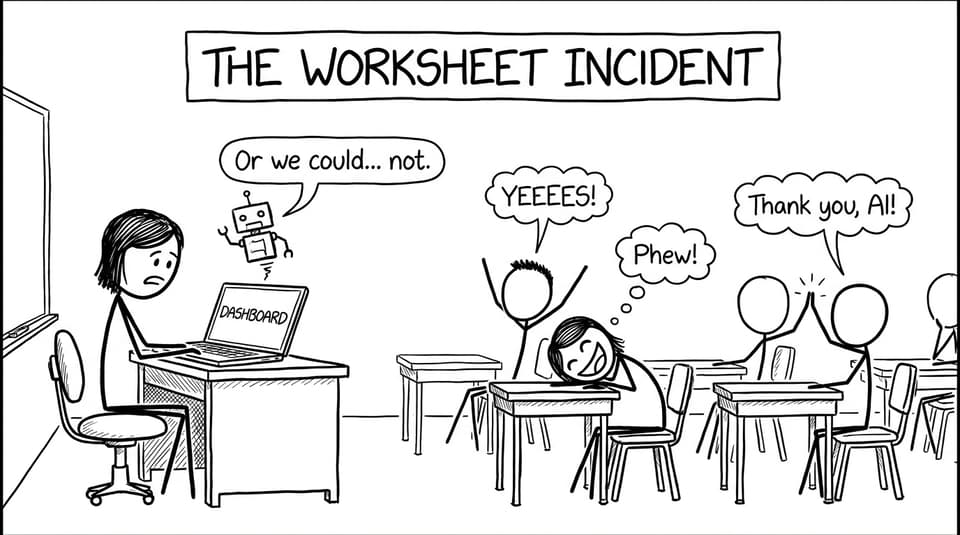
In IB, feedback is oxygen. But teachers are human, and marking takes time.
With AI-supported grading, the gap between attempt and insight shrinks. RevisionDojo’s Jojo AI Chat can help students understand errors and rehearse better responses, while teachers stay in control of what counts: Jojo AI and a deeper look at how interactive chat builds active practice: Jojo AI conversation features.
The result is simple: more corrections per week, which is often the difference between “I studied” and “I improved” in IB.
Differentiation that respects IB rigor
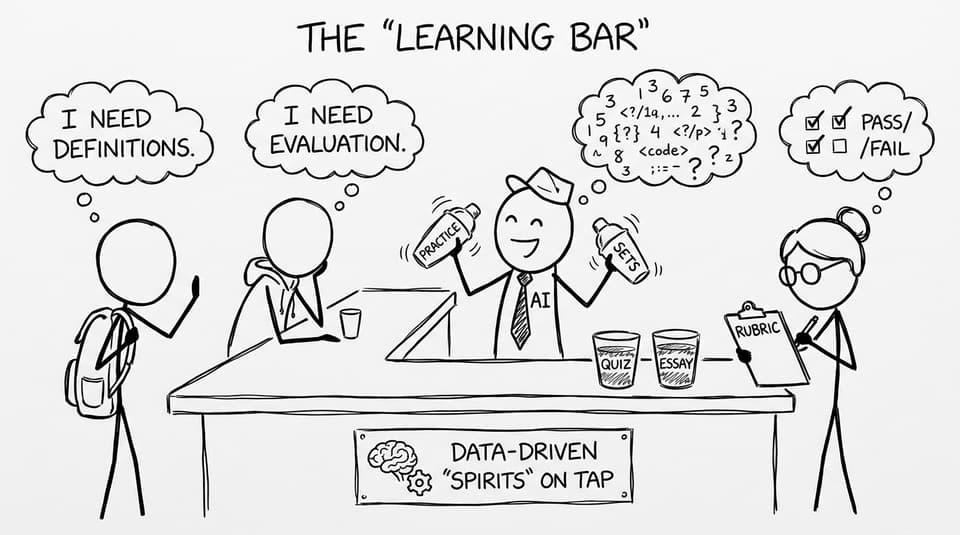
Good personalization doesn’t lower the bar. It changes the route.
AI helps teachers group students by needs: one group drills definitions, another practices application, another targets evaluation. Students can reinforce that work with spaced repetition so forgetting doesn’t ambush them later: IB Flashcards and the feature overview: Flashcards.
A useful companion read for students building memory systems is: IB Flashcard System: Active Recall for Better Memory.
How you can ask your teacher to use AI for IB personalization
Try one of these specific asks:
-
“Can we use AI feedback for weekly IB short responses so we fix mistakes faster?”
-
“Can you assign Questionbank sets by topic after each test?”
-
“Can we track which command terms we’re weakest at?”
Small requests create big structure. In IB, structure compounds.
Conclusion: the best AI for IB is the one that keeps you honest
AI doesn’t replace IB teachers. It gives them leverage: faster feedback, clearer patterns, and more time to teach the parts that actually require a human.
If you want personalized IB instruction that shows up in your grades, ask for a system that links practice to feedback to the next task. That’s what RevisionDojo is built for: Questionbank, Study Notes, Flashcards, Jojo AI Chat, Grading tools, Predicted Papers, Mock Exams, Coursework Library, and Tutors working as one calm loop.
Start by tightening one loop this week: one topic, one set of IB questions, one round of feedback, one correction. Then repeat.