



The first time you practice for the IB German Ab Initio oral exam, you learn a strange truth: your vocabulary isn’t the real problem.
It’s the silence.
That tiny pause where your brain knows what it wants to say, but can’t find the German fast enough. The recording light feels brighter. Your teacher’s follow-up question lands. And suddenly you’re negotiating with yourself: Do I risk a longer sentence and make mistakes, or do I stay safe and sound basic?
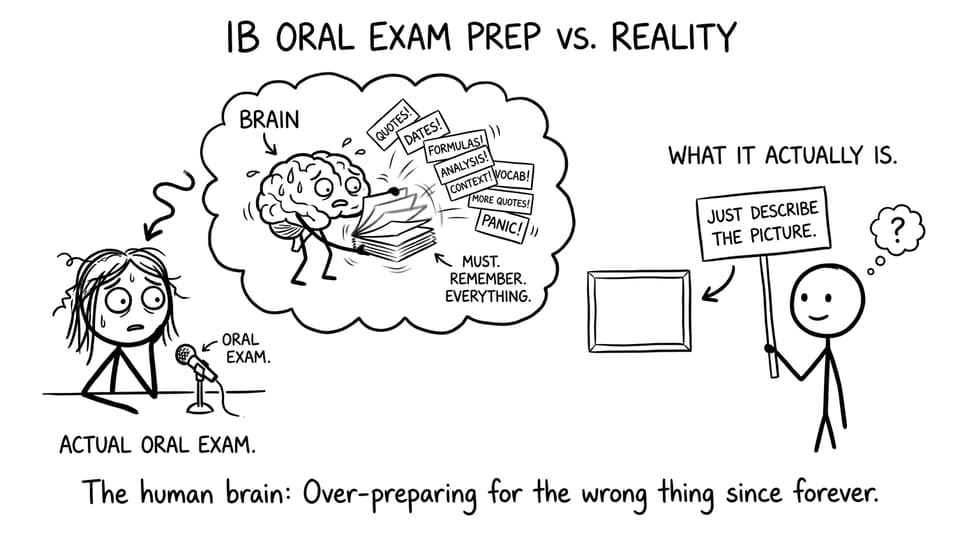
This is exactly why smart Revision Tips matter. The oral isn’t a memorization contest. It’s a communication test designed for beginners, and the fastest way to improve is to train the exact skills the exam rewards.
Quick checklist: your highest-yield Revision Tips
-
Learn the oral structure and timing so nothing feels surprising.
-
Build a “picture description” routine you can reuse on any stimulus.
-
Memorize flexible phrases (connectors, opinions, clarification requests).
-
Practice extending answers with one extra detail, one reason, and one example.
-
Run at least 3 timed mock orals and review what went wrong.
If you want the longer version with practice prompts and exam guidance, keep this open as your oral plan and pair it with How to Succeed in the IB German Ab Initio Oral Exam (2025 Edition).
Understand the oral exam format (so your nerves shrink)
The oral exam is worth 25% of your final grade. The typical flow is:
-
Preparation (15 minutes): You get a visual stimulus linked to an IB theme and make notes.
-
Presentation (1-2 minutes): You describe the picture, add context, and share basic opinions.
-
Discussion (3-4 minutes): Your teacher asks follow-ups, and you respond naturally.
The more this structure becomes familiar, the less your brain wastes energy on panic. For the bigger picture of the whole course, read IB German Ab Initio Exam Format (2025 Guide).
What examiners actually reward (and what they don’t)
Many students think the oral is graded like this: perfect grammar = top marks. But beginner orals are usually judged on a wider mix:
-
Language: range of vocabulary, accuracy, pronunciation clarity.
-
Message: can you communicate ideas clearly and stay relevant?
-
Interaction: can you respond, extend, and keep the conversation moving?
-
Cultural awareness: can you connect to German-speaking contexts when it fits?
A practical set of Revision Tips is to practice “recovery strategies” as much as vocabulary. If you forget a word, you can still score well by paraphrasing and continuing. For deeper culture guidance, see How Do IB German Ab Initio Exams Test Cultural Awareness? (2025 Guide).
Revision Tips for the 15-minute prep: use a simple template
The 15 minutes of prep is where you build control. Use a repeatable system:
The 5-5-5 method
-
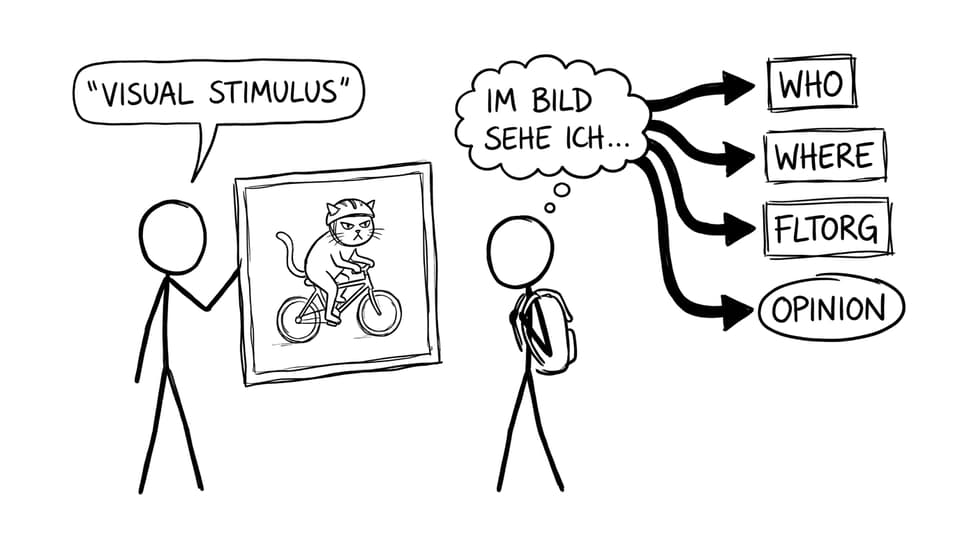
First 5 minutes: label the obvious (who, where, what).
-
Next 5 minutes: add story (what happened before, what might happen next, why it matters).
-
Last 5 minutes: predict 6 follow-up questions and prep mini-answers.
This is also where RevisionDojo helps: use Study Notes to revise theme vocabulary, then run quick drills in the Questionbank to keep language active. If you need a full pacing plan across assessments, read How Can I Manage Time Effectively in IB German Ab Initio Exams? (2025 Guide).
Revision Tips for describing any picture (without freezing)
Picture work is a skill, not a talent. Train a “default path” you can walk every time:
A reliable structure that sounds fluent
-
Start simple: Im Bild sehe ich...
-
Add location: Das Foto ist wahrscheinlich in...
-
Add actions: Sie/Er macht...
-
Add feelings/opinion: Ich finde das..., weil...
-
Add comparison: In meinem Land... / In meiner Schule...
To widen what you can say, build vocabulary by theme. RevisionDojo’s German Ab Initio theme pages (with notes and practice) are a clean way to do that, for example Den Planeten teilen resources. You can also review strategy-level guidance in What Study Resources Are Best for IB German Ab Initio?.
Build a phrase bank that keeps you talking
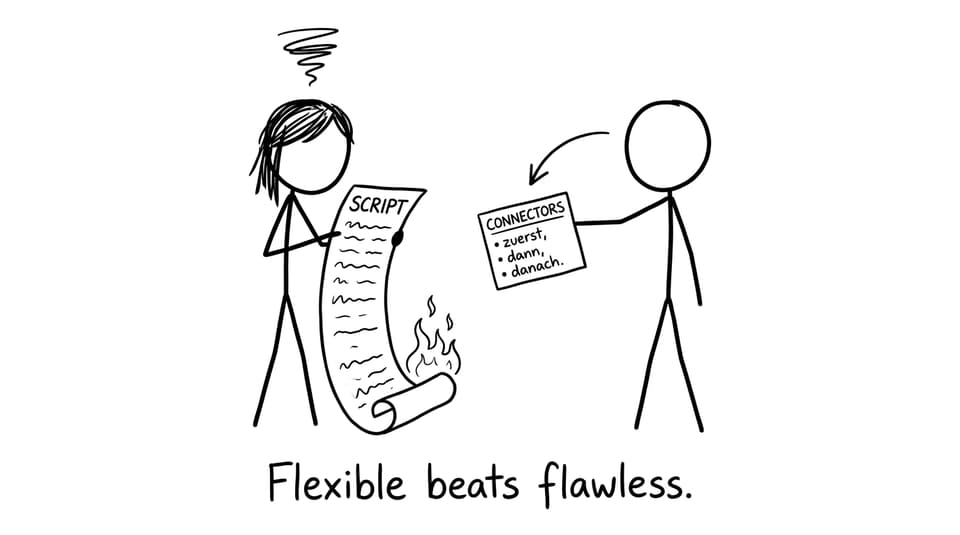
If you want one set of Revision Tips that pays off immediately, it’s this: memorize connectors and “filler” phrases that buy thinking time.
Use phrases like:
-
Meiner Meinung nach...
-
Ich denke, dass...
-
Zuerst... dann... danach... schließlich...
-
Können Sie das bitte wiederholen?
-
Ich bin nicht sicher, aber vielleicht...
Connectors matter because they make simple grammar sound organized. For word order support, revise subordinating conjunctions like weil and dass with Notes for Subordinating Conjunctions: weil, dass, wenn.
And if you’re unsure what grammar is worth your time, use How Much Grammar Do You Need for IB German Ab Initio? plus What Grammar Topics Are Most Important in IB German Ab Initio? (2025 Guide).
Practice the discussion like a conversation, not an interview
The discussion is where marks move. The goal is not to “survive questions.” The goal is to extend.
A simple extension formula:
- Answer + reason + example
Example:
- Ja, Recycling ist wichtig, weil es weniger Müll gibt. In meiner Schule haben wir Container für Papier und Plastik.
If you want speaking drills that build interaction, pair with Mastering Language B Oral Practice and the broader 10 Proven Tips to Prepare for Your IB Language B Oral. The principles transfer well to Ab Initio: clarity, structure, and flexibility.
Use RevisionDojo to run smarter oral practice loops
RevisionDojo works best when you treat it like a cycle:
-
Study Notes to learn a small theme slice (school, environment, technology).
-
Flashcards to make key nouns, verbs, and phrases retrievable.
-
AI Chat to instantly fix misunderstandings and generate follow-up questions.
-
Mock Exams to simulate pressure and timing.
-
Predicted Papers to keep your practice aligned to likely theme coverage.
-
Grading tools to tighten writing and grammar accuracy (which feeds into speaking).
-
Coursework Library for exemplars and clarity on IB expectations.
-
Tutors when you need feedback on pronunciation, pacing, or strategy.
Start here for the subject hub: German ab initio - IB Resources.
Conclusion: turn nerves into a routine you trust
The IB German Ab Initio oral exam feels scary when it’s unpredictable. It gets easier the moment you can say: I know the structure. I know my opening line. I know how to extend. I know how to recover.
That’s what strong Revision Tips do: they replace panic with a repeatable method.
If you want one place to practice the full loop (theme vocab, connectors, speaking prompts, and timed simulations), use RevisionDojo’s German ab initio - IB Resources along with the oral-focused guide How to Succeed in the IB German Ab Initio Oral Exam (2025 Edition). Then run your next mock oral, not to prove you’re perfect, but to prove you can keep going.