
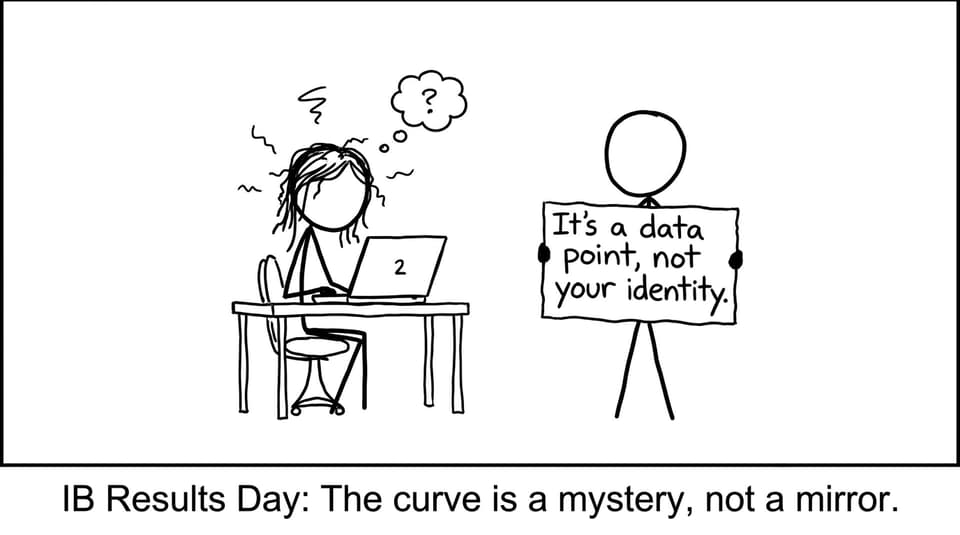
A 2 can feel like a verdict.
You open your results, see the number, and your brain writes a whole story: I’m not good at this. I’m behind. I’m done.
In the IB, a mark of 2 is definitely a warning sign. But it’s also something more useful: a precise signal that your current understanding and exam technique aren’t matching what the IB is rewarding yet. That difference matters, because signals can be acted on.
What a 2 means in IB grading (1 to 7)
The IB uses a 1 to 7 scale in each subject:
-
7: excellent
-
6: very good
-
5: good
-
4: satisfactory
-
3: limited
-
2: poor
-
1: very poor
A 2 usually means you’ve shown very limited command of the assessed skills. In practice, that often looks like one (or more) of these:
-
You know some content, but can’t apply it under exam conditions.
-
You misunderstand command terms (explain vs analyze vs evaluate).
-
Your answers are incomplete, off-task, or not structured in the way mark schemes reward.
-
Coursework (IA, EE, TOK writing) misses key rubric requirements or clarity.
If you want to translate your raw marks into likely grades and understand how close you are to the next boundary, use the IB Grade Calculator and compare with IB Grade Boundaries. In the IB, small changes in marks can sometimes shift a grade, so knowing the boundary is calming and practical.
Is a 2 “failing” in the IB?
In many schools, a 2 is treated as a fail because it’s below what’s normally considered a safe level of achievement.
But the IB diploma decision is more holistic. Your final outcome depends on:
-
Your total points across six subjects
-
Your HL points requirement
-
Your core completion (CAS, EE, TOK)
-
How many low grades you have
The key idea: one 2 is serious, but it doesn’t automatically erase everything you’ve built.
Can you still get the IB Diploma with a 2?
Sometimes, yes.
A single 2 can be survivable if the rest of your profile is strong and you still meet the overall diploma requirements (including minimum totals and HL expectations). A 2 in an HL is usually more dangerous, because it pulls down the HL subtotal and often reflects deeper gaps in exam skill.
Two patterns where a 2 becomes a bigger problem in the IB:
-
You collect multiple low grades (especially more than one 2).
-
The 2 blocks you from meeting the minimum HL points or overall point total.
This is why planning matters. You’re not just “raising a grade.” You’re managing a points system.
Why students get a 2 in the IB (common causes)
A 2 rarely comes from laziness. More often, it comes from effort pointed at the wrong target.
Misreading what the IB is asking for
The IB rewards specific behaviors: precise definitions, justified steps, criterion language, and clear reasoning. If your answers are accurate but not framed the right way, marks leak.
One fast fix is to practice in a system that shows you what the mark scheme is actually looking for. RevisionDojo’s Questionbank is built for this kind of correction loop: attempt, get feedback, then try again while the mistake is still fresh.
Content gaps that hide until timed practice
Many IB students feel confident while revising notes, then collapse under time pressure. That’s not a personality flaw. It’s a missing training phase.
Build stamina with realistic rehearsal: IB Predicted Papers and targeted routines like IB: The Last 2 Weeks Before Exams (What Matters).
Coursework that misses the rubric
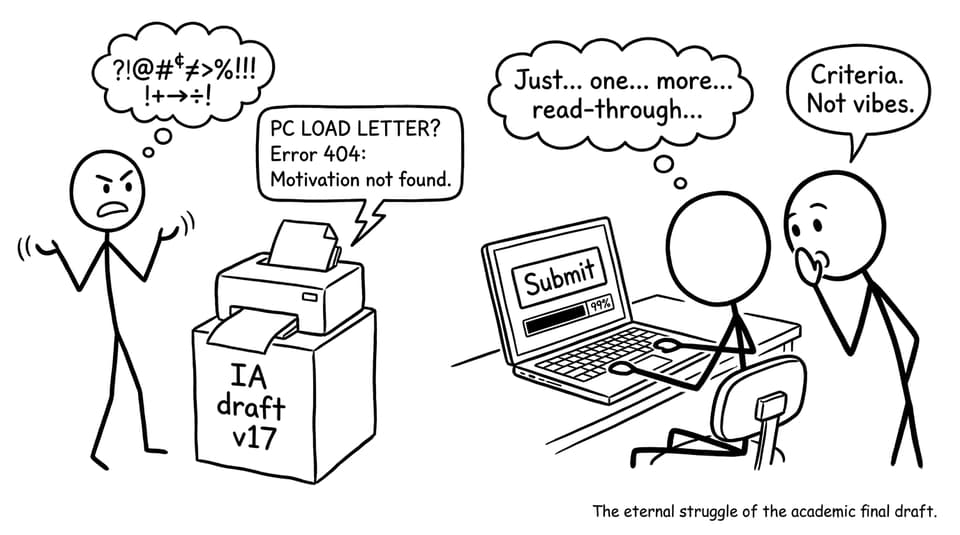
In the IB, coursework marks are not “how hard you worked.” They are “how clearly you hit the criteria.” If your IA or essay is drifting, it can drag your grade down before you even reach exam season.
For feedback aligned to criteria, use the IB Coursework Grader and, if helpful, read IB IA Grading Service: Professional Assessment in Minutes.
A calm recovery checklist (from 2 to safer territory)
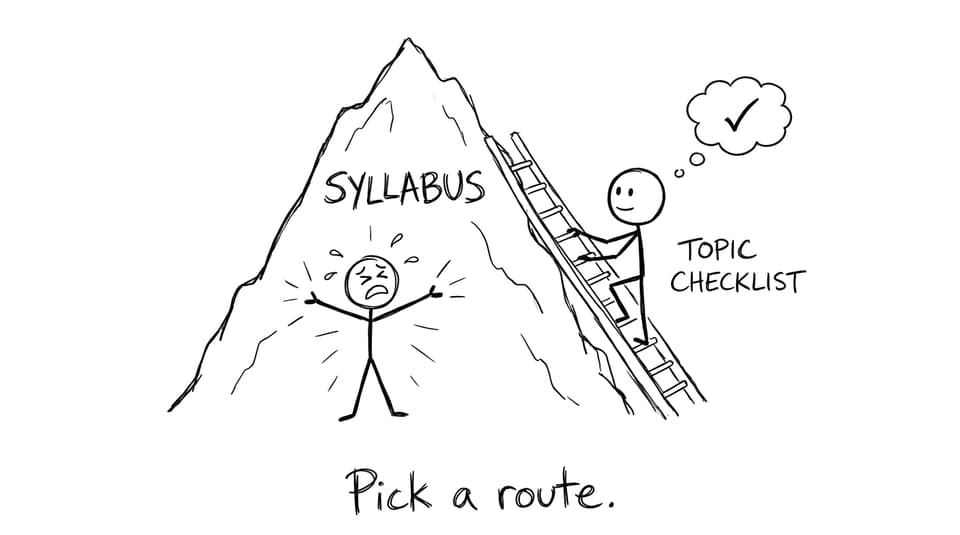
Here’s a simple IB recovery plan that works because it’s small enough to repeat.
Diagnose in one sitting
-
Identify which paper or component produced the 2.
-
List your top 3 recurring errors (concept, technique, timing, or command terms).
-
Check how far you are from the next grade boundary using the IB Grade Boundaries.
Rebuild with a tight loop (7 days)
-
Study Notes (20 minutes): clarify one subtopic only.
-
Flashcards (10 minutes daily): commit definitions, processes, and formulas to recall.
-
Questionbank (25--40 minutes): drill that same subtopic until your accuracy rises.
If you need a structured routine that doesn’t rely on motivation, borrow the approach from You’re Not Lazy -- Your IB Study Method Is Broken. Also, RevisionDojo’s Flashcards feature is designed for short daily retrieval that compounds over time.
Add pressure gradually
Once accuracy improves, add timed practice. Use IB Predicted Papers to simulate the real feel without guessing what to revise next. If you’re unsure how to treat predicted resources in the IB, IB Predicted vs Specimen Papers: What They Mean will keep your expectations realistic.
Get feedback that matches the IB
If written work is the issue, don’t wait. Upload drafts to the IB Coursework Grader and correct one criterion at a time. If you need human support, pair the tools with RevisionDojo Tutors so the diagnosis is faster and the plan is simpler.
The takeaway: a 2 in IB is a warning, not a destiny
A 2 in the IB is serious because it threatens points totals and can signal gaps in exam method or rubric understanding. But it’s also workable, because most students can improve quickly once they stop revising “everything” and start training what the IB actually marks.
If you want a steady, exam-focused way forward, RevisionDojo is built for exactly this moment: Questionbank for targeted practice, Study Notes for clarity, Flashcards for daily recall, AI Chat for quick explanations, Grading tools for coursework feedback, and Predicted Papers plus Mock Exams to make the real exam feel familiar. Your next grade doesn’t need a miracle. It needs a loop you can repeat.
