
The moment you realise “HL” is not just a label
In the first weeks of IB, HL can sound like a casual abbreviation teachers toss around. Then you look at your timetable, hear someone say “HLs set your workload,” and suddenly it feels like a decision that will echo all the way to exam day.
So let’s slow it down. The HL meaning in IB is simple, but the consequences are practical: time, depth, assessment demands, and how you build a revision system that actually holds under pressure. This 2025 guide explains what HL is, how it differs from SL, and how to choose HL subjects without accidentally designing a two-year burnout plan.
Quick checklist: what you need to know about HL in IB
If you want the fast overview before the nuance:
-
In IB, HL means Higher Level.
-
You still take six subjects total.
-
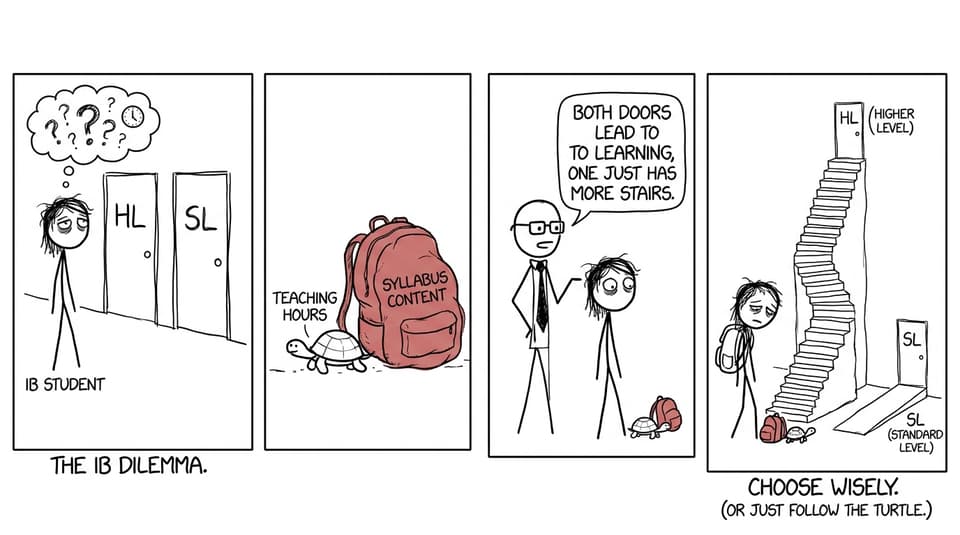
HL subjects are taught for about 240 hours (vs 150 hours at SL).
-
HL usually means more content, more depth, and often longer/more demanding exams.
-
You must take at least 3 HLs and no more than 4 HLs in the IB Diploma Programme.
For a broader comparison, you can also read What’s the Difference Between HL and SL in IB?.
What does HL mean in IB?
In IB, HL stands for Higher Level. Every IB Diploma student takes six subjects, and those subjects are split across two levels:
-
HL (Higher Level)
-
SL (Standard Level)
The HL meaning in IB is not “worth more points.” It means you study that subject with more teaching time, more syllabus breadth, and higher expectations for the same core skills: accuracy, analysis, and exam technique.
A concrete marker is teaching hours:
-
HL courses typically have about 240 teaching hours
-
SL courses typically have about 150 teaching hours
That extra time is where the extra chapters, harder question styles, and deeper evaluation tend to live.
If you’re also clarifying SL, this companion guide helps: SL Meaning in IB: A Complete 2025 Guide.
HL vs SL in IB: the differences that actually show up in exams
More time, but also more “ways to lose marks”
HL in IB is often described as “SL plus extra content.” Sometimes that’s true. But the more important difference is what happens under timed conditions.
HL questions more often require:
-
Longer chains of reasoning
-
More steps shown (especially in maths and sciences)
-
Clearer evaluation and synthesis (especially in essays and humanities)
That’s why many students experience HL as harder not because they are less capable, but because HL exposes weak fundamentals faster.
A deeper reflection on this trade-off is worth reading: Does HL vs SL Matter in IB? The Honest Answer.
Assessments can be longer or more complex
Across IB subjects, HL assessments may include extra paper components or more demanding tasks. Even when the internal assessment exists at both levels, HL expectations often push for more sophistication in analysis, structure, and justification.
If you want a concrete example from a specific subject, see What Are the Differences Between SL and HL in IB English A?.
How many HL subjects do you need in IB?
The IB requirement is straightforward:
-
At least 3 HL subjects
-
No more than 4 HL subjects
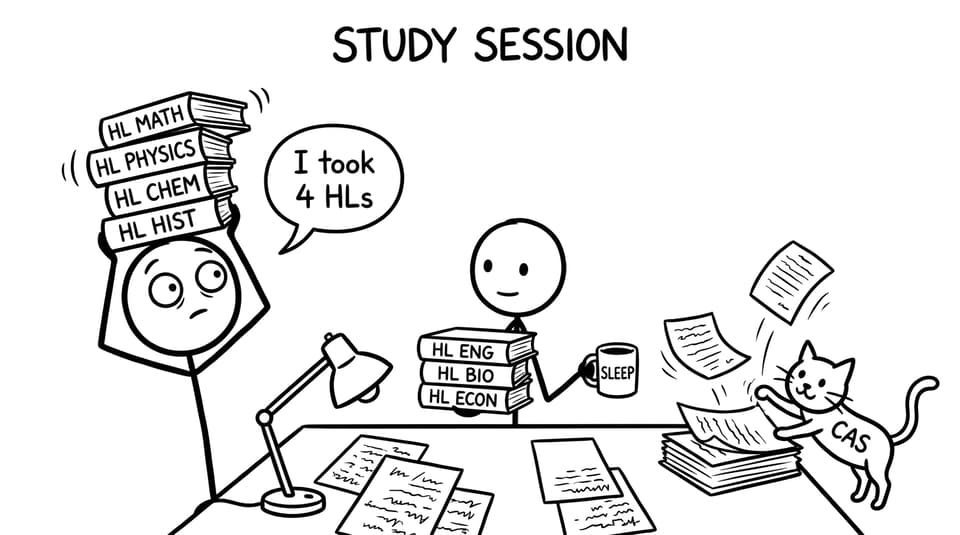
Most students take 3 HL and 3 SL. Taking 4 HLs can work, but it should be based on genuine strength and interest, not status or comparison.
If family conversations are driving the decision, this perspective helps: Do Universities Care Whether My Child Took HL or SL in IB Subjects?.
Examples of smart HL combinations (and why they work)
HL choices should match your likely university direction and your stamina.
-
STEM-leaning: HL Mathematics + HL Physics + HL Chemistry (high workload, high prerequisite coverage)
-
Humanities-leaning: HL History + HL English + HL Economics (reading and writing heavy, but synergistic)
-
Balanced: HL Biology + HL Language and Literature + HL Psychology (varied skills, less single-subject overload)
The best combination is the one your weekly schedule can survive consistently.
How to choose HL subjects wisely in IB (a calm decision method)
Start with prerequisites, then choose what you can repeat
In IB, a subject choice is a repetition choice. HL requires more repetitions because it requires more performance under time.
Use this decision filter:
-
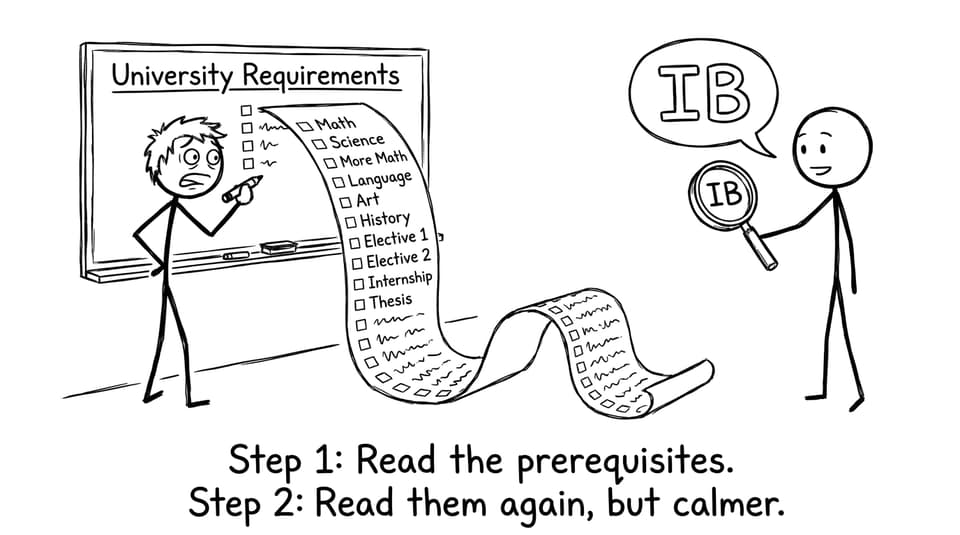
Requirements first: if a degree genuinely requires an HL, treat that as non-negotiable.
-
Strength next: choose HLs where you can realistically reach consistent 6/7 performance with practice.
-
Workload balance: avoid stacking your three most time-consuming subjects all at HL unless you have unusually strong capacity.
-
Coursework alignment: if you plan an Extended Essay in a subject, HL can make research feel more natural, but it also increases total intensity.
When your plan is set, build a system inside RevisionDojo: learn with RevisionDojo Study + Exam Prep, practise with the Questionbank, and keep daily recall alive using the strategy ideas in IB Flashcard System: Active Recall for Better Memory.
The three most common myths about HL meaning in IB
Myth: HL is only for “genius” students
In IB, HL is for students who can commit to the extra depth and practice. The quiet truth is that consistency beats raw talent most weeks.
Myth: HL is always better than SL
Universities value relevance and performance. A strong SL grade can be strategically better than a shaky HL grade in a subject you do not need.
Myth: all HLs feel equally hard
HL difficulty depends on your strengths, your teacher, and your study loop. HL Maths may be brutal for someone who loves essays, while HL English may feel heavy for someone who prefers problem-solving.
Conclusion: HL meaning in IB is really about depth you can sustain
The HL meaning in IB is “Higher Level,” more teaching hours, more depth, and more demanding exam performance. The best HL choices are not the most impressive on paper. They are the ones you can practise consistently, recover from mistakes quickly, and walk into exams with steady confidence.
If you want one calm place to run that whole IB process, RevisionDojo is built for it: Study Notes for clarity, Flashcards for retention, AI Chat when you’re stuck, Grading tools for feedback, Predicted Papers and Mock Exams for timed stamina, a Coursework Library to reduce background stress, plus Tutors when you need a human to raise the bar. Start with the RevisionDojo IB hub, then build your HL plan around practice that actually matches the way IB marks are earned.