
If you have ever stared at an energetics question and thought, “There’s no way we can measure that reaction in a lab,” you have already met the reason Hess’s law exists. In IB Chemistry, Hess’s law is the quiet shortcut that turns “impossible to measure” into “possible to calculate,” especially when exam pressure makes every line of working feel heavier.
Hess’s law problems look like puzzles because they are puzzles. But they are also forgiving: you can take a long route, a short route, or a messy route, and still end up with the same ΔH as long as your chemistry is consistent. That reliability is exactly why IB Chemistry keeps coming back to it.
What Hess’s Law Means in IB Chemistry
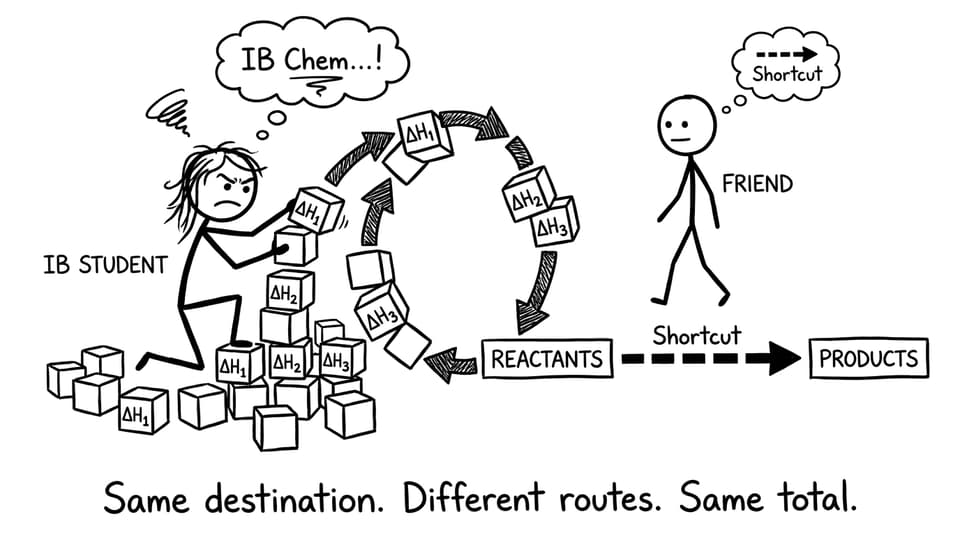
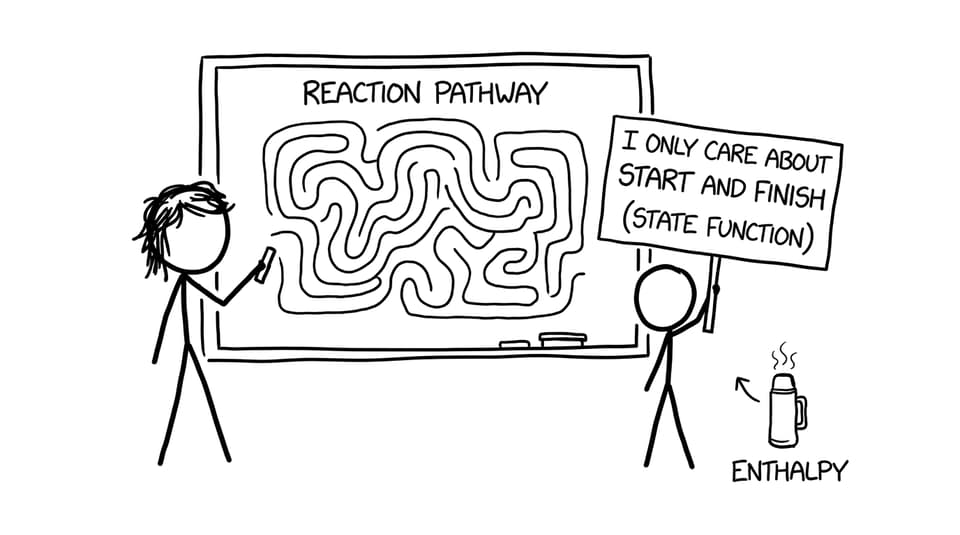
Hess’s law says that the total enthalpy change for a reaction is the same no matter which pathway you take.
In IB Chemistry, the phrase to remember is: enthalpy is a state function. That means ΔH depends only on:
-
The reactants you start with
-
The products you finish with
It does not depend on the steps in between. If you can build the target reaction by adding known reactions (even if you have to flip or scale them), you can also build the target ΔH.
For a foundation refresher, pair this with RevisionDojo’s clear explainer on Enthalpy Change Explained for IB Chemistry.
A Quick Hess’s Law Checklist (Before You Calculate)
Use this mini-checklist whenever you see Hess’s law in IB Chemistry:
-
Write the target equation first (what ΔH are you trying to find?)
-
Underline species that must cancel (the “middle” chemicals)
-
Decide: algebra method or cycle method
-
Apply the three rules carefully:
-
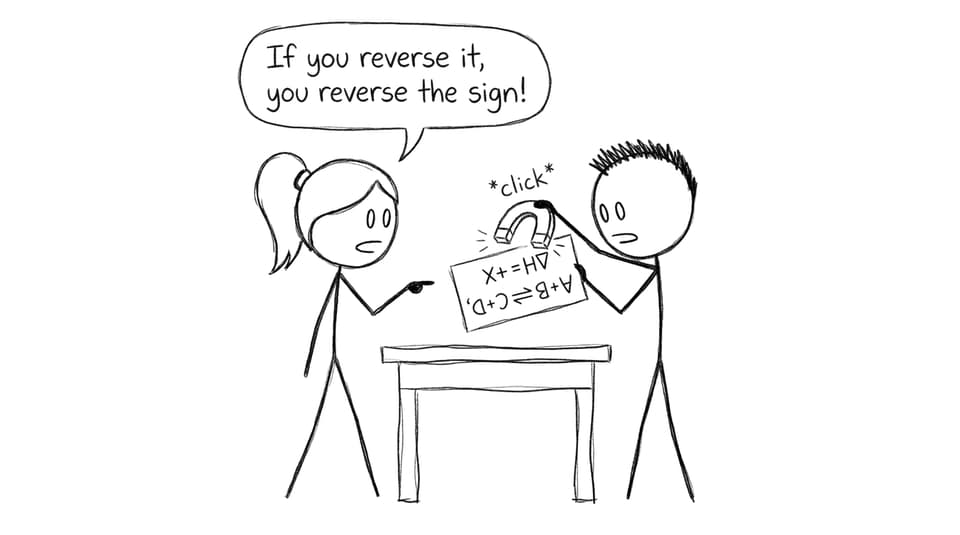
Reverse equation → reverse sign of ΔH
-
Multiply equation → multiply ΔH by the same factor
-
Add equations → add ΔH values
-
If you want targeted practice on this exact skill, go straight to IB Chemistry Topic R1.2.2 Hess’s Law Questionbank (SL/HL) and R1.2 Energy cycles in reactions - IB Questionbank.
Two Ways to Solve Hess’s Law Problems in IB Chemistry
Algebra method (the “equation puzzle” approach)
This is the most common IB Chemistry exam style: you are given several equations with ΔH values and asked to combine them.
What you do:
-
Flip equations until reactants/products line up with the target
-
Scale equations so coefficients match
-
Add everything and cancel what appears on both sides
It is basically stoichiometry, but for enthalpy.
Enthalpy cycle method (the “diagram keeps you honest” approach)
Some students think in pictures. Cycles help because they force you to show two alternative routes from the same start to the same finish.
Cycles are especially common when IB Chemistry mixes Hess’s law with:
-
Formation data
-
Combustion data
-
Bond enthalpy ideas
-
Born-Haber style reasoning
For related support topics, see Standard Enthalpy of Formation Explained and Bond Enthalpy Explained for IB Chemistry.
Worked Example: A Classic Hess’s Law Setup
Find ΔH for:
C(graphite) + 1/2 O₂(g) → CO(g)
Given:
-
C(graphite) + O₂(g) → CO₂(g) ΔH = -393 kJ mol⁻¹
-
CO(g) + 1/2 O₂(g) → CO₂(g) ΔH = -283 kJ mol⁻¹
Step 1: Decide what must cancel.
You want CO on the product side, but equation (2) has CO as a reactant. So reverse (2).
CO₂(g) → CO(g) + 1/2 O₂(g) ΔH = +283 kJ mol⁻¹
Step 2: Add equations.
Add reversed (2) to (1):
C + O₂ → CO₂ (ΔH = -393)
CO₂ → CO + 1/2 O₂ (ΔH = +283)
CO₂ cancels, leaving:
C + 1/2 O₂ → CO
Step 3: Add ΔH values.
ΔH = -393 + 283 = -110 kJ mol⁻¹
That’s Hess’s law in IB Chemistry: rearrange reactions until the chemistry matches, then rearrange the enthalpy the same way.
Common Hess’s Law Mistakes (And How to Avoid Them)
-
Forgetting sign changes when reversing an equation (write “REVERSED = SIGN FLIPS” in the margin).
-
Scaling the equation but not scaling ΔH (treat ΔH like a coefficient that must follow).
-
Canceling species incorrectly (only cancel if it appears identically on both sides).
-
Ignoring physical states when they matter (IB Chemistry can be picky when data tables specify states).
-
Rushing the target equation (if the target is wrong, everything “correctly” built from it is still wrong).
If you want structured energetics revision that connects calorimetry to cycles, explore IB Chemistry R1.1 Measuring Enthalpy Change.
Bringing It Home: Make Hess’s Law Your Reliable Tool
Hess’s law is one of those IB Chemistry topics that feels abstract until you notice what it really offers: control. When a reaction is hard to measure, you are not stuck. You just take the long way around using data you trust.
To turn that control into marks, practice in a system that mirrors exam thinking: use RevisionDojo’s Study Notes, drill patterns in the Questionbank, test yourself with Flashcards, and check your reasoning with AI Chat when one step feels unclear. When you are ready to pressure-test, use Mock Exams, Predicted Papers, and the Grading tools to spot weak links before the real exam does. And if you want a human voice in the process, RevisionDojo Tutors can help you untangle the exact mistake you keep repeating.
Hess’s law is not just a chapter in IB Chemistry. It is a way to keep moving, even when the direct path is blocked.