

Functional groups are the reason organic chemistry stops feeling like a random forest of carbon chains and starts feeling like a map.
If you have ever looked at an unfamiliar molecule in IB Chemistry and thought, “I have no idea what this will do,” you were probably looking at the wrong part. The chain length, the branching, the ring system--those matter, but they are rarely where the exam questions begin. The exam begins where reactivity begins: the functional group.
This guide explains functional groups in IB Chemistry the way you need them for exams: quick identification, predictable physical trends, and the reaction logic that earns marks.
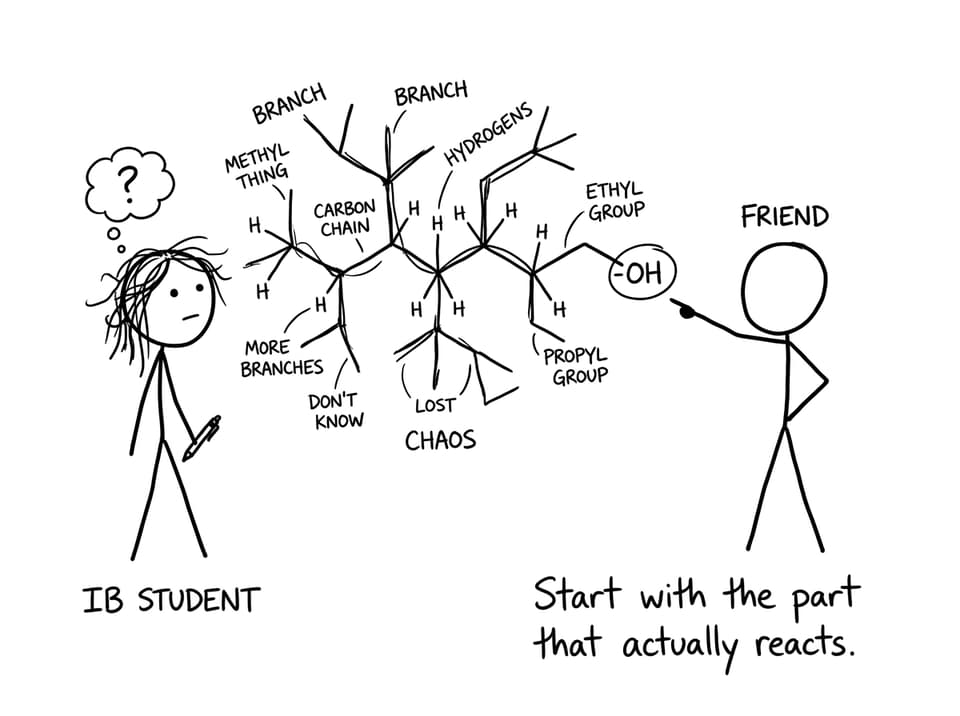
The functional group checklist (exam-speed)
When a structure appears, run this mental checklist in IB Chemistry:
-
Circle the “non-carbon/hydrogen” feature first (O, N, halogens) or any multiple bond (C=C, C≡C, C=O).
-
Decide the family name (alkene, alcohol, aldehyde, ketone, carboxylic acid, ester, amine, amide, etc.).
-
Predict polarity and intermolecular forces (is there hydrogen bonding?).
-
Predict the most likely reaction type (addition, substitution, oxidation, reduction, hydrolysis, acid-base).
-
Only then worry about the rest of the carbon skeleton.
For syllabus-aligned practice and examples, the most direct hub is S3.2 Functional groups: Classification of organic compounds.
What is a functional group in IB Chemistry?
In IB Chemistry, a functional group is a specific arrangement of atoms that gives an organic molecule its characteristic reactions.
Think of the molecule as a long sentence. Most of the carbon chain is grammar--it sets context, changes boiling point a bit, and affects solubility. The functional group is the verb. It tells you what the molecule can do.
This is why homologous series work: as the carbon chain grows, the functional group stays chemically recognizable, so patterns stay predictable.
The core functional groups you must recognize
Below are the high-yield functional groups for IB Chemistry exams, with what examiners usually want you to notice.
Hydrocarbons: alkanes, alkenes, alkynes
-
Alkanes (C--C single bonds): low reactivity (typically substitution only under special conditions). Mostly nonpolar.
-
Alkenes (C=C): electron-rich region, so electrophilic addition is a key theme in IB Chemistry.
-
Alkynes (C≡C): also undergo addition; the multiple bond remains the “reactive spotlight.”
Oxygen-containing: alcohols, aldehydes, ketones, carboxylic acids, esters
-
Alcohols (R--OH): hydrogen bonding, higher boiling points; can undergo oxidation and esterification.
-
Aldehydes (R--CHO): carbonyl at the end of the chain; oxidize readily to carboxylic acids.
-
Ketones (R--CO--R'): carbonyl in the middle; resistant to oxidation under mild conditions.
-
Carboxylic acids (R--COOH): acidic; strong hydrogen bonding; form salts and esters.
-
Esters (R--COO--R'): less hydrogen bonding than acids/alcohols; hydrolysis is a common reaction idea.
If you want a clean link between these groups and reaction families, use 20.1 Types of organic reactions Notes.
Nitrogen-containing: amines and amides
-
Amines (R--NH2 / R2NH / R3N): basic; form ammonium salts; often increase water solubility.
-
Amides (R--CONH2): strong intermolecular forces (hydrogen bonding); often higher melting points; less basic than amines due to resonance.
How functional groups shape physical properties
In IB Chemistry, property questions are rarely about memorizing numbers. They are about explaining trends.
Polarity and solubility
Polar functional groups raise solubility in water because they interact with water via dipole-dipole forces and sometimes hydrogen bonding. A small alcohol is usually more soluble than a similarly sized alkane because the --OH group “pays the entry fee” into water.
Hydrogen bonding (the frequent mark magnet)
If you see O--H or N--H, ask: can it hydrogen bond? That single idea explains why alcohols and carboxylic acids often have unusually high boiling points compared with hydrocarbons of similar molar mass.
Chain length still matters (but second)
Longer nonpolar chains reduce solubility and push boiling point upward via stronger London dispersion forces. In exam explanations for IB Chemistry, it is often: functional group effect first, chain length effect second.
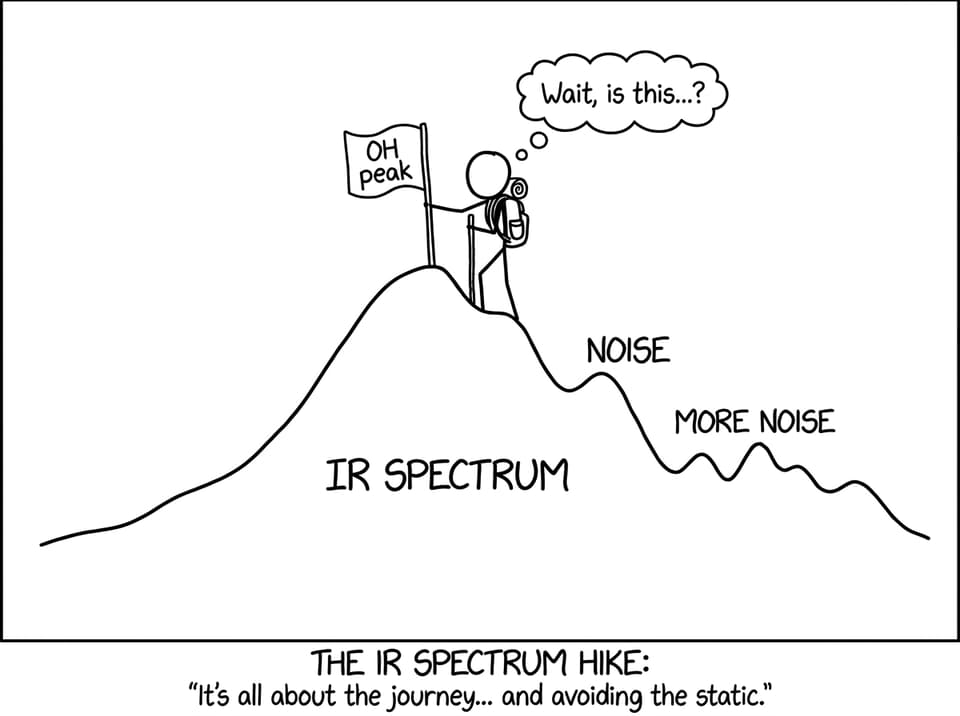
How functional groups predict reactions (the marks are here)
Organic mechanisms in IB Chemistry are functional-group-centric. You are rewarded for spotting the reactive site.
-
Alkenes: addition reactions (focus on the pi bond as electron-rich).
-
Halogenoalkanes: nucleophilic substitution (leaving group logic).
-
Alcohols: oxidation (primary vs secondary patterns matter) and dehydration.
-
Carbonyls (aldehydes/ketones): nucleophilic addition themes.
-
Carboxylic acids and esters: esterification and hydrolysis.
For reduction pathways tied to functional groups, see Reduction of functional groups Notes.
To drill this under exam conditions, combine RevisionDojo’s Questionbank with the topic sets for S3.2 Functional Groups Questionbank and 10.2 Functional group chemistry Questionbank.

Common misunderstandings (and quick fixes)
“If the chain changes, the functional group changes”
Not in the way exams mean it. The functional group is defined by the local atom pattern. Adding carbons changes molar mass and often physical properties, but the core reaction behavior stays centered on the same functional group.
“Similar-looking molecules react similarly”
Only if they share the same functional group. In IB Chemistry, functional group isomers can look deceptively alike on paper but behave very differently.
“Naming is separate from functional groups”
Naming depends on functional groups because IUPAC priority determines suffixes and numbering. For a refresher, review S3.2.5 IUPAC nomenclature Notes.
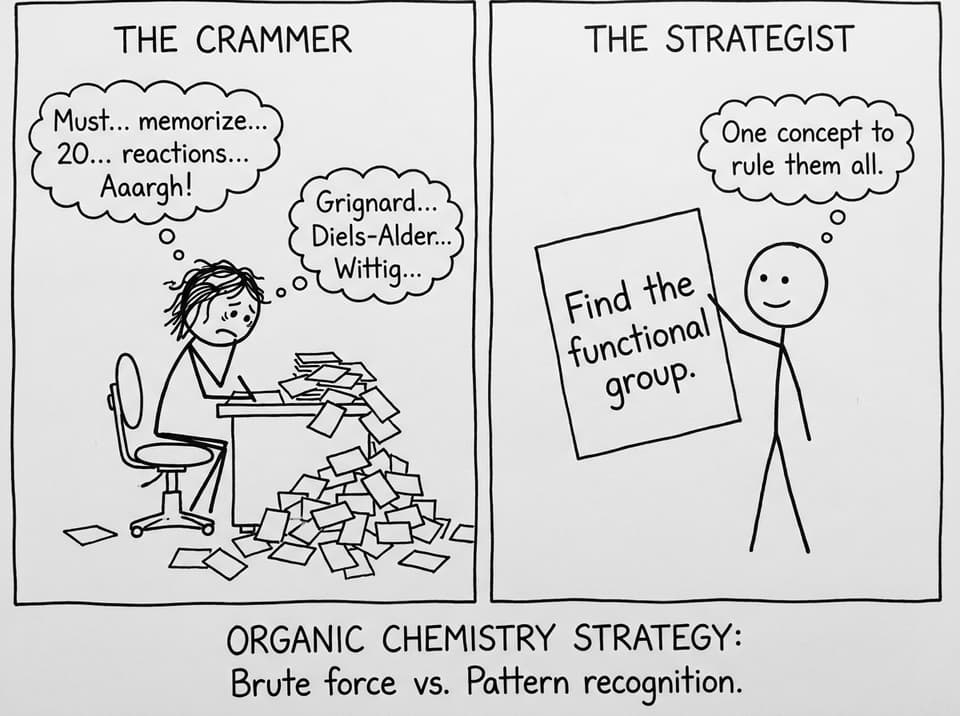
A simple RevisionDojo routine to master IB Chemistry functional groups
If you want functional groups to feel automatic in IB Chemistry, run a loop that matches how memory actually forms:
-
Read the key ideas once in IB Chemistry Resources using Study Notes.
-
Convert recognition into reflex with Flashcards (for example, S3.2 Functional Groups Flashcards).
-
Apply under pressure with the Questionbank and mark-scheme-aligned feedback.
-
Finish with Mock Exams and Predicted Papers when you need full-paper stamina and realistic pacing (see Predicted Papers).
Functional groups are the small details that make IB Chemistry feel predictable. Learn to spot them fast, explain what they do, and your organic chemistry marks start rising in a way that feels almost unfair.
If you are revising today, pick one topic set in the Questionbank, tag mistakes by functional group, and let RevisionDojo’s tools (Questionbank, Study Notes, Flashcards, AI Chat, Grading tools, Predicted Papers, Mock Exams, Coursework Library, Tutors) turn those patterns into points.