

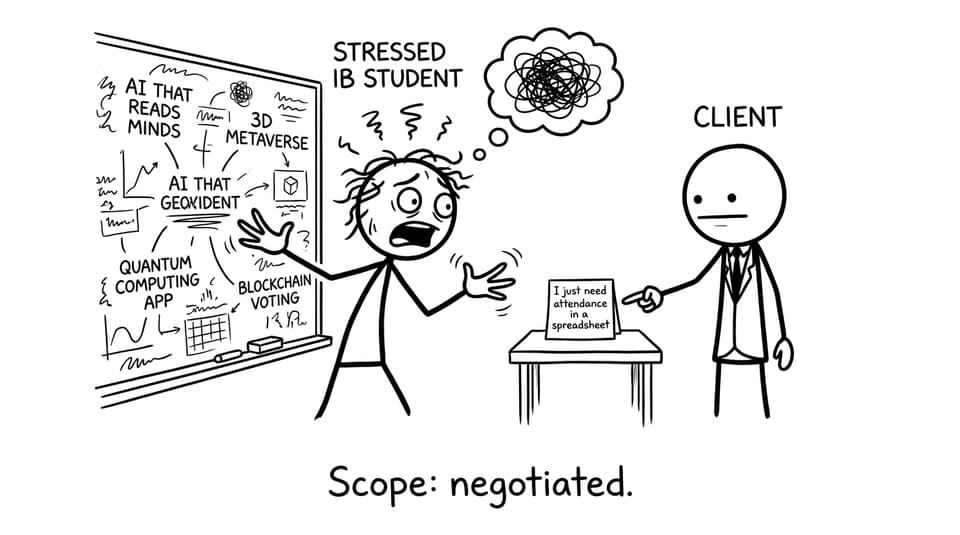
The moment you open the IA brief, your brain does a very human thing: it tries to impress an imaginary examiner. Suddenly, a small tool for a real client becomes “an AI-powered platform with accounts, analytics, and a 3D dashboard.”
In IB Computer Science, that instinct is expensive. Not because ambition is bad, but because the highest marks usually come from clarity: a real client, a real problem, a solution you can finish, and evidence you can explain. This post gives you examples of good IB Computer Science IA projects and the patterns behind them, so you can choose something that’s buildable, testable, and documentable.
Quick checklist for a high-scoring IB Computer Science IA
Before you fall in love with an idea, run this quick filter (it will save you weeks):
-
A real client you can interview more than once.
-
A problem with measurable success criteria (speed, accuracy, time saved, error reduction).
-
A scope that fits the IB timeframe (think: a tight, useful tool, not a full product).
-
Clear opportunities to show design + development + testing + evaluation.
-
Features that naturally allow algorithms, data structures, and possibly a database.
If you want a broader IA overview first, start with IB Computer Science Internal Assessment (IA): Ultimate Guide.
Examples of good IB Computer Science IA projects (and why they work)
Each example below is “small enough to finish, rich enough to score.” That balance is the sweet spot in IB Computer Science.
Attendance tracker for a teacher or club
A simple interface connected to stored records: add student names, mark present/late/absent, generate weekly summaries.
Why it scores well:
-
Client need is obvious and easy to validate.
-
Strong database design opportunities.
-
Testing is natural: edge cases, duplicates, missing days, export formats.
Quiz or flashcard builder for a specific subject
A tool that lets a teacher or student create decks, randomize questions, track weak topics, and export results.
Why it scores well:
-
Easy to define success criteria (time to create a deck, accuracy gains, usability).
-
Great for showing arrays/lists, loops, file handling, and clean UI.
-
Real feedback loops: users will tell you what’s confusing.
For exam-side revision while you build, pair your IA work with IB Computer Science Notes so your terminology and diagrams stay sharp.
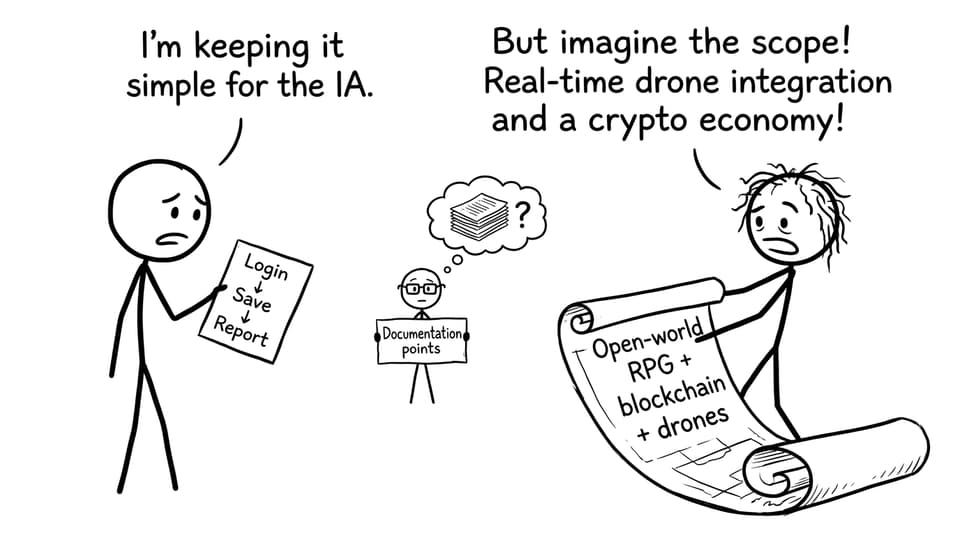
Inventory management system for a small shop or school department
Track items, quantities, suppliers, reorder thresholds, and produce reports.
Why it scores well:
-
Naturally uses CRUD operations and structured data.
-
Reporting features show algorithmic thinking (sorting, filtering, aggregates).
-
Evaluation can be concrete: fewer stockouts, faster lookup time.
Fitness tracker for a family member or team
Log workouts, goals, and progress summaries (weekly totals, streaks, personal bests).
Why it scores well:
-
Simple data model, but lots of meaningful calculations.
-
Testing is straightforward (invalid values, dates, rounding rules).
-
Evaluation ties to behavior: “Does the client actually use it?”
Library loan manager for a classroom or club
Track items, borrowers, due dates, overdue notices, and borrowing history.
Why it scores well:
-
Clear entities and relationships (ideal for ER diagrams).
-
Strong chance to demonstrate search, filtering, and validation.
-
Usability testing is easy: librarians are honest.
Restaurant ordering and billing tool
Take orders, calculate totals, apply discounts, print or export bills, track popular items.
Why it scores well:
-
Realistic constraints and success criteria.
-
Robust testing: multiple items, voids, taxes, rounding.
-
Great for showing structured development and iterative improvements.
Language learning assistant (vocabulary + spaced practice)
A vocabulary bank with practice modes, progress tracking, and difficulty adjustments.
Why it scores well:
-
Algorithms are meaningful (scheduling practice, weighting weak items).
-
Client feedback is rich: learning tools either feel helpful or they don’t.
-
Evaluation can compare progress before/after.
Study timetable generator for a specific student
Collect subjects, available hours, constraints, and generate a realistic weekly schedule.
Why it scores well:
-
Constraints create real algorithmic depth.
-
Testing is natural (conflicting constraints, too little time, priorities).
-
Evaluation focuses on practicality, not perfection.
If you’re still deciding, Best IA Topics for IB Computer Science helps you narrow ideas without overscoping.
Projects to avoid (or aggressively simplify)
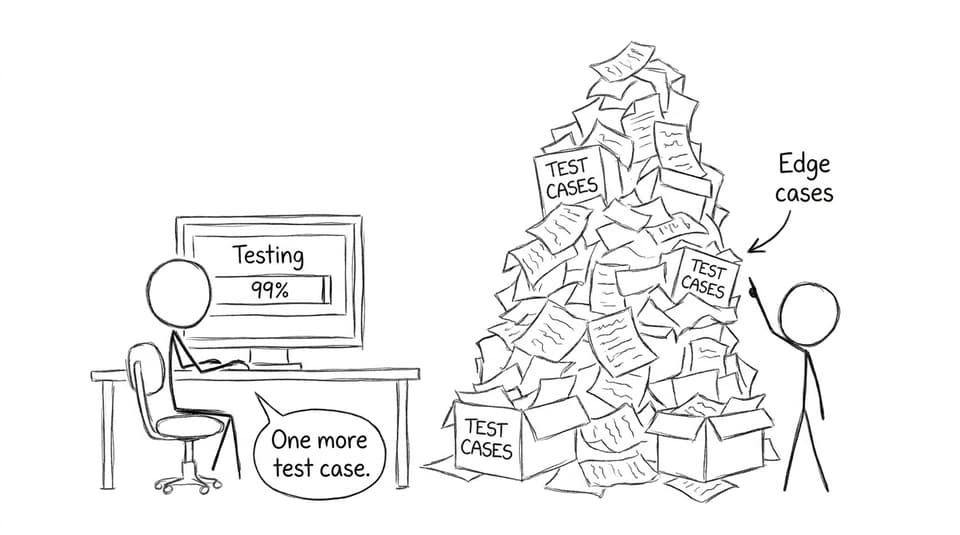
In IB Computer Science, the danger zone isn’t “hard.” It’s “hard to finish and explain.” Be cautious with:
-
Huge games (especially 3D or multiplayer).
-
Social networks or chat apps with heavy security requirements.
-
Any idea without a clearly involved client.
-
Anything that relies on many external APIs you can’t control.
If you’re unsure what the examiner rewards, read What Does the IB Computer Science IA Rubric Look For? and keep your documentation aligned from day one.
Make your IA choice exam-smart (not just project-smart)
Many students treat IA and exams like two separate lives. In reality, IB Computer Science rewards the student who connects them.
-
Use RevisionDojo Study Notes to tighten your theory explanations (SDLC, testing types, database concepts).
-
Use Flashcards to keep definitions and command terms fresh while you build.
-
Use the Questionbank to practice exam-style reasoning when your IA is making you code-heavy.
-
Use AI Chat when you get stuck on a design decision or algorithm explanation.
-
Use Mock Exams and Predicted Papers to keep timing and paper skills alive during IA season.
-
Use Grading tools early to self-check your report quality.
A useful time reality check: How Long Does It Take to Finish the IB Computer Science IA?.
Conclusion: pick the IA you can prove
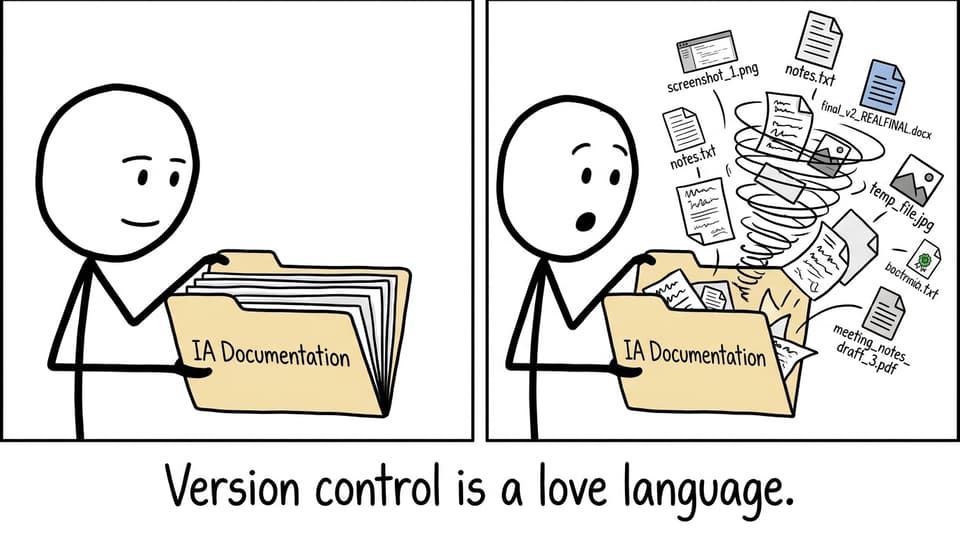
A good IA in IB Computer Science is rarely the flashiest idea. It’s the one you can finish, test thoroughly, and explain with calm confidence. Use the examples above to choose a project where the client is real, the scope is tight, and the evidence is easy to collect.
When you’re ready to tighten your plan and polish your report, lean on RevisionDojo: the Coursework Library for exemplars, Grading tools to check against the rubric, plus Study Notes, Flashcards, AI Chat, Questionbank, Mock Exams, Predicted Papers, and Tutors to keep both your IA and exams moving in the same direction.
For a structured next step, see Mastering IB Computer Science Assessments.