



The uncomfortable moment every IB student recognizes
You finish your last IB exam and feel something close to peace… until you remember the next step: scores get sent. Somewhere, an admissions office is about to see a single number that feels like it contains your whole personality.
So let’s answer the question plainly: Does USC care about your final IB exam scores?
Yes. USC cares about final IB exam scores in the same way a careful reader cares about the last chapter of a book: not because it erases everything before it, but because it confirms the story you’ve been telling all year.
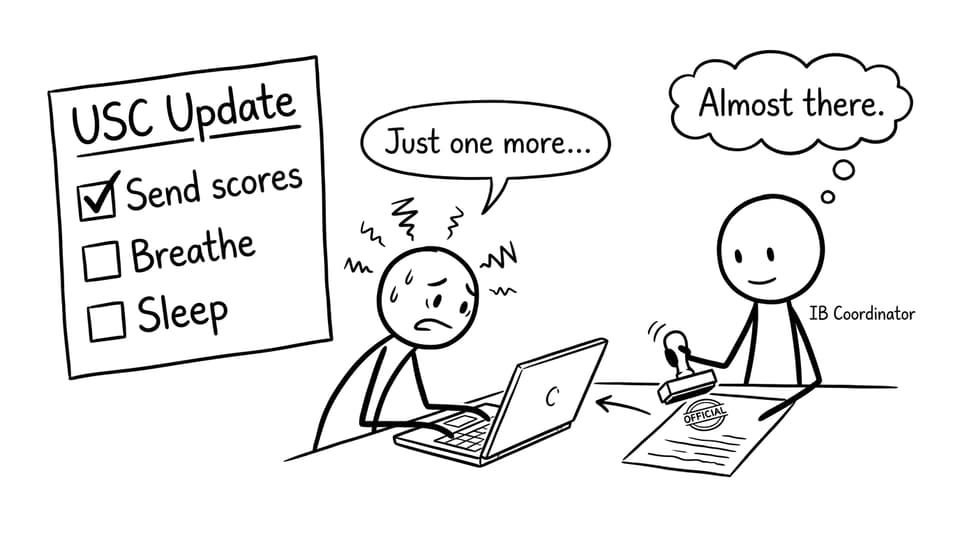
Quick checklist: what USC uses your IB scores for
Here’s the high-level map most IB students actually need:
-
Admissions context: USC evaluates rigor (and the IB diploma is rigorous).
-
Final verification: final IB scores can confirm what your transcript and predicted performance suggested.
-
College credit: strong IB Higher Level (HL) results can translate into elective credit.
-
Placement and flexibility: higher IB scores can unlock advanced placement and sometimes general education (GE) fulfillment.
If you want to prepare for that reality, build your revision around proof, not hope: targeted questions, timed practice, and feedback loops. RevisionDojo’s Questionbank is built for exactly that.
How USC views IB during admissions
USC is clear about liking students who choose challenging coursework. The IB Diploma Programme is one of the clearest signals of academic ambition because it combines breadth (six subjects) with depth (HL courses) and long-form work.
That said, USC admissions is holistic. Your grades, course rigor, activities, writing, recommendations, and overall context matter. Final IB exam scores are one part of the picture, not the entire canvas.
A useful way to think about it: your application shows your trajectory; your final IB results show whether the trajectory held.
For day-to-day exam prep, the calmest strategy is a system you can repeat. If you need one, start with RevisionDojo’s How to Study for IB Exams: Step-by-Step Guide.
Do final IB exam scores matter for getting in?
In most cases, IB students apply before final scores exist. That means USC primarily evaluates what it can see at the time: transcript performance, course selection, school profile, and the strength of your overall application.
But final IB scores still matter after the decision because:
-
They provide an official, standardized confirmation of your academic preparation.
-
They help USC make decisions about credit and placement.
-
In rare cases, a dramatic drop in final IB outcomes compared to what your school reported can trigger questions.
This is not about needing perfect 7s. It’s about avoiding a surprise ending. Build consistency now: a little every day, then pressure-tested once a week.
For the “pressure-tested” part, RevisionDojo’s IB Predicted Papers are a clean way to rehearse pacing and decision-making under time.

How USC uses IB scores after admission: credit, GE, placement
This is where final IB results become very practical.
College credit (the part students feel immediately)
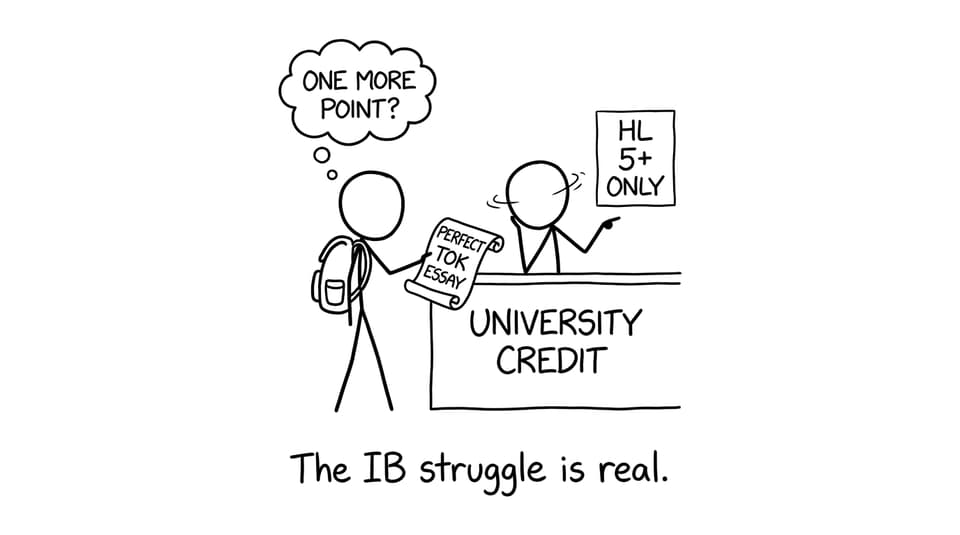
USC can award 6 semester units of elective credit for each HL subject with a score of 5, 6, or 7, up to four subjects.
Alternatively, if you earn 30 or more overall on the full IB Diploma, USC may award 20 elective semester units.
Why this matters: credit can buy you time. Time to explore minors. Time to study abroad. Time to take a lighter first semester while you adjust.
GE fulfillment and placement
Depending on the subject and score, strong IB results can sometimes help with GE requirements and course placement (especially in areas like math, sciences, and languages). Policies can change by department, so treat this as “possible,” then verify with USC once you’re admitted.
If your goal is to turn IB study time into real-world benefits, train like it’s a skill. Use content to feed practice: IB Revision Notes: Quick Review Before Exams pairs well with short bursts of questions from the Questionbank.
A practical IB plan if you’re worried about USC seeing your final scores
Anxiety loves vague plans. USC does not. Here’s a grounded weekly loop for IB students preparing for exams:
-
Study Notes for one subtopic (15-30 minutes)
-
Flashcards daily for recall (10 minutes)
-
Questionbank practice on that exact subtopic (25-45 minutes)
-
One timed session per week using a predicted paper to build stamina
-
Review mistakes with brutal honesty, then retest in 48 hours
RevisionDojo was built to keep this loop in one place: Study Notes, Flashcards, AI Chat for quick clarity, Grading tools for feedback, Predicted Papers and Mock Exams for realism, a Coursework Library for long-form components, and Tutors when you need a human to help you unstick a pattern.
To sharpen your revision habits fast, use The Ultimate Guide to Revision for IB Students and How to Study for IB Mocks (Without Burning Out).
Final takeaway: yes, USC cares, so make your IB work count
USC cares about your final IB exam scores because they confirm rigor, support credit decisions, and can affect placement. But they are not a single trapdoor under your future. They’re a signal.
If you want that signal to be strong, build a revision system that produces evidence: practice questions, feedback, timed sessions, and steady recall. Start with the RevisionDojo app workflow for IB exam prep, then anchor your daily routine in Study Notes, Flashcards, and the Questionbank. When the scores are finally sent, you’ll know you didn’t leave it to luck. You trained.