
Some admissions questions feel like they’re really about reassurance.
“Does LSE prefer the IB?” often means: If I push through the hardest weeks of the IB, will it actually count?
If you’re an IB student preparing for exams, the honest answer is calm and useful: LSE doesn’t publish a simple “preference list,” but it consistently respects the IB because it signals breadth, academic stamina, and the kind of writing and thinking LSE courses demand. In other words, the IB is not a magic key. It’s a strong language to speak in an application, as long asas long as your grades and subject choices match what the course requires.
Below, we’ll unpack what “preference” really looks like, what you can control before exams, and how to build an IB study plan that makes your offer conditions feel survivable.
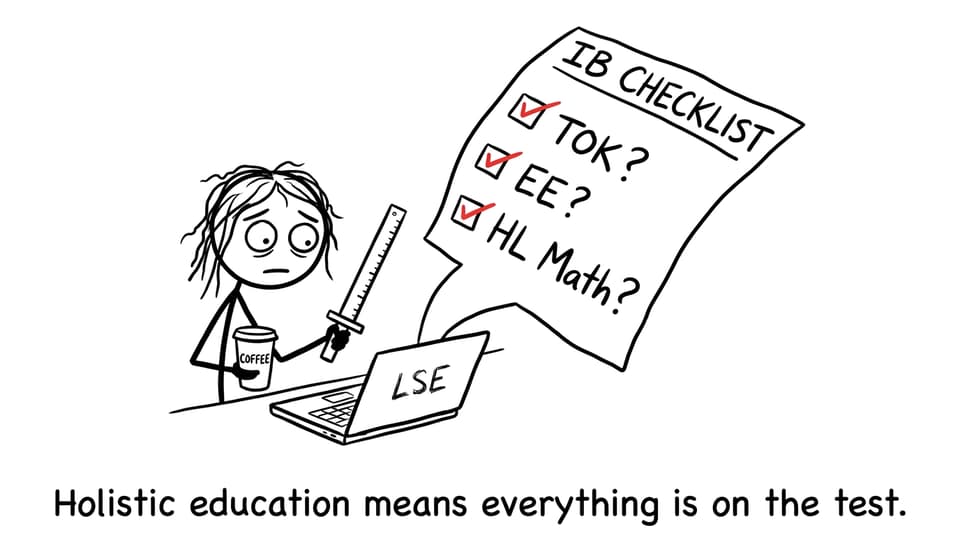
The quick checklist: what LSE actually cares about (and where IB helps)
Use this as your fast filter before you spiral:
-
Course requirements first: LSE cares more about whether you meet subject prerequisites than whether you did IB or A-levels.
-
Predicted grades matter: your IB predicted score is often the headline.
-
HL choices can be decisive: especially for economics-heavy degrees, HL Maths (often AA) is a major signal.
-
Academic writing and reasoning: the IB’s TOK and Extended Essay train habits LSE loves.
-
Consistency under pressure: LSE courses are demanding; the IB’s workload is credible evidence you can cope.
To train those pieces efficiently, it helps to study like you’re building a system, not just “revising more.” RevisionDojo is designed for that loop: RevisionDojo for IB.
Does LSE prefer the IB, or do they prefer what the IB proves?
It’s tempting to imagine admissions as a single lever: choose the right qualification, get the advantage. Real admissions tends to be quieter than that.
LSE is selective because it has to be. It receives a huge volume of academically strong applicants, many with perfect-looking transcripts. So “preference” usually shows up in subtler ways: which qualifications reliably predict success in LSE-style courses.
The IB often lands well because it proves three things at once:
-
Breadth: you can handle multiple disciplines without losing your footing.
-
Depth: HLs show you can think at higher intensity.
-
Independent work: the Extended Essay and IAs show you can sustain a project.
An IB student who can write clearly, argue carefully, and manage deadlines is basically demonstrating “day one readiness” for social science degrees. That’s not guaranteed by the IB, but the IB makes it easier to demonstrate.
Why IB skills map well to LSE degrees
TOK trains the kind of thinking LSE rewards
In the IB, TOK can feel abstract right up until you realise what it’s really doing: forcing you to justify claims, weigh evidence, and speak precisely.
That’s the heartbeat of an LSE seminar. You’re rarely rewarded for “knowing a lot” unless you can explain why it matters, how you know, and what a counterargument would say. TOK isn’t identical to university-level argumentation, but it points you in the same direction.
If TOK is currently eating your time, make it work for you: practice building claims and counterclaims, then apply the same structure to your essay-based subjects when revising.
The Extended Essay quietly signals research maturity
The Extended Essay is one of those IB experiences that feels inconvenient now and oddly valuable later. LSE courses require long reading lists, self-directed study, and writing that doesn’t collapse under its own ambition.
An EE shows you can:
-
define a research question,
-
choose methods and sources,
-
write in a disciplined structure,
-
and revise your thinking based on what you find.
That’s not just “nice.” It’s predictive.
Coursework + deadlines build the stamina LSE assumes
LSE degrees often assume you can manage multiple deadlines at once without being chased. The IB is essentially a two-year rehearsal for that reality.
That said, the most useful takeaway isn’t “I suffered, therefore I’m ready.” It’s: I learned how to work when motivation is missing. That’s a skill you can train before exams.
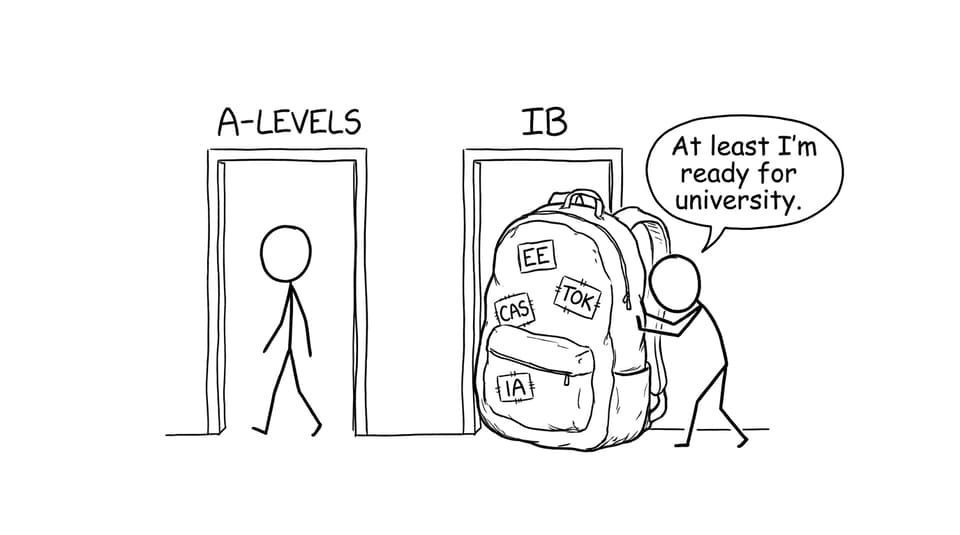
Predicted grades and typical IB expectations for competitive courses
For many LSE courses, competitive applicants tend to sit in a high band of predicted grades. You’ll often hear ranges like 38-40+ points discussed for the most selective programmes, with strong HL scores (often 6s and 7s) doing a lot of the heavy lifting.
Two important notes for your sanity:
-
Requirements vary by course and year. Always check the specific course page.
-
Meeting a typical range doesn’t guarantee admission; missing it can make things harder.
If your predicted grades feel fragile, don’t try to fix everything at once. Build evidence that you’re improving, topic by topic.
A practical way is to run a tight loop:
-
Learn one subtopic using Study Notes
-
Convert it into daily retrieval with Flashcards
-
Apply under exam conditions using the Questionbank
That combination turns “I hope I know this” into “I have data that I can score on it.” For more on building confidence from predicted scores, see: IB Predicted Grades Don’t Define You (Here’s What Does).
Subject combinations: the quiet deal-breaker
This is where “Does LSE prefer the IB?” becomes the wrong question.
LSE prefers fit.
Some courses care deeply about your subject mix, especially anything economics-, data-, or maths-heavy. If a course expects mathematical fluency, HL Maths isn’t just a nice-to-have signal, itit can be the foundation that keeps you afloat later.
Use this simple test:
-
Does your intended degree rely on quantitative methods?
-
If yes, is your IB subject choice proving you can do that work?
If you’re unsure, ask your school and cross-check requirements early. Then focus your revision on the subjects that carry the most admissions weight.
How to prep for IB exams with LSE in mind (without burning out)
LSE doesn’t admit “potential energy.” They admit students who can convert effort into results.
So your exam preparation needs two tracks: knowledge and performance.
Build knowledge fast, then stress-test it
-
Use Digital IB Study Notes to get clean explanations and reduce random Googling.
-
Drill weak areas with the Comprehensive IB Question Bank guide so your practice is targeted, not vague.
-
Add realism with IB Predicted Papers to train timing and stamina.
RevisionDojo ties those steps together with exam-style feedback loops: Questionbank practice, Study Notes for gaps, Flashcards for retention, and AI Chat when you’re stuck. When it’s time to pressure-test, Predicted Papers and Mock Exams help you rehearse the real thing.
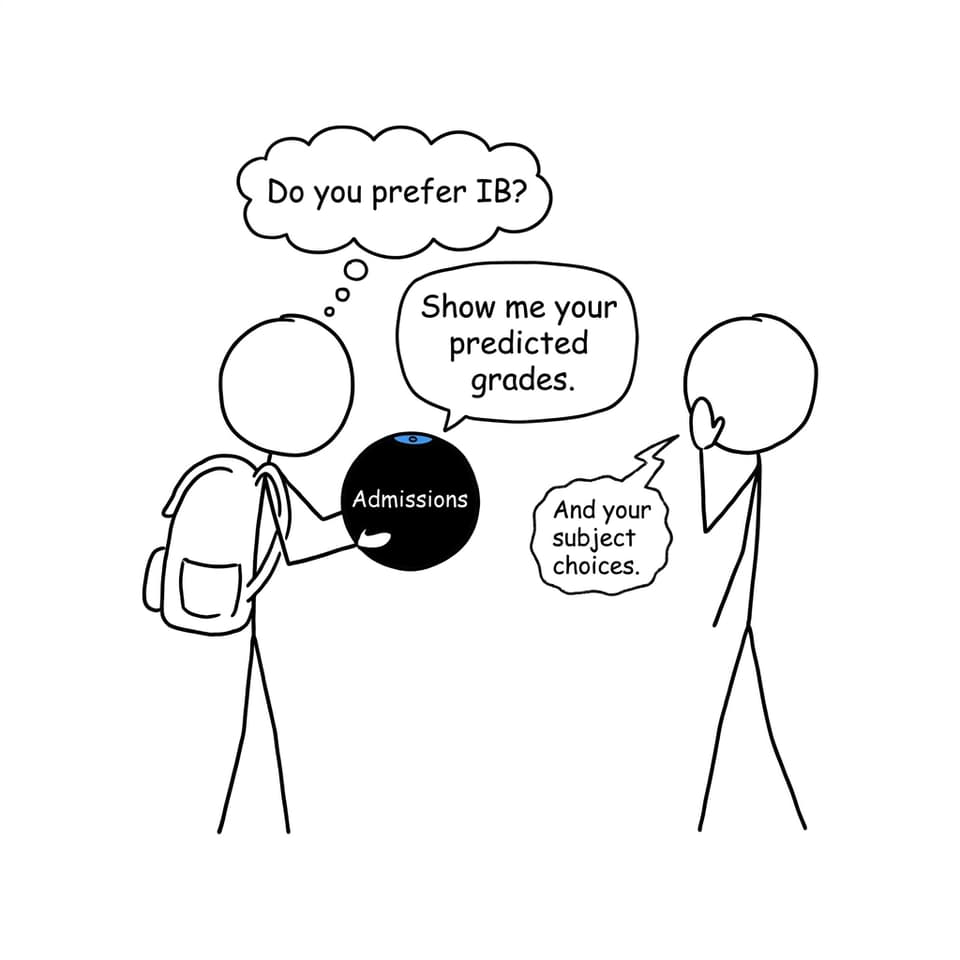
The bottom line: LSE respects the IB, but results decide
If you’re asking whether LSE prefers the IB, you’re already thinking like an applicant: you’re trying to understand incentives.
Here’s the incentive that actually matters: LSE rewards proof. The IB can be powerful proof of of breadth, research maturity, and academic stamina, but only when it comes with the grades and subject fit your course demands.
So make the IB work for you in the final stretch. Build a routine that’s boring, repeatable, and data-driven: Study Notes for clarity, Flashcards for retention, Questionbank for exam skill, AI Chat for fast help, and Predicted Papers and Mock Exams for realistic practice. Start here: RevisionDojo for IB.