



A funny thing happens in the IB when your mental health starts slipping: time doesn’t slow down. The calendar keeps marching. Teachers keep collecting drafts. And you start wondering whether the system has any room for reality.
So, do IB deadlines get extended for mental health reasons?
Yes, sometimes. But not automatically, and not by DM-ing the IB. Extensions and accommodations usually flow through your school, your IB coordinator, and an official process often described as special consideration under the IB Access and Inclusion approach. The key is clarity, evidence, and early communication.
The quick answer (save this checklist)
If you want the best chance of deadline flexibility in the IB, do these things:
-
Tell a trusted adult at school early (teacher, counselor, or coordinator)
-
Ask what the deadline means (draft? final? authenticity? upload cutoff?)
-
Gather evidence (doctor, therapist, counselor, or documented school support)
-
Propose a specific new deadline and what you will deliver by then
-
Keep studying in a “minimum viable” way while you wait
If you’re already late, go straight to this guide: What to Do if You Miss an Internal Assessment Deadline.
How the IB process actually works for mental health
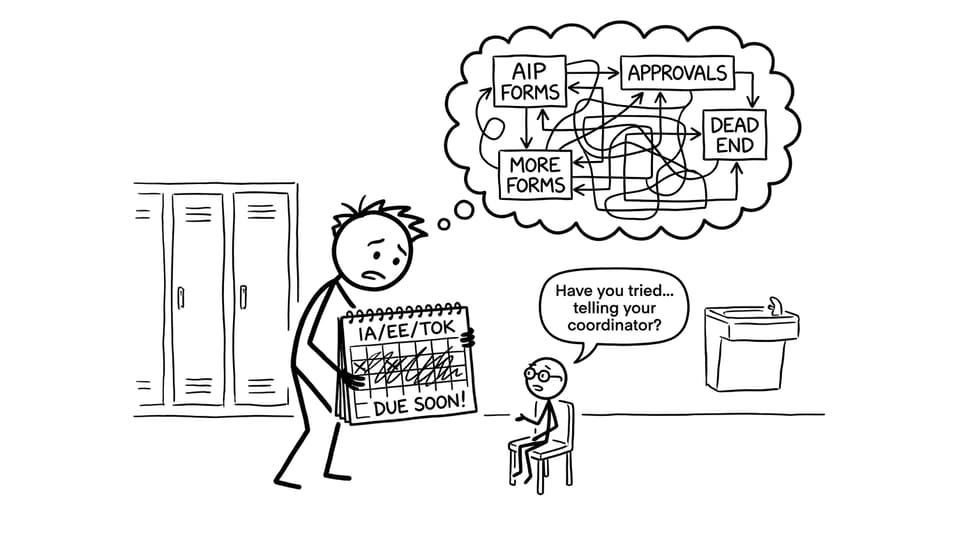
The IB generally doesn’t run deadline conversations directly with students. Your school does. That’s why the most important person in this story is usually your IB coordinator.
In many schools, mental health-related deadline changes are handled as special consideration requests, aligned with the IB Access and Inclusion framework. That typically means:
-
The school submits the request (not you)
-
The request focuses on how your circumstances affected a specific component (IA, EE, TOK)
-
Evidence matters because it shows this is health-related, not procrastination
If you’re unsure whether anxiety “counts” without a formal diagnosis, read: Does the IB Care if I Have Undiagnosed Extreme Anxiety?.
What evidence usually helps
In the IB, “evidence” doesn’t need to be dramatic. It needs to be credible and relevant. Examples include:
-
A note from a GP/doctor
-
A letter or summary from a therapist or psychologist
-
Documentation from your school counselor
-
Records of ongoing support plans at school
The point isn’t to prove you’re struggling. It’s to document how your mental health affected deadlines or performance.
What schools often do before anything becomes “official”
Most IB schools try smaller solutions first. Think of it like a ladder:
Informal flexibility
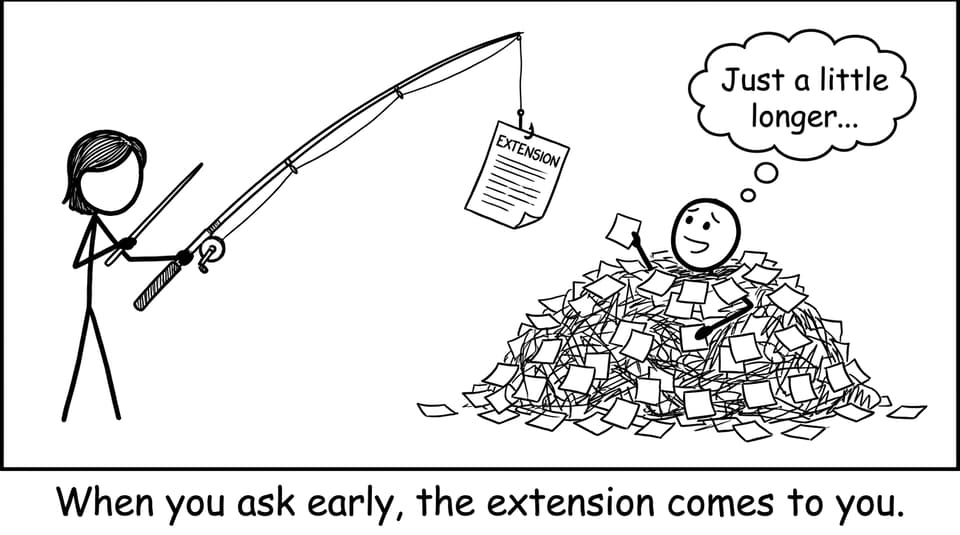
Sometimes a teacher can shift a draft deadline or accept a short delay without escalating anything. This is common for IAs where the school has internal scheduling space.
Counselor involvement
If stress, burnout, panic, or depression is interfering with work, a counselor can help document what’s happening and suggest school-based supports.
A practical tool here is journaling, because it gives you language for what you’re experiencing (and when). See: Can Journaling Help Me Cope With IB Stress?.
Formal request through the coordinator
If the deadline is high-stakes or the adjustment is significant, the coordinator typically becomes the hub: collecting evidence, explaining the impact, and submitting the appropriate request.
For EE/TOK, be especially cautious: extensions are possible but typically rare and treated as exceptional. Read: What Happens If You Miss the EE or TOK Deadline?.
How to ask for an IB extension without making it worse
The best IB extension requests sound boring. Boring is good. Boring is credible.
Try a structure like:
-
One sentence about the issue (mental health, symptoms, timeframe)
-
One sentence about impact (what you can’t complete and why)
-
One sentence with a plan (what you can submit, and when)
If you want help with wording and timing, use: How Can I Talk to My Teachers About My Mental Health Struggles?.
Also ask the question many students skip: “Is this a school deadline or the final IB submission deadline?” This matters more than people realize. Related reading: Can Schools Set Their Own IA Deadlines?.
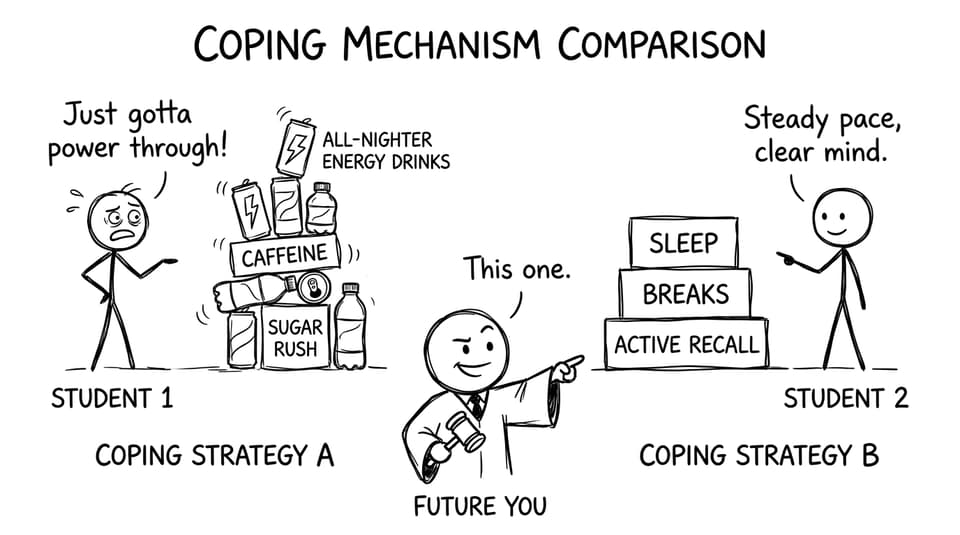
Staying on track while you wait (without burning out)
When you’re requesting support in the IB, it can feel like your life is “on hold.” Don’t do that. Keep momentum small.
A simple approach:
-
10 minutes RevisionDojo Flashcards (daily)
-
15-25 minutes Questionbank practice (one tiny set)
-
Use AI Chat to clarify one blocked concept
-
If you’re drafting coursework, use Grading tools to check rubric alignment
If you need a calm daily rhythm, borrow one here: The Ultimate Daily IB Study Schedule.
And if motivation is collapsing, use: IB Stress: How to Stay Motivated Without Burning Out.
Conclusion: yes, but the IB needs a process
IB deadlines can be extended for mental health reasons, but the path runs through your school, your coordinator, and usually some form of documentation. The most important move is early, calm communication paired with a concrete plan.
If you want to keep improving while you sort out deadlines, build a steady system on RevisionDojo: use Study Notes for clarity, Flashcards for daily recall, Questionbank for exam-style practice, Mock Exams and Predicted Papers for timing, AI Chat and Grading tools for feedback, and the Coursework Library plus Tutors when you need stronger guidance.