



In the last month before an IB exam, most students make the same trade without noticing: they swap understanding for speed. It feels rational. There’s a syllabus to cover, definitions to memorise, structures to rehearse.
But the IB doesn’t really reward “how much you remember.” It rewards what you can do with what you remember: apply, evaluate, connect, justify. That’s the difference between a student who knows a concept and a student who can carry it into an unfamiliar prompt without panicking.
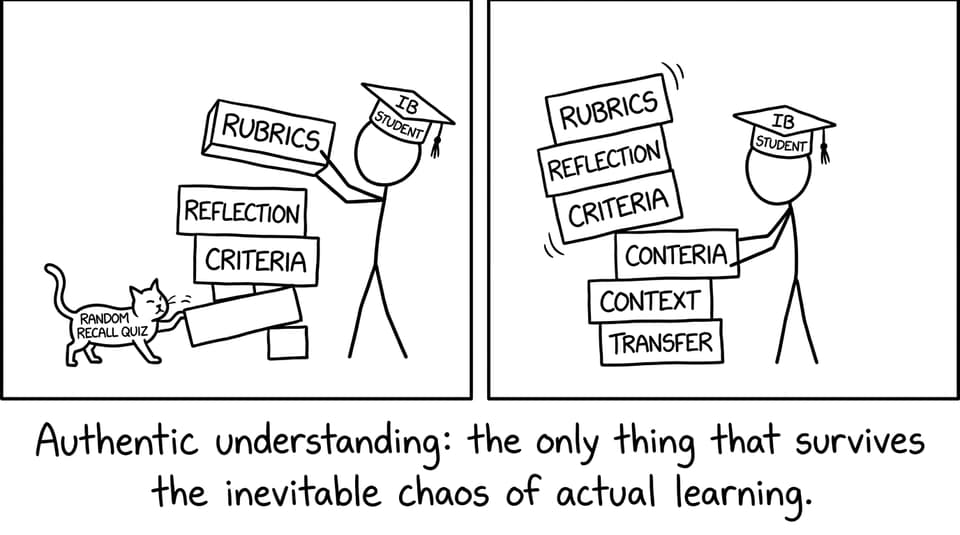
So here’s a useful lens for your revision: treat every practice task as an assessment that either trains authentic understanding or trains short-term recall. One of these travels well. The other collapses the moment the question is phrased differently.
A quick checklist for IB assessments that actually help
If you’re revising for IB exams, use this checklist to judge any task you do (including the ones you make for yourself):
-
Does it match IB criteria or markband language in some way?
-
Does it force application (new data, new context, new angle), not just recall?
-
Does it include a feedback loop (marking, corrections, reflection, retest)?
-
Does it make you explain “why” and “so what,” not only “what”?
-
Does it produce a reusable artifact (a rule, a flashcard, a mini-structure, a mistake pattern)?
If the answer is yes to most of these, you’re doing the kind of assessment that builds IB understanding and exam confidence.
What “authentic understanding” means in IB revision
Authentic understanding is what you feel when a question changes costume and you still recognise it.
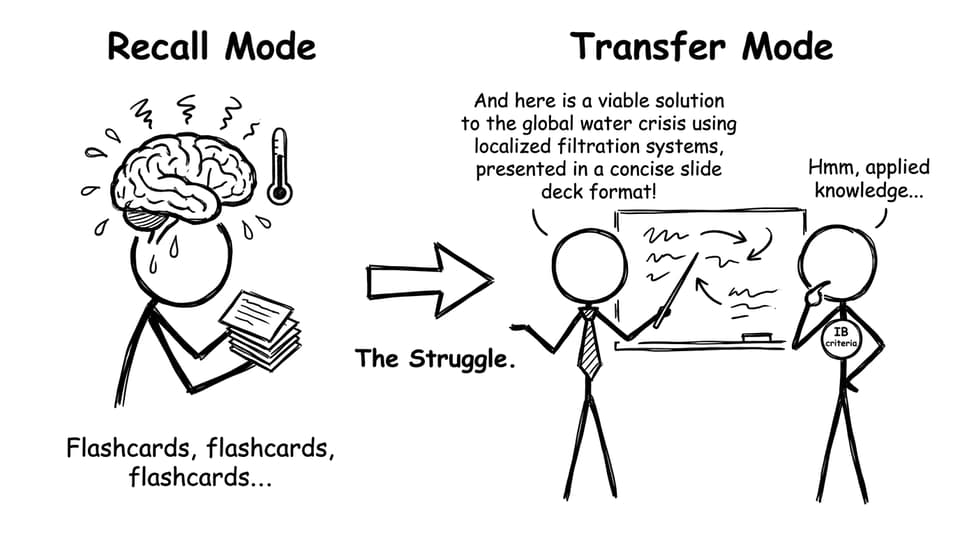
In IB, that usually shows up as transfer: you take a concept from Study Notes, then you apply it to a new stimulus, a new experiment, a new text extract, a new case, or a new command term. The best assessments make you practice that transfer, because that’s where marks live.
A simple test: if you can only answer when the prompt matches your notes, you have recognition. If you can answer when the prompt surprises you, you have understanding.
For structured practice that mirrors this, students often combine RevisionDojo’s RevisionDojo for IB with a routine from How to Study for IB Exams: Step-by-Step Guide.
The best IB assessment designs (for students) follow a three-part loop
You don’t need to be a teacher to “design assessments.” Every time you choose a practice task, you are designing your training.
Start with criteria, not vibes
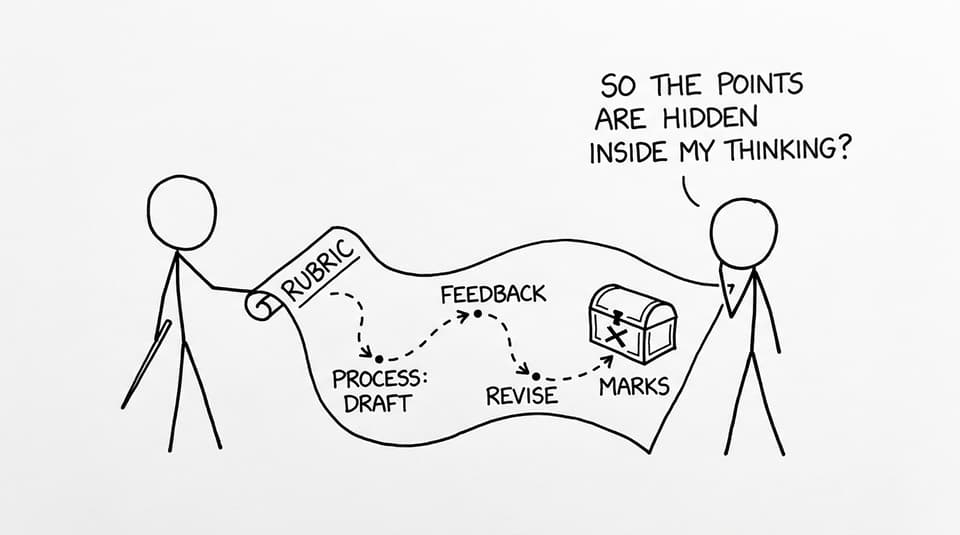
A common IB trap is doing work that feels productive but isn’t aligned to what gets credited. Strong assessments start with the question: “What would earn marks here?”
That’s why rubric-aligned feedback matters. When you use a tool that grades against expectations, it turns practice into a map.
RevisionDojo makes this easier with Grading tools for written responses and coursework-style drafts, plus targeted feedback loops built into practice.
Add a real-world or unfamiliar context
Authentic assessments introduce friction: a new dataset, a new scenario, a different authorial perspective, a surprising constraint. This is exactly what IB papers do.
So when you practise, avoid only doing “clean” questions right after reading notes. Mix your practice:
-
do topic-specific questions first to build the skill
-
then do mixed-topic sets so your brain learns selection and discrimination
-
include timed sections so you can think under pressure
RevisionDojo’s Questionbank supports this kind of assessment design: you can practise by topic, then widen the net and build exam-style adaptability. Pair that with How to Study for IB Exams Without Burning Out so the loop stays sustainable.
Bake in reflection (the most underrated mark-boost)
Reflection sounds soft until you realise it is the quickest way to stop repeating the same lost marks.
After every assessment task, write six lines:
-
What did the question actually ask?
-
What did I do first?
-
Where did I lose marks?
-
Was it content, method, command term, or clarity?
-
What is the smallest fix?
-
When will I retest it?
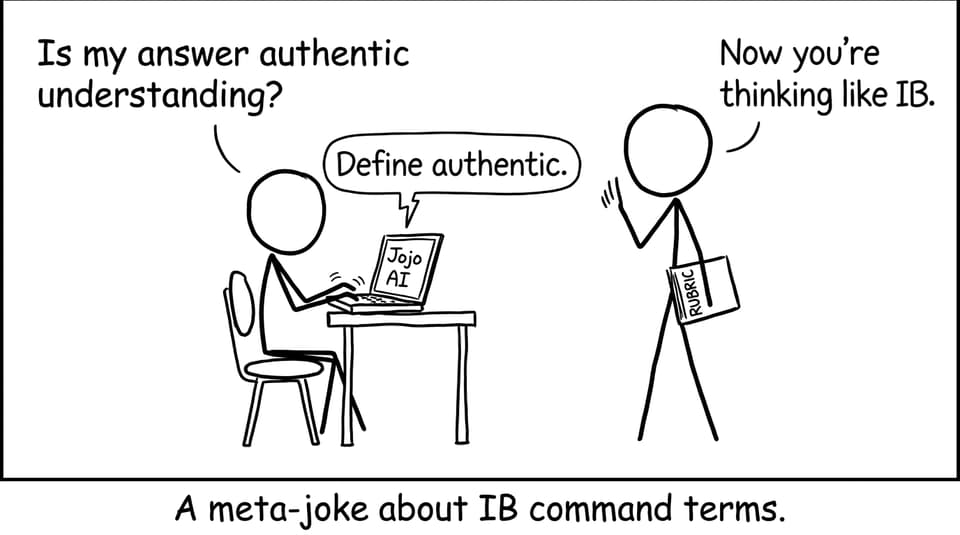
This is where tools like Flashcards (for errors that repeat) and AI Chat (for the one thing you can’t explain yet) become practical, not decorative.
Turning IB exam practice into authentic assessments (in 45 minutes)
Here’s a compact routine you can run multiple times per week. It’s an IB assessment design you control.
-
10 minutes: read one small slice of content using Study Notes (aim for clarity, not completeness).
-
20 minutes: do Questionbank questions on that slice (preferably a mix: straightforward + unfamiliar).
-
10 minutes: check feedback and mark like an examiner, not a fan.
-
5 minutes: create 3-5 Flashcards from mistakes and add one “rule” you will follow next time.
If you freeze in front of prompts, keep IB Exam Panic: What to Do If You Don't Understand open as your emergency playbook.
Where RevisionDojo fits in (without adding chaos)
The point of an IB assessment isn’t just a score. It’s a feedback system that changes your next attempt.
RevisionDojo is built around that loop:
-
Study Notes to understand fast
-
Flashcards to retain without rereading
-
Questionbank to apply under exam-style constraints
-
AI Chat to clarify confusion before it hardens into a gap
-
Grading tools to get rubric-aware feedback
-
Mock Exams and Predicted Papers to simulate the emotional reality of time pressure
-
Coursework Library to see what strong work looks like
-
Tutors when you need a human to diagnose patterns
If you’re rebuilding your full plan, align it with IB Exam Day Checklist: The Ultimate Guide and What to Do the Night Before IB Exams so your assessment training actually shows up on the day.
Conclusion: Make every IB practice task earn its keep
The most useful way to think about IB prep is simple: your practice becomes you. If you practise recall only, you become good at recall only. If you practise transfer, reflection, and criteria-aligned communication, you become the kind of student the IB rewards.
So design your assessments on purpose: context-rich questions, rubric-aware feedback, and small reflection loops that turn mistakes into strategy. And if you want the entire system in one place, RevisionDojo gives you the tools to run it daily, including Questionbank, Study Notes, Flashcards, AI Chat, Grading tools, Predicted Papers, Mock Exams, Coursework Library, and Tutors, so authentic understanding isn’t a hopeful idea. It’s your routine.