
In the week before deadlines, most IB students don’t need more feedback.
They need the right kind of feedback.
Because “This is good, but develop it” can mean anything when you’re staring at an IA draft at 1:17 a.m., rereading the same paragraph like it might confess what it wants to become.
That’s why RevisionDojo lets you generate custom reports inside its Coursework Grading tool: you choose the feedback format that matches your revision stage, your attention span, and your goal.
The quick checklist: pick a feedback format that fits your stage
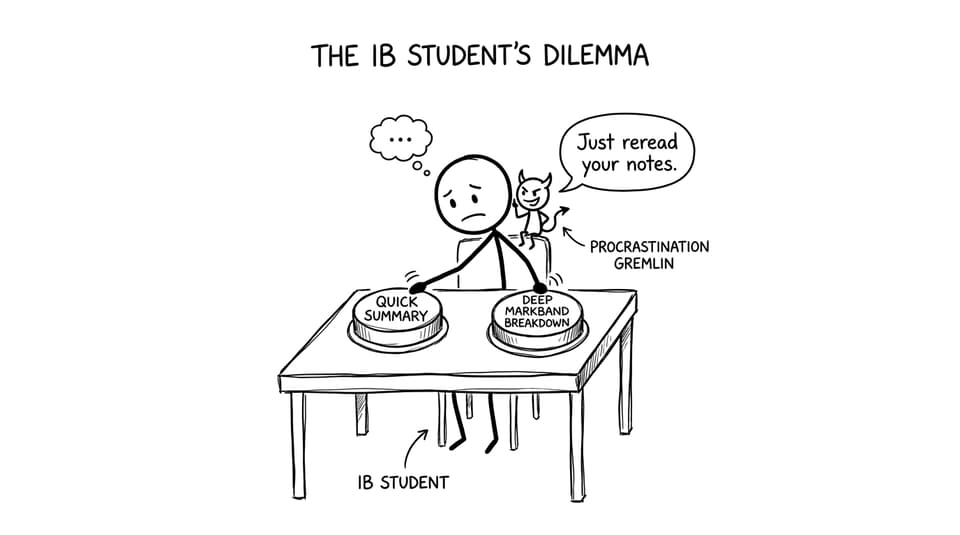
Before you click “generate,” ask three simple questions (very IB, very criterion-minded):
-
Do I need speed, or precision?
-
Am I early draft, mid draft, or polishing?
-
Do I learn best from a snapshot, a breakdown, or a comparison?
Then choose the report style that gets you moving.
If you want the broader system around this, pair coursework feedback with daily practice in the RevisionDojo Questionbank and short recall loops using Flashcards.
Why custom IB grading reports matter
One of the quiet frustrations in IB coursework is that you can work hard and still revise in circles.
Not because you’re lazy, but because generic feedback doesn’t tell you what to do next.
Custom IB grading reports solve that by changing the output format, not the standards. The criteria stay the criteria. What changes is how clearly you can see your path through them.
RevisionDojo’s Coursework Grading tool fits naturally into a bigger exam-prep rhythm too: skim targeted Study Notes, drill weaknesses, then come back and refine your writing with rubric-aligned feedback.
The three feedback formats (and when to use each)
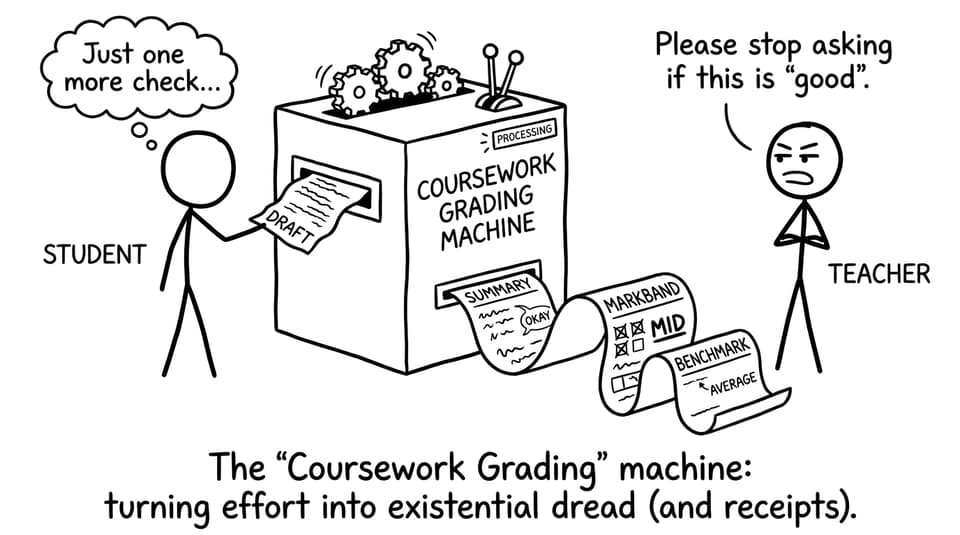
Summary feedback (fast clarity)
Summary feedback is the “tell me what matters most” option.
You get a concise view of strengths, the biggest mark-leaks, and clear next steps. For an IB student juggling multiple deadlines, this is often the best way to avoid over-editing everything and improving nothing.
Use it when:
-
you’re early in a draft and need direction
-
you’re short on time
-
you tend to spiral when feedback is too detailed
Full markband breakdown (criterion-by-criterion control)
This is the deep, structured option: criterion-level scoring with narrative commentary explaining why marks were awarded and what would lift the work.
If you’re trying to climb markbands, this is where you stop “hoping” and start engineering points. It’s also the format that pairs best with targeted drills: identify the weak criterion, then practice the underlying skill with timed prompts in your revision routine.
For broader exam technique, it helps to connect this mindset with how you practice for papers too. Articles like How 45-Point IB Students Prepare for Exams reinforce the same principle: feedback only works when it drives a loop.
Comparative benchmark report (make the standard visible)
Benchmarking is for the moment you think: “I’ve revised this three times. Why does it still feel… average?”
This report compares your work against high-scoring exemplar coursework on similar topics so the differences become concrete: structure, depth, tone, reflection, and the small choices that separate “fine” from “top-band.”
If you like learning by models, pair this with the broader revision strategy in The Ultimate Guide to Revision for IB Students.
How to generate a custom IB grading report in RevisionDojo
The workflow is deliberately simple:
-
Open the Coursework Grading feature.
-
Upload your IA, TOK essay, or Extended Essay draft.
-
Choose your report format (summary, markband breakdown, or benchmark comparison).
-
Let Jojo AI generate your report in minutes.
-
Revise, then regenerate a new report as your draft improves.
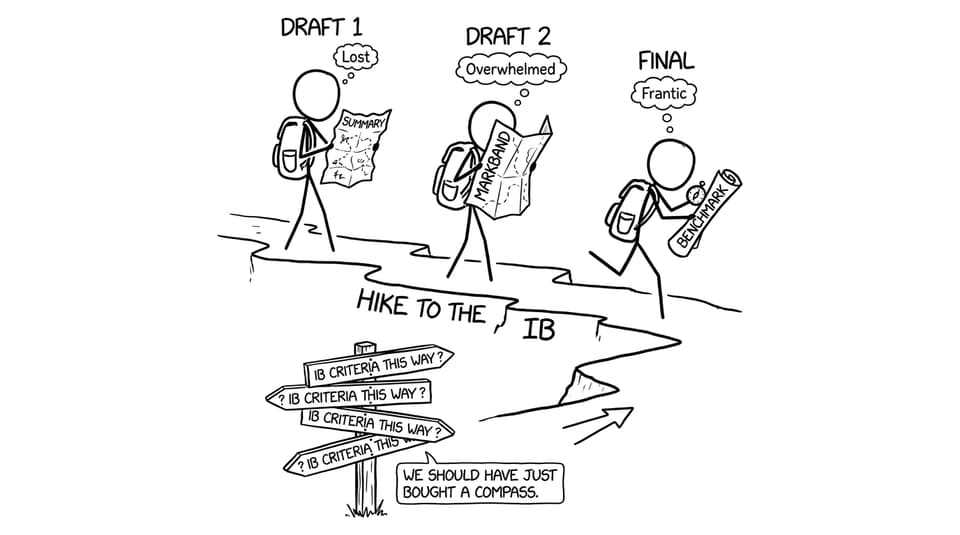
Students often forget that iteration is the whole game in IB. The first report isn’t a verdict. It’s a map.
If you want a complementary routine for written clarity, connect this with study habits from 10 Proven Study Techniques for IB Students.
How RevisionDojo makes feedback usable (not just accurate)
Good IB feedback isn’t just “aligned.” It’s actionable.
RevisionDojo’s advantage is how the platform connects tools:
-
Coursework Grading gives you structured feedback you can actually follow.
-
AI Chat lets you ask “Why is this criterion weak?” and get an explanation you can apply.
-
Flashcards help you lock in command terms, definitions, and subject language.
-
The Questionbank and Mock Exams turn insights into practice under time.
-
Predicted Papers help you rehearse likely exam patterns without guessing.
-
Study Notes patch content gaps quickly.
-
If you want human guidance, Tutors can help you prioritize revisions and build a plan.
The result is a calmer system: less second-guessing, more deliberate improvement.
For bigger-picture planning, you can also use How to Revise for IB Exams: A Month-by-Month Revision Plan to time your feedback depth across the year.
Final thought: choose the IB feedback that helps you act
The best IB students aren’t the ones who receive the most feedback.
They’re the ones who can use it.
Custom IB grading reports give you control over how you improve: quick clarity when you’re overloaded, criterion precision when you’re pushing markbands, and benchmark comparison when you need the standard to feel real.
Generate your next report using RevisionDojo’s Coursework Grading tool, then pair it with the platform’s Questionbank, Study Notes, Flashcards, Mock Exams, and AI Chat to turn feedback into points.