



The quiet truth about the IB is that it does not fail you in one dramatic moment. It chips away at you in small, ordinary places: a missed deadline that becomes two, a chapter you meant to review “tomorrow,” an essay draft you never quite finish.
So when someone asks, “Can I self-study the IB Diploma Programme?” the honest answer is yes. But it only works when you replace what school normally gives you: structure, feedback, pacing, and accountability.
This guide explains what IB self-study really involves, who it suits, where it usually breaks, and how to make it realistic when exams get close.
The quick reality-check for IB self-study
If you want the simplest checklist before committing to IB self-study, use this:
-
You can build (and follow) a weekly schedule for two years, not two weeks
-
You can learn from texts and markschemes without needing constant explanations
-
You can get feedback for writing-heavy parts of the IB (especially core + IAs)
-
You have a practice system (questions, timing, review loops)
-
You have a support layer for when you get stuck (tools, tutors, peers)
If even one of these is missing, self-studying the IB becomes less “independent learning” and more “guessing what the examiner wanted.”
Is it realistic to self-study the IB Diploma Programme?
Yes, self-studying the IB is realistic for a specific type of student: disciplined, self-directed, and willing to treat the programme like a long project with weekly deliverables.
The students who pull it off rarely rely on motivation. They rely on systems. They use multiple resources, practice under time pressure, and repeatedly compare their work to criteria. In other words, they build a mini-school around themselves.
A helpful starting point is understanding what self-study looks like at the subject level, because the IB is a bundle of different skill types. See: Is It Possible to Self-Study an IB Subject?
Why IB self-study feels harder than it sounds
The IB was built for trained teachers and fixed teaching hours
The IB expects a rhythm: lessons each week, teacher feedback, internal deadlines, and scheduled assessments. When you self-study, none of those exist unless you create them.
That is why many self-studiers don’t fail because they are “not smart enough.” They fail because their pace collapses. And pace collapses quietly.
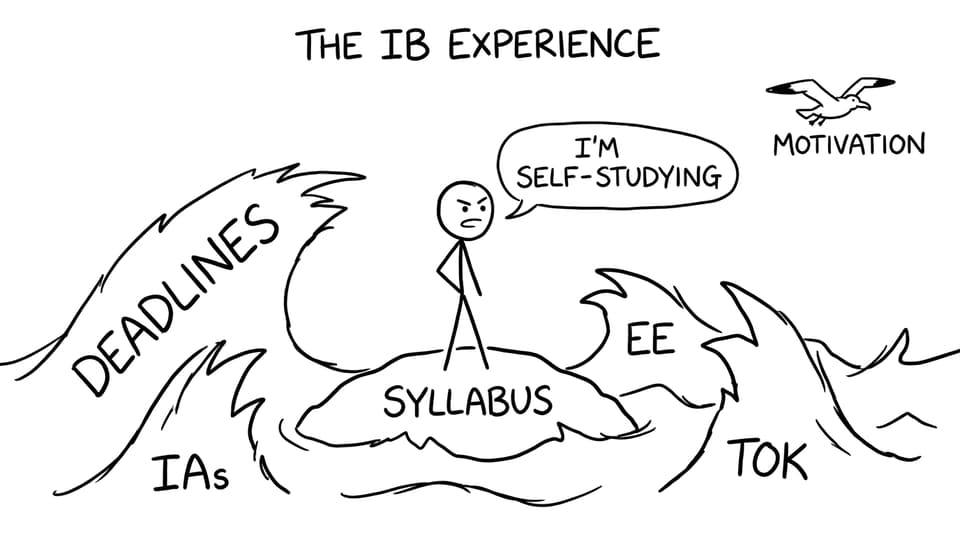
Core components and coursework are the real choke points
For many students, exams are only half the battle. The IB also includes pieces that usually require supervision and iterative feedback:
-
Extended Essay (EE)
-
Theory of Knowledge (TOK)
-
Internal Assessments (IAs)
Without feedback, you can lose marks even with strong ideas because you miss what the criteria reward. This is where structured support matters: a Coursework Library to see what strong work looks like, Grading tools to align drafts to rubrics, and Tutors when you need a human to diagnose what’s going wrong.
Burnout hits self-studiers earlier
When you self-study the IB, you carry the emotional load alone: “Am I behind?” “Am I doing this right?” “Is this good enough?” That uncertainty is exhausting.
The fix is not “try harder.” The fix is shorter cycles of proof: study a small piece, test it, review it, repeat.
The skills you need to self-study IB (and how to train them)
Self-discipline that survives boring days
In the IB, consistency beats intensity. A sustainable plan might look like 60-90 minutes daily plus one longer weekly block for timed practice.
To keep discipline practical, anchor it to tools that reduce friction. For example, RevisionDojo links Study Notes to practice and tracking so you always know what “next” is: RevisionDojo App: The Smarter Way to Prep for IB Exams
Long-term planning (without turning into a spreadsheet person)
Two years is too big to hold in your head. Break the IB down into weekly outcomes: one topic learned, one set of questions completed, one timed session reviewed.
If you need a clean workflow, borrow the structure from: How to Study for IB Exams: Step-by-Step Guide
Fast feedback loops
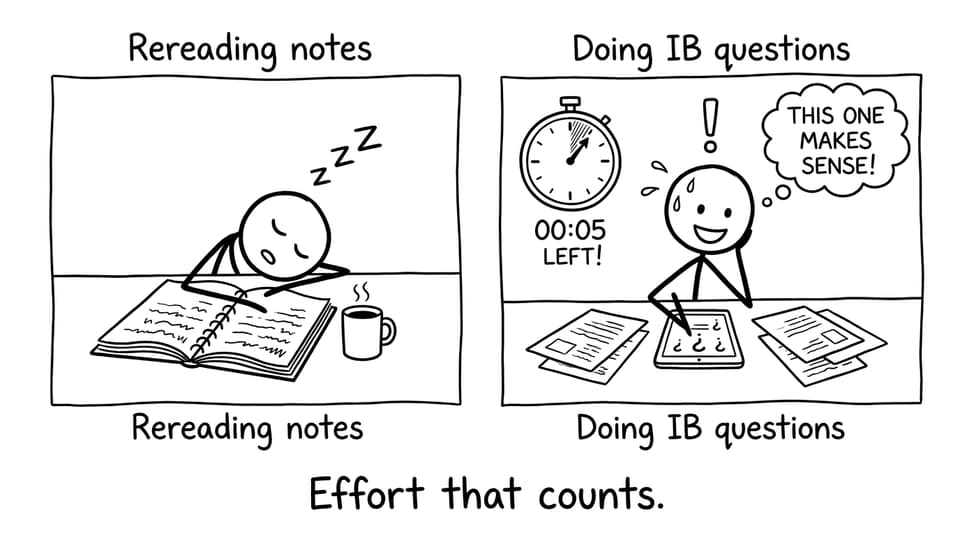
Self-study fails when mistakes don’t get corrected. Build a loop that forces correction:
-
Learn with Study Notes
-
Lock recall with IB Flashcards with Spaced Repetition (SRS)
-
Apply with the Questionbank
-
Get unstuck with AI Chat (Jojo)
-
Pressure-test with Mock Exams and IB Predicted Papers
For extra detail on notes, this is useful: Digital IB Study Notes: Access Anywhere, Anytime
A realistic self-study plan for IB students (simple, repeatable)
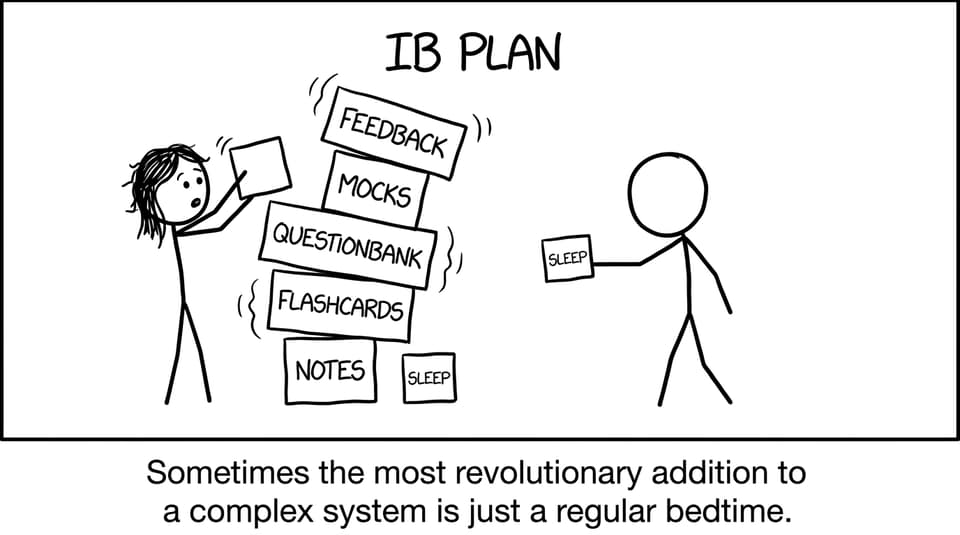
Here is a weekly structure many IB students can actually sustain:
-
3 topic blocks (45-75 min): Study Notes then Questionbank on the same subtopic
-
5-10 min daily: flashcards (spaced repetition)
-
1 timed session/week: a mini-mock or paper section, followed by a mistake log
-
1 feedback session/week: use AI Chat, Grading tools, or a tutor to fix one recurring weakness
If you struggle with pacing and stress, this companion helps: How to Study for IB Mocks (Without Burning Out)
Who should (and shouldn’t) self-study the IB Diploma Programme?
Self-studying the IB may work if you:
-
Learn well from reading, worked examples, and markscheme language
-
Can plan your week and protect study time
-
Are comfortable asking for help (AI Chat, tutors, communities)
-
Prefer controlling your pace over following a classroom tempo
It is usually a poor fit if you:
-
Need frequent teacher check-ins to stay on track
-
Struggle with deadlines without external pressure
-
Avoid writing feedback (even though IB marking depends on it)
-
Don’t have a plan for TOK/EE/IAs
If you’re choosing subjects strategically, this can help: Which IB Subjects Are Easiest to Self-Study?
Conclusion: yes, you can self-study IB, but you can’t improvise it
You can self-study the IB Diploma Programme. But you cannot wing it.
Treat the IB like a two-year project: weekly targets, constant practice, and fast feedback. Build a routine that still works on tired days. And when you need structure, borrow it from a system designed for IB exams.
If you’re serious about self-studying, start with RevisionDojo for IB: use the Questionbank to practice, Study Notes to stay aligned, Flashcards for daily recall, AI Chat when you’re stuck, and Mock Exams plus Predicted Papers to train calm under time pressure.