
Your predicted grades can feel like a door that swings quietly shut. One moment you’re planning dream courses, and the next you’re staring at a number that seems to describe a different student.
Here’s the steady truth for IB students preparing for exams: you can’t ask the IB organization to change predicted grades directly. But you can request a review inside your school, and the way you do it matters.
How predicted grades work in IB (and who controls them)
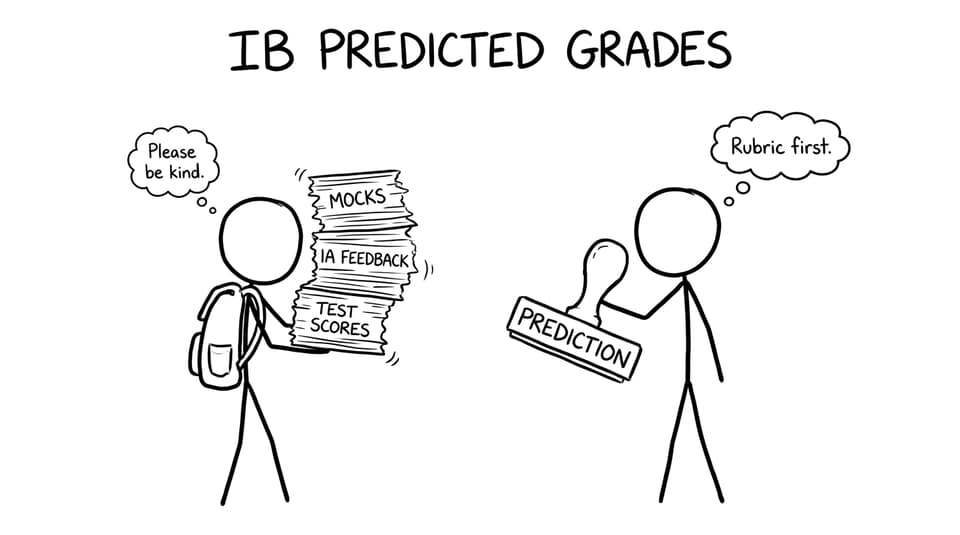
In the IB, predicted grades are set by your teachers, usually in consultation with your IB Coordinator and department policies. They’re based on patterns, not promises: mock performance, timed assessments, quality of your Internal Assessment (IA) work, and consistency.
If you want the clearest breakdown of what schools look at, start with how schools predict IB scores. It’s the most practical way to see what evidence actually moves a prediction.
Can you request a review of predicted grades in IB?
Yes, but only internally. The IB won’t accept predicted grade appeals from students. The only path is through your school before submission deadlines.
A strong next step is to follow the predicted grade appeals process guide, because it outlines who to speak to first (usually your subject teacher) and how escalation typically works (Coordinator, Head of Department, school leadership).
A quick IB predicted grade review checklist (what to do first)
Before you send any emails, pause and get organized:
-
Ask politely how your predicted grade was determined in that IB subject.
-
Bring 2-4 pieces of recent evidence (not a life story).
-
Propose a concrete next step: a timed assessment, a marked essay, an IA draft review.
-
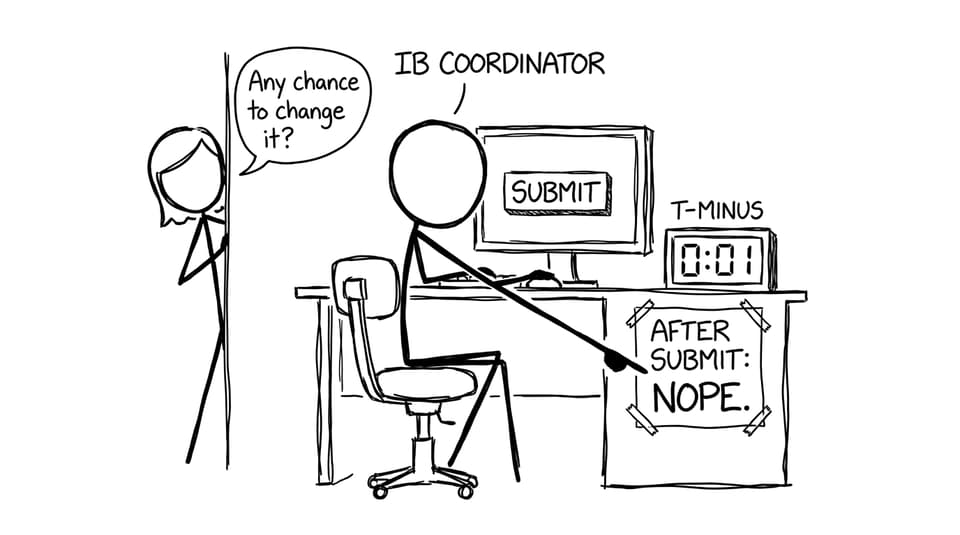
Confirm the school’s deadline for final predicted grade submission.
If you’re unsure how much predictions matter for offers, read Do IB predicted grades matter for conditional offers? to calibrate urgency without panic.
What evidence actually helps in an IB predicted grade review
Teachers rarely change an IB prediction because a student feels anxious. They do reconsider when the data changes.
Helpful evidence often includes:
-
Improved mock or timed-paper results
-
Higher-quality IA drafts aligned to criteria
-
A clear upward trend across recent class assessments
-
Specific feedback you acted on (and the improved work that followed)
If your goal is to improve the evidence itself (not just argue the number), use how to improve your predicted grades in IB as your action plan.
After the review: what to do if the IB predicted grade can’t change
Sometimes the answer is no. Not because you’re “not capable,” but because the school has to submit what it can justify.
That’s where RevisionDojo becomes less of a website and more of a system: use Study Notes to rebuild shaky concepts, Flashcards to keep recall alive, and the Questionbank to turn weak topics into automatic marks. Then run Mock Exams and Predicted Papers to generate the kind of time-pressured evidence that teachers trust. If you want instant clarity mid-revision, AI Chat helps you fix misunderstandings fast, and Grading tools make your written responses more mark-aware. For coursework stress, the Coursework Library helps you see what “good” looks like, and Tutors add a human layer when you need targeted diagnosis.
To reframe your mindset, this piece helps: IB predicted grades don’t define you.
Conclusion: your predicted grade isn’t the end of your IB story
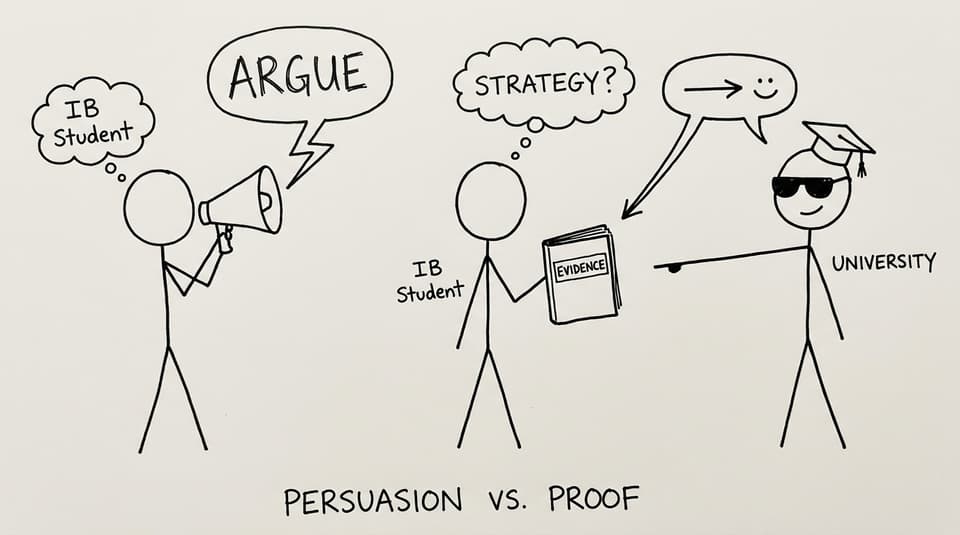
In IB, you can’t appeal predicted grades to the IB itself, but you can request a school-based review when you bring strong evidence and act early.
If you want to walk into that conversation prepared, build your “proof stack” on RevisionDojo: drill weak areas with the Questionbank, sharpen recall with Flashcards, rehearse under pressure using Mock Exams and Predicted Papers, and use AI Chat plus Grading tools to turn feedback into marks. Then, whether your predicted grade changes or not, your final performance has somewhere solid to land.